In April, the European Investment Bank (EIB) and the European Bank for Reconstruction and Development (EBRD) signed a Mutual Reliance and Cooperation Agreement, founding their future cooperation on jointly financed projects. Yet concerns have already emerged about potential risks to environmental and social safeguards as well as accountability under the new partnership.
Anna Roggenbuck, Policy officer | 14 July 2025
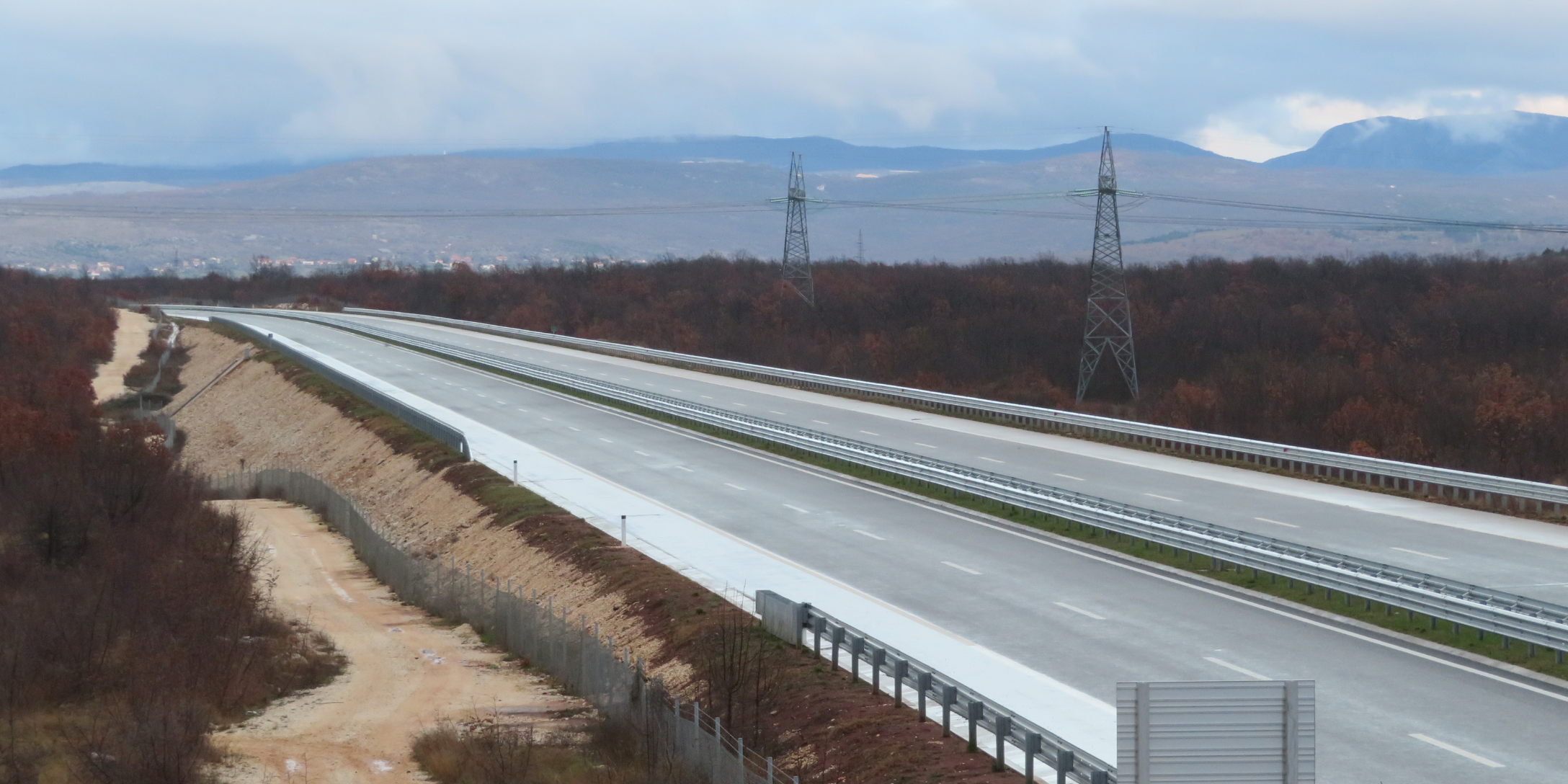
Corridor Vc, built section in Bosnia and Herzegovina
Initially, the agreement will apply to a small number of carefully selected projects to test the new approach and procedures. But even at this early stage, doubts remain about the robustness of safeguards and the institutions’ ability to uphold accountability in co-financed projects, mainly due to the EIB’s comparatively weaker environmental and social due diligence and complaints mechanism.
Under the agreement, selected projects will be appraised and monitored solely by the designated leading institution – either the EIB or the EBRD – using its own environmental and social policies and standards. While EIB and EBRD standards share a certain level of similarity, the EBRD’s standards are more operationally detailed and require compliance with good international practice, as outlined in its relevant guidance note. The EIB, however, has yet to develop a similar guidance note, despite committing to do so in 2022.
Two sides of the same story
Perhaps the most significant discrepancy lies in the banks’ approaches to due diligence. The EBRD is actively engaged throughout project preparation, consultation, implementation and monitoring. In contrast, the EIB heavily relies on project promoters to provide information and assurances of compliance. This difference may lead to variations in the quality of project preparation depending on which institution leads.
It’s also likely to affect how the banks’ accountability mechanisms assess potential complaints about environmental and social issues or transparency, as past experience has already shown. For example, both the EIB Group Complaints Mechanism (EIB-CM) and the EBRD Independent Project Accountability Mechanism (IPAM) received similar complaints regarding the route selection and environmental and social impacts of a section of the co-financed pan-European Corridor Vc near the city of Mostar in Bosnia and Herzegovina.
However, the two mechanisms reached contradictory conclusions regarding standards, environmental impact assessments, and public consultations. While the EIB-CM found no major shortcomings, the IPAM found the project non-compliant with several of the EBRD’s environmental and social standards. These gaps can be attributed not only to differences in standards, but also to how the mechanisms themselves operate.
Multilateral development banks, including the EIB and the EBRD, are expected to provide access to independent, safe, and effective accountability mechanisms, in line with the internationally recognised effectiveness criteria for non-judicial grievance mechanisms set out in the UN Guiding Principles on Business and Human Rights. However, Bankwatch research reveals that the EIB-CM has consistently fallen short of fulfilling its mission in an independent, efficient, and meaningful way, leaving communities affected by EIB operations at risk.
Additionally, the EIB-CM fails to meet key UN criteria on independence, legitimacy, transparency, accessibility, and effectiveness. Despite the dedicated efforts of EIB-CM staff to deliver meaningful outcomes for complainants, the EIB’s institutional response to EIB-CM recommendations has often been inadequate, resulting in little substantive improvement. This raises serious doubts about whether the EIB-CM alone can ensure accountability and access to remedy when handling complaints related to environmental and social matters in co-financed projects.
Time to fix the system
The EIB now has a unique opportunity to improve its complaints mechanism, which is currently under review. A recently appointed external panel of experts is expected to release a report with recommendations for improvement in the coming weeks, and non-governmental organisations have already identified priority areas and policy recommendations.
These include strengthening the EIB-CM’s independence within the EIB’s structure, clarifying its mandate on the delivery of remedy, improving the case-handling process to make it more inclusive, equitable, transparent and safe, and enforcing the EIB-CM’s monitoring function.
With joint initiatives between the banks set to increase under the agreement, both institutions must strengthen not only their environmental and social safeguards, but also their accountability mechanisms, aligning them with the best available policies and practices to prevent any weakening of stakeholders’ rights.
The upcoming EIB-CM revision should fully adhere to both good international practice and the effectiveness criteria set out in the UN Guiding Principles on Business and Human Rights. For the EU’s public development bank, this reform is long overdue.
Never miss an update
We expose the risks of international public finance and bring critical updates from the ground – straight to your inbox.
Institution: EIB | EBRD
Theme: Multilateral development banks | Accountability
Tags: EBRD | EIB | EIB-CM | IPAM | accountability

