As the European Union begins shaping its post-2027 budget – the next multiannual financial framework – the challenges ahead are significant. From accelerating climate change to geopolitical tensions and conflicts, the EU needs a budget that is both responsive and forward-looking. Yet, despite the far-reaching impact these decisions will have on millions of Europeans, the process by which they are made still falls short of being truly democratic.
Zuzana Gruberová, Alexandra Lebriez and Jana Pospíšilová Maussen, Centre for Transport and Energy | 25 July 2025
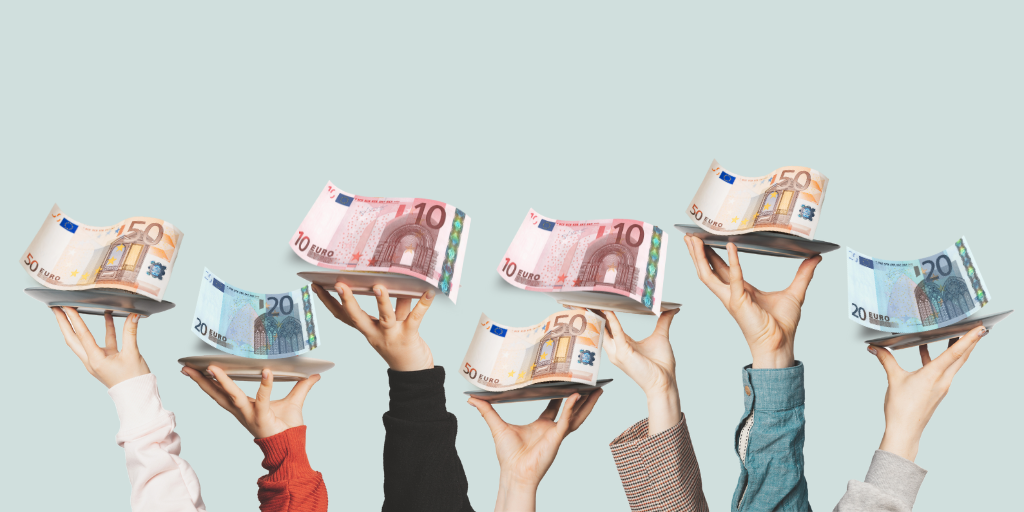
At the Centre for Transport and Energy (CDE), we are drawing attention to the fact that civil society is being sidelined from one of the EU’s most powerful levers for change – its budget. And unless this changes, Europe risks making the same mistakes again – spending public money inefficiently, unsustainably, and without public legitimacy.
The 2028 budget – a moment of reckoning
Starting 1 January 2028, the EU will operate under a new budget. With priorities ranging from energy security and climate action to economic resilience and global competitiveness, environment-wise, this budget will have to do more with less.
For us at the Centre for Transport and Energy and for civil society across the Czech Republic and the EU, this means every euro must be used strategically and equitably. We are already seeing the consequences of poor prioritisation. Take the Czech Republic’s use of cohesion funds to finance fossil fuel infrastructure – a short-sighted move that undermines the EU’s own climate commitments. Ending such practices is one of the Centre for Transport and Energy’s central demands.
Despite the direct impact of EU funds on Czech citizens’ lives, civil society remains virtually locked out of the decision-making process. In the Cohesion 28+ preparatory platform led by the Czech Ministry of Regional Development, the Centre for Transport and Energy is one of just two civil society organisations present. The remaining 93 per cent of invited stakeholders represent the state, business, and financial sectors. This is not just a Czech problem – but it stands out with particular intensity in the Czech Republic. Therefore, at the Centre for Transport and Energy, we are asking: how can budget decisions be fair or democratic when those representing ordinary citizens are barely in the room? The current imbalance leaves out not only civil society organisations like ours but also the voices of the most vulnerable communities we work to represent.
CDE’s vision: how should the new EU budget look like?
We at the Centre for Transport and Energy believe the EU must step up – not shrink – its ambitions. That’s why we are advocating for a EUR 2 trillion budget, with clear and binding commitments to sustainability, fairness, and transparency.
The Centre for Transport and Energy’s key proposals include allocating 50 per cent of the EU budget to climate and biodiversity, 40 per cent for climate action and 10 per cent for biodiversity protection strictly applying the ‘do no significant harm’ principle to prevent harmful investments, aligning climate measures with social justice goals, supporting renewable energy and energy communities, particularly in coal-dependent regions, and fully reinvesting revenues from the Emissions Trading System into sustainable projects. Our position is clear – a just transition must remain at the core of EU policy and that means supporting people and communities, not polluters.
Democratisation of decision-making
At the Centre for Transport and Energy, we are not only advocating for smarter spending, but we are also calling for systemic changes to how decisions are made. Currently, the state holds the overwhelming majority of power in deciding where EU funds go. This dominance undermines both accountability and innovation. We believe no single actor – not even the state – should control more than half the votes at the decision-making table. This principle reflects the European Code of Conduct on Partnership, which calls for meaningful cooperation between public authorities, social partners, and civil society. But in practice, this principle often only exists on paper.
One concrete step toward change would be reforming the Technical Assistance Operational Programme. Although it is designed to help all partners manage EU funds, in reality, it is used almost exclusively by public authorities. Redirecting even a portion of this funding to under-resourced civil society organisations would empower them to participate meaningfully and on an equal footing.
Our money and our future are on the line
EU funds are public money and citizens, especially in countries like the Czech Republic that rely heavily on EU investment, deserve a say in how that money is used. The Centre for Transport and Energy believes the solution is simple: civil society must be recognised as an equal partner in shaping Europe’s future. We are actively engaging in consultations and policy frameworks, including the Strategic Framework for Cohesion Policy, to ensure that the process includes a diversity of civil society voices.
But to succeed in a landscape dominated by more powerful interests, structural change is needed – goodwill alone is not enough. The long-term EU budget represents a critical opportunity to address this imbalance, and we must not let it slip away.
Never miss an update
We expose the risks of international public finance and bring critical updates from the ground – straight to your inbox.

