CBAM: Western Balkan governments must act now to avoid ‘perfect storm’ – new report
The EU’s Carbon Border Adjustment Mechanism (CBAM) takes full effect from 1 January 2026. But Western Balkan governments’ lack of preparation increases the risk of a calamitous and unjust energy transition, finds a new report published today by CEE Bankwatch Network (1).
30 October 2025
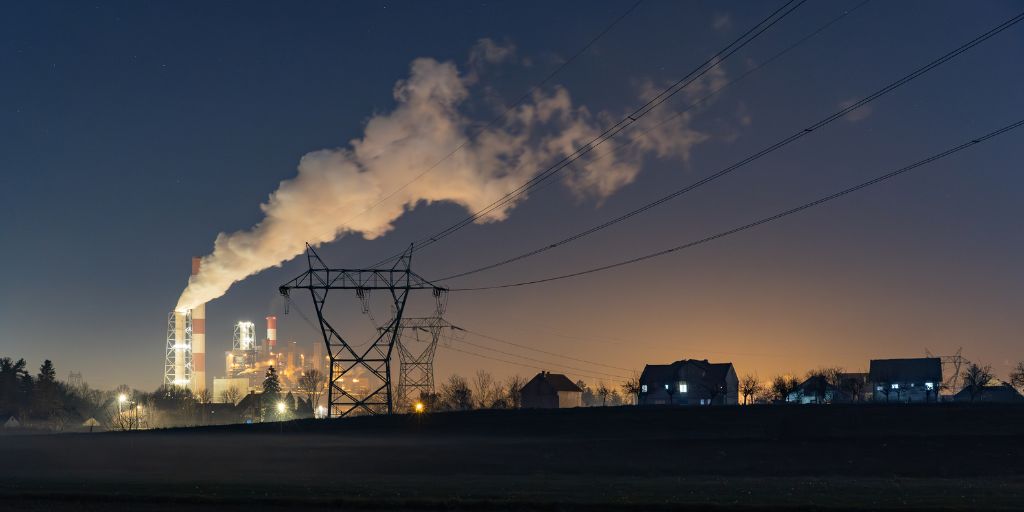
Matteo Trevisan, done as part of the More Necessary Than the Sun photographic project
Nevertheless, if they act fast to introduce their own carbon pricing on electricity and heat generation, the governments could mitigate the impact of CBAM and raise up to EUR 4.2 billion per year to fund a sustainable energy transition and support coal-dependent regions.
Under CBAM, EU importers of certain goods including electricity (2) from outside the bloc will need to pay for the carbon dioxide emissions associated with producing such goods in the exporting country. This will make imports to the EU from countries with high levels of coal, oil and gas use much more expensive than they have been so far.
EU importers of electricity from the Western Balkans – Italy, Croatia, Hungary, Romania, Bulgaria and Greece – will have to find other suppliers or face high CBAM costs. Electricity imports to the EU will likely plummet overnight, slashing income for electricity utilities in the Western Balkans.
Bosnia and Herzegovina, Montenegro, and North Macedonia will not pay CBAM fees themselves, but will be affected by a fall in income from electricity exports, as will Serbia to some extent. Kosovo has no EU border but will still feel some impacts. Albania’s hydropower-dependent power sector will only be affected if the country goes ahead with building gas power plants.
Until now, the EU has helped prop up heavily polluting coal power plants in the Western Balkans. Around 57 per cent of electricity imported by the EU from Bosnia and Herzegovina, Montenegro, North Macedonia and Serbia is coal-based. CBAM is designed to ensure that the EU takes responsibility for carbon emissions from such imports.
The income from CBAM will go to the EU budget. If electricity exports continue at recent levels, the EU’s annual income from these alone could reach almost EUR 965 million (3).
Had the Western Balkan governments started preparing for CBAM earlier, instead of allowing the EU to generate income from their electricity exports, they could have generated revenue for their own energy transition by introducing national carbon pricing systems themselves.
This could also have contributed to their electricity sectors being exempted from CBAM, which has built-in conditions allowing this if the countries substantially progress in applying EU energy and climate law. However, none of the countries are near to fulfilling these conditions.
Still, by introducing domestic carbon pricing, the countries could mitigate the impacts of CBAM (4) and generate significant revenue to spend on a just and sustainable energy transition.
Ioana Ciuta, CEE Bankwatch Network – ‘With just two months to go until CBAM takes full effect, we are still hearing wishful thinking from governments and utilities hoping for delays and exemptions. But there will be no postponement and none of the countries are anywhere near gaining the electricity sector exemptions allowed under the CBAM Regulation. They need to stop dreaming and start preparing.’
Pippa Gallop, CEE Bankwatch Network – ‘CBAM could finally force Western Balkan governments to tackle the elephant in the room and start closing their highly-polluting and increasingly uneconomic coal power plants. But coal dependent regions mustn’t be left behind – they need to plan for redevelopment. Western Balkan governments haven’t yet set aside funding for this, and nor has the EU. This has to change.’
Contacts
Pippa Gallop, Southeast Europe energy policy officer, CEE Bankwatch Network
+385 99 755 9787
Ioana Ciuta, Strategic Area Leader – Fossil Fuels, CEE Bankwatch Network
Tel.: +40 31 438 2489
Notes for editors
- The report is available here.
- Electricity, iron and steel, cement, fertiliser, aluminium, and hydrogen
- The Energy Community Secretariat has recently put the figure even higher, at almost EUR 1.2 billion. Energy Community Secretariat, Energy Community CBAM readiness tracker 2025, 20 October 2025.
- CBAM fees for imports of goods from countries which apply a carbon price can be reduced to take account of the carbon price already paid in the exporting country. So this would reduce the CBAM costs for EU importers and make goods from the exporting country more attractive.
Never miss an update
We expose the risks of international public finance and bring critical updates from the ground – straight to your inbox.

