The damage from Slovenia’s Mokrice dam won’t stop at the Croatian border
28 May 2026
Story by Pippa Gallop, Southeast Europe Energy Policy Officer, CEE Bankwatch Network
The river Sava upstream from Zagreb, Photo: Ivan Posinjak
Slovenia’s state-owned Hidroelektrarne na Spodnji Savi (HESS) has for two decades been trying to build the controversial Mokrice hydropower plant on the river Sava. But poor quality environmental studies have been repeatedly quashed in court by the Slovenian Native Fish Society, and a recent transboundary assessment’s claims that the impacts will stop at the Croatian border are far from convincing.
Over the past two decades, it’s been painful to see the lower Sava in Slovenia turned into a series of reservoirs and dams. A weir at the intake of the Krško nuclear power plant had already been built in the early 1980s and the Vrhovo hydropower plant upstream in the 1990s, but since 2000 four more hydropower plants have been built – Boštanj, Arto-Blanca, Krško and Brežice.
Brežice, the furthest downstream and newest addition, is about ten kilometres from the Croatian border. It started trial operations in 2017, and has turned a lively part of the Sava into a brown, stagnant reservoir.
The dams have also contributed to significantly decreased sediment transport and groundwater levels downstream in Croatia since the 1980s, with the riverbed of the Sava deepening. This in turn creates risks to the water supply in Croatia’s capital, Zagreb.
Yet all is not lost. The biodiversity-rich river Krka in Slovenia is a major tributary to the Sava. Protected as the Krka with tributaries Natura 2000 site, its confluence just downstream of the Brežice reservoir helps to mitigate the hydropower plant’s downstream impacts. The remainder of the lower Sava within Slovenia is also protected due to the presence of Rutilus virgo, the cactus roach, endemic to the Danube basin.
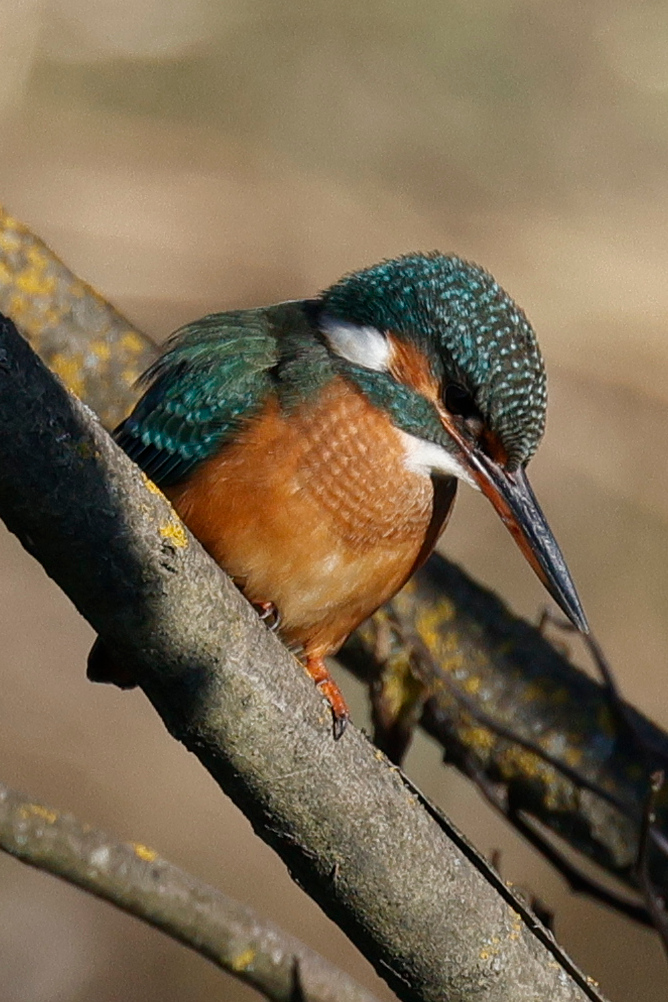
Downstream of the border, the Sava upstream from Zagreb is also part of the Natura 2000 network, designated to protect eight fish species. Much of the surrounding area is a bird reserve, some of whose inhabitants – including white-tailed eagles and kingfishers – also depend on fish. Other nearby protected areas like Rakitje also rely on sufficient Sava flows to maintain groundwater levels.
Mokrice: last, but not least in terms of impacts
Brezice hydropower plant, Slovenia, Photo: Ivan Posinjak
Unfortunately, HESS is not yet finished with its quest to dam the entire lower Sava in Slovenia. The plan is to complete the series with the 31-megawatt Mokrice dam, turning most of the remaining stretch between Brežice and the Croatian border into yet another reservoir. It would also flood the lower part of the river Krka and other Sava tributaries.
HESS claims it will help to raise groundwater levels in Slovenia, downstream from Brežice. But that will likely result in further decreases in Croatia, increasing the risks to Zagreb’s water supply, agriculture and nearby protected areas.
Environmental permitting for Mokrice has been going on for more than a decade – not because the process is excessively burdensome, but because the project has insurmountable impacts. Slovenia’s environment agency has recognised the plant’s significant impacts on fish species and water quality, but the authorities keep approving the project despite flawed assessments. It’s therefore been left to civil society – in this case, the Slovenian Native Fish Society – to insist that the law be properly applied. The courts have so far agreed, but HESS keeps pushing forward with the project.
Out of step with water resilience and nature restoration imperatives
The EU policy and legal landscape has changed significantly since Mokrice was first proposed. It now goes beyond nature protection and mandates restoration. The EU Nature Restoration Regulation aims to restore 25,000 km of free-flowing rivers across the EU by 2030. Building the Mokrice hydropower plant would go in the opposite direction from this goal, directly intervening in 11 kilometres of river and with downstream impacts on many more. Not only does it have the usual impacts associated with building dams such as habitat fragmentation, preventing sediment transport and lowering groundwater downstream, but the flooding of the Krka river up to Krška Vas and of other Sava tributaries renders it a highly damaging project also upstream of the planned dam.
More than 80% of EU habitats are still in poor status, according to the European Environment Agency, and the EU is still far from achieving the goals of the Water Framework Directive by 2027. According to the European Commission, based on 2016-2021 data, only 39.5% of surface water bodies in Europe have a good ecological status or ecological potential – roughly the same as the 2009-2015 period. As a result, the EU’s 2025 Water Resilience Strategy underlines the need for increased efforts to implement the Water Framework Directive. Again, Mokrice would take both Slovenia and Croatia in the opposite direction.
‘Overriding public interest’ label unjustified
The river Sava upstream from Zagreb. Photo: Ivan Posinjak
Another thing which has changed since two decades ago is the availability of alternatives. While the development of renewable energy is crucial, hydropower has a higher environmental impact than suitably-sited solar or wind, and should not be prioritised.
It makes no sense to declare a hydropower plant with an average annual generation of 131 GWh, or 1% of Slovenia’s electricity generation in 2024, as being of overriding public interest. While not a negligible amount in a system which is increasingly decentralised, the high environmental risks of the project cannot be justified by such electricity generation, particularly now that other sources are cost-effective.
Solar photovoltaics have shown impressive growth in Slovenia since 2021, and in 2025 generated more than twelve times as much as the Mokrice hydropower plant would. In particular, Slovenia has an impressive record in developing energy communities and prosumer solar – the latter of which made up half of all photovoltaic capacity installed in 2025, with significant space for further growth. This, along with further efforts on energy efficiency, is where Slovenia needs to put its efforts – not in hydropower.
New amended impact assessment missing key elements
As a result of the Slovenian Native Fish Society’s successful work to uphold the law, Croatia recently held a new consultation on an amended environmental impact assessment (EIA) for Mokrice, on which Bankwatch provided comments. But the EIA was missing key elements, including the section called the ‘appropriate assessment’, required under the Habitats Directive due to the plant’s impacts on Natura 2000 sites. This assessment was updated in 2024 but not shared with the Croatian public for comments.
And despite mentioning that Mokrice would deteriorate the ecological status of the ‘VT Sava Krško–Vrbina’ water body, the EIA does not say whether an analysis under Article 4(7) of the Water Framework Directive has been done. Such an assessment is needed in order to establish whether a derogation from the Directive is justified. It’s therefore unclear on what basis it has been concluded that the project can nevertheless go ahead.
Flood protection does not depend on accepting the dam
The river Krka, Slovenia. Photo: Ivan Posinjak
HESS promotes Mokrice as multi-functional, but this is misleading. It is an electricity generation project, and should be assessed as such. Other objectives appear to have been added in order to secure public support and to make it harder to argue that less damaging alternatives are available.
The goal of flood protection is crucial, but does not require a hydropower plant. It could and should be resolved through other interventions, which should be planned and assessed in their own right.
Groundwater problems are in any case caused by previous projects upstream, but even if Mokrice might partly help to tackle this issue in Slovenia, it would aggravate the problem downstream in Croatia.
Bizarrely, ‘navigability of the Sava’ is also stated as an objective, but this is bogus. It’s neither a real need, nor would Mokrice help to realise it – quite the opposite, as it would put a new barrier across the river. The Sava is only navigable downstream of Sisak in Croatia, and this is not likely to change any time soon.
Impacts on Croatia downplayed
The environmental impact assessment emphasises that Mokrice would act as a ‘compensation basin’ for the Brežice plant, mitigating sudden changes in flow caused by so-called ‘hydropeaking’ and ensuring a ‘near-natural’ flow at the Croatian border. It also claims that Mokrice would not have a negative impact on water quality in Croatia, which is not credible, as the Krka’s current positive influence downstream of Brežice would be decreased by the new dam. Since the EIA admits that water quality in the ‘VT Sava Krško–Vrbina’ water body will deteriorate, it seems highly likely this would also be the case downstream.
Building yet another hydropower plant would only increase the cumulative impacts already generated by the dams on the Sava, and the study fails to address the reduction of sediment transport, deepening of the riverbed downstream, and consequently lower groundwater levels.
The ‘solution’ proposed by the EIA – to transport sediment from the Krško intake to below the Mokrice plant, presumably at least part of the way by truck – would be extremely energy intensive and would cause regular, serious clouding of the water below the Croatian border.
The EIA also denies any impact on protected areas in Croatia, yet Volumes 4 and 5 of the study don’t even name all the right fish species protected in the Sava upstream of Zagreb Natura 2000 site. The claim that there would be no significant impacts on this site seems highly unlikely as it relies heavily on the disputed claims above on water quality and quantity.
Inadequate alternatives analysis and ‘straw man’ zero alternative
The EIA’s analysis of alternatives only examines different variants of the same project and their contribution to the questionable objectives above. The ‘do nothing’ option is presented literally, failing to acknowledge that some of the objectives, including electricity generation and flood protection, could be reached by other more cost-effective and less damaging means.
High time for a rethink
The amended EIA’s overall message is that even though the existing plants on the Sava have had negative impacts and some have limited mitigation measures in place, Mokrice will improve the situation and all the impacts will stop at the Croatian border. Given that the Krka’s mitigating effects will also be reduced by being impounded behind a dam, this isn’t credible.
Our conclusion is that Mokrice entails unavoidable and significant negative impacts on Croatia, as well as on the region of Slovenia just across the border, and that it’s high time to finally cancel it. The supplementary environmental impact assessment for the Mokrice hydropower plant must be rejected, and alternative means found to ensure flood protection for the nearby communities.

