Dighomi Meadows: An uncertain future for Tbilisi’s last floodplain forest
Story by Mariam Patsatsia, community support coordinator, CEE Bankwatch Network
Dighomi Meadows is the last surviving floodplain forest in Tbilisi. A refuge for otters, kingfishers, pond turtles and more than 40 other species protected by the Bern Convention, it was meant to be restored under a rehabilitation strategy drawn up in 2024 with support from the Asian Development Bank (ADB). Instead, in under a year and in breach of the strategy’s recommendations, the Georgian authorities carved a plot out of the meadows, leased it to a private company and rezoned it for sports facilities – with no regard for the environmental impact. More than USD 480 000 of public money spent on the strategy now risks being wasted.
A walk through the meadows
I join Ana Trapaidze, one of the driving forces behind the Dighomi Meadows initiative, on her guided walk. We set off from the car park of the Olympic swimming pool in the northern suburbs of Tbilisi, where newcomers and regulars come together for a visit to the capital’s embattled floodplain.
Ana welcomes us and shows us what has been lost and what survives. We first walk past rows of withered trees, mounds of rubble and stretches of churned-up soil left behind by years of unregulated gravel mining and illegal waste dumping. Work on two football stadiums has left fresh scars.
Our next stop, the surviving woodland, shows what the meadows once were – and could be again if left to recover. Under the canopy, birdsong draws our eyes to the branches, where kingfishers and nightingales are easy to spot, even for less experienced observers. Turtles basking on half-submerged logs in the ponds are hard to miss, as is a large nest of black ants.
Why the meadows matter
Dighomi Meadows covers about 190 hectares on the right bank of the Mtkvari River, about 64 of them once wooded with poplar, oak and willow. The meadows lie on a migratory flyway and serve as a refuge for a rich and diverse population of birds. Between February and June 2024, the conservation specialist Luka Tkemaladze recorded close to 95 species here. He estimates that more systematic surveys could push that figure to 120. For most of these birds, the floodplain is a stopover site where they rest and forage during migration or seasonal movements. But for a few of these species, including the kingfisher, little bittern and night heron, the meadows are also where they breed and feed.
At least 18 of the bird species recorded in the meadows are listed under Appendix II of the Bern Convention, the Council of Europe’s Convention on the Conservation of European Wildlife and Natural Habitats, which singles out animal species requiring strict protection. Beyond birds, the meadows also shelter at least 8 protected bat species (possibly as many as 19), 7 reptile species, as well as their most elusive inhabitant, the Eurasian otter (Lutra lutra).
Tbilisi Otter Island, a secluded area surrounded by the river and adjoining the meadows, is a breeding area for the few otters remaining in the city. The 12.7-hectare site has been officially adopted into the Emerald Network to protect its vulnerable species and habitats.
The site’s 2024–2034 management plan, prepared by Ilia State University for the Ministry of Environmental Protection and Agriculture, recommends extending its boundary to incorporate the remaining riverbank floodplain forest, since the island alone cannot sustain its dependent species – including otters, common kingfishers, great and little egrets, and black-crowned night herons – without the adjoining forest fragments, ponds and meadows. This underlines the international importance of the meadows and the rich biodiversity they retain despite the many threats they have faced.
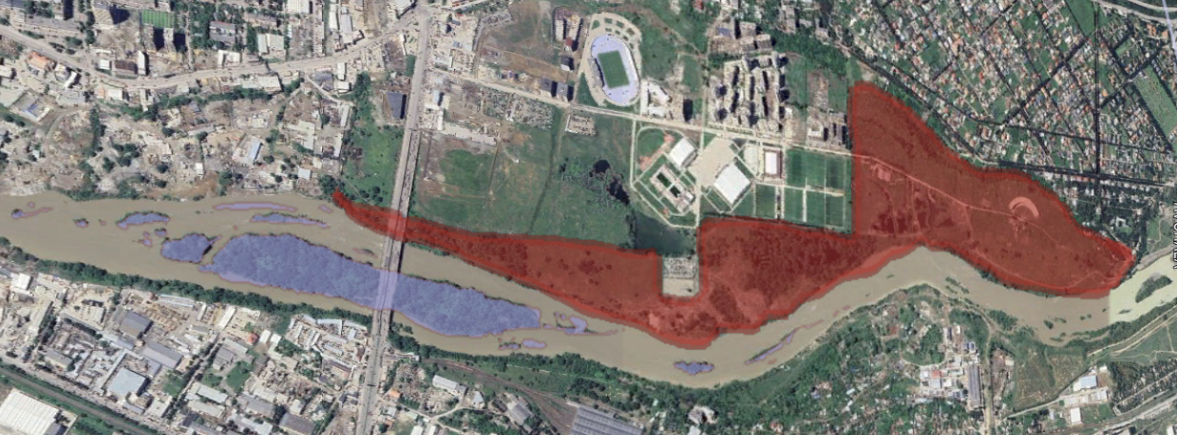
A decade of destruction… and resistance
From 2006 onwards, and intensively after 2014, the Dighomi floodplain faced increasing human encroachment. The pressure escalated in the mid-2010s when part of the area was turned into an Olympic village for the 2015 European Youth Summer Olympic Festival. After the event, trucks moved in and began using the floodplain as a dumping ground for all sorts of refuse. At its worst, according to local residents, every minute several fully loaded trucks would enter the area, leaving construction, municipal, household and even hazardous waste strewn across the site.
Around the same time, illegal quarrying expanded across the area, creating rows of small quarry pits. Sand and gravel were dredged from the riverbed, heaped up across the meadows in piles sometimes taller than the trees, ground down on site and readied for transfer to construction projects.
By May 2020, more than half of the floodplain had been wholly degraded. By 2024, only about 8 hectares of the original woodland remained intact.
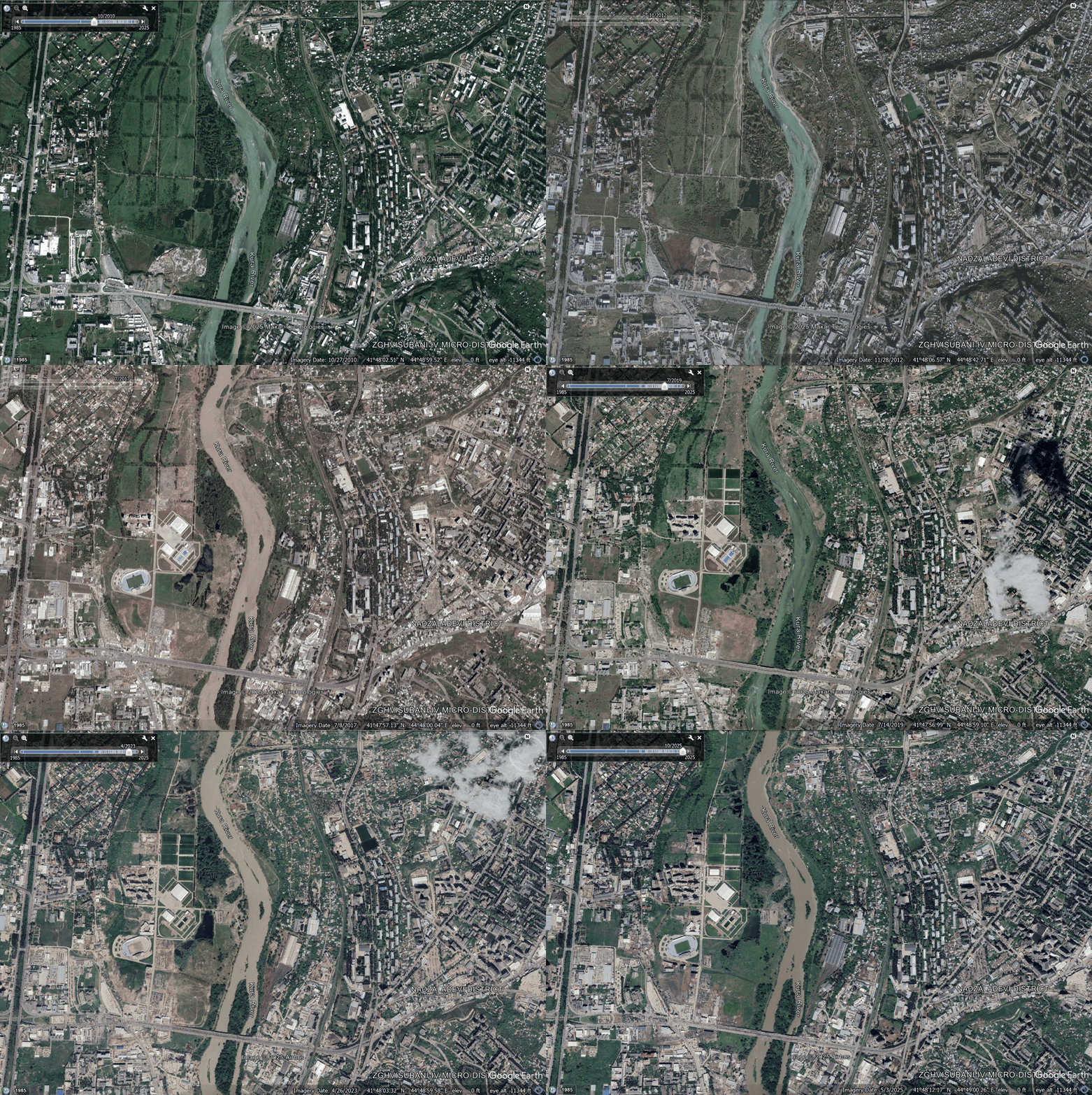
Eventually, unrelenting grassroots activism brought the activities to a halt, but it was a protracted, exhausting process. In 2020, as the first residential buildings near the meadows were completed, a young family moved into the neighbourhood. Ana – a physics teacher and lecturer and mother of two – was pivotal in bringing local residents together to organise against the constant stream of trucks and the gravel extraction.
Over the years, Ana, her husband Tornike and the Dighomi Meadows initiative, which brings together other defenders and supporters of the area, documented illegal works, notified authorities and then waited – often in vain – for their response. Along the way, the family was followed, intimidated and accused of being funded from abroad. On one particularly disturbing occasion, a drone hovered outside their balcony while the family, including their children, were in the apartment.
Ana livestreamed their visits to the quarrying sites and deep into the meadows for followers of their Facebook page, both to protect the family and to show the public what was being done to the floodplain. She started organising guided tours, researching and bringing the plight of the floodplain to the media’s attention. In 2021, she sued Tbilisi City Hall and the Ministry of Environmental Protection and Agriculture to force the removal of the waste.
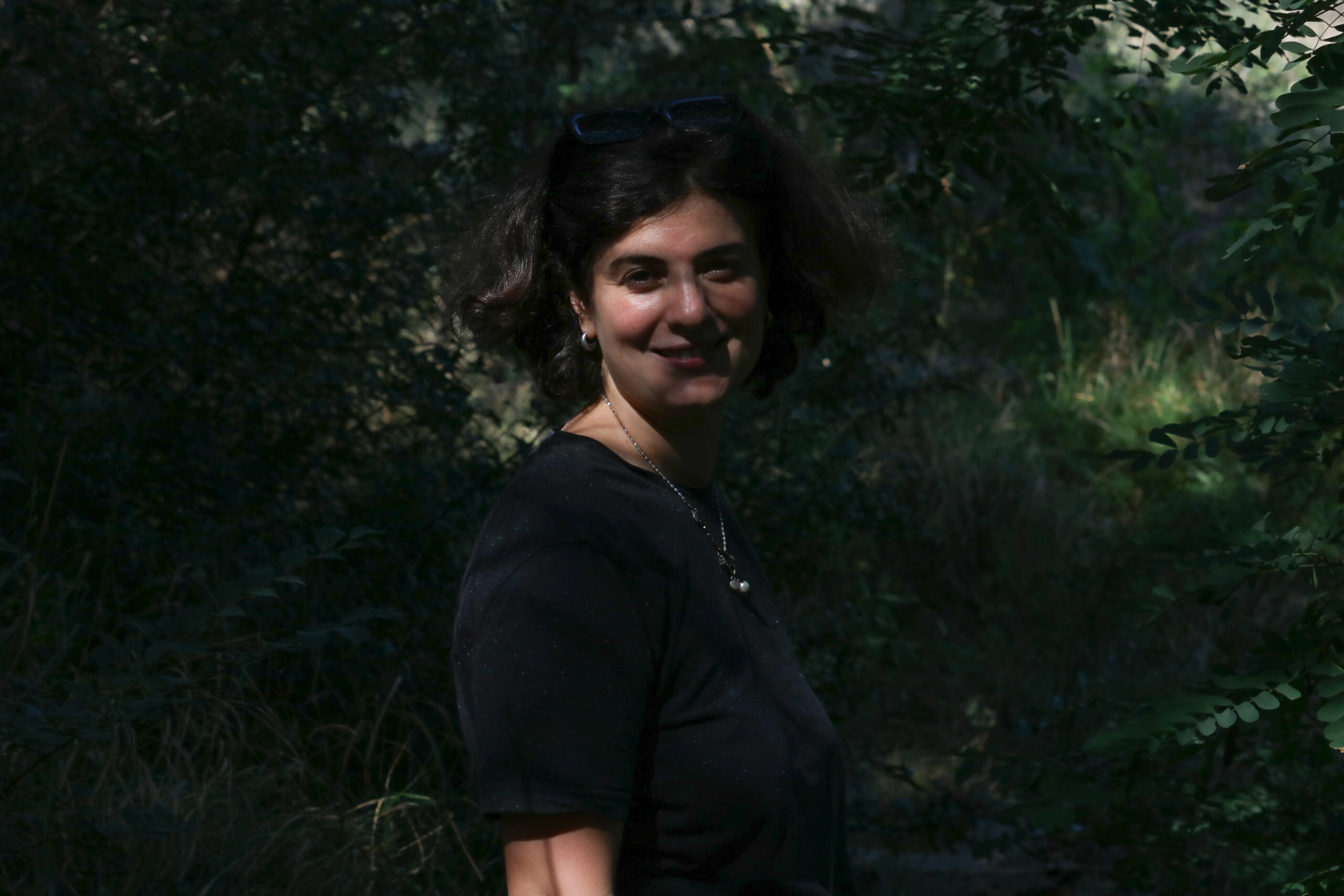
‘As a citizen, this was a kind of test – to see how the environmental protection system works and what we, as citizens, can do to protect [nature],’ Ana says about her efforts to defend the meadows. ‘It turned out that just making a phone call or writing a complaint isn’t enough, and you essentially have to throw yourself completely into the matter and devote everything to it.’
In 2024, Ana’s persistence finally paid off. In March, the National Enforcement Bureau and City Hall’s municipal inspectorate demolished the illegal structures used to run the operations that had devastated the meadows. In November, after three years, Tbilisi City Court ruled in Ana’s favour, ordering City Hall to remove the waste from municipal and state-owned land. (City Hall has since appealed the decision.) Around the same time, the rehabilitation strategy, backed by the ADB, was finalised.
For a brief moment, it seemed the long fight for Dighomi Meadows had been won.
The strategy the ADB abandoned
The ADB has become an important stakeholder in the meadows through its Livable Cities Investment Program. Georgia took out an ADB loan to fund the programme’s project-readiness financing, itself intended to prepare a larger investment loan – the Livable Cities Investment Project for Balanced Development – designed to improve urban and tourism infrastructure across the country. The investment project originally envisaged a municipal park in the floodplain.
But the park’s design raised concerns: it was close to sensitive otter habitat and far from residential areas. After pressure from local activists, the project’s promoter, the Tbilisi Development Fund, began working with the ADB on the rehabilitation strategy to ensure new activities aligned with the public’s desire to restore the floodplain. The strategy’s 2022 terms of reference stated that the Fund, with the ADB’s support, would develop a long-term plan for restoring the floodplain, one that had to be aligned with the wider investment project and linked to the subprojects delivered under it.
Drawing up the strategy was an important milestone, marked by substantial public participation. The process showed strong public support for restoring the floodplain and highlighted the value of the area to neighbouring communities and to the capital city as a whole.
Despite initial commitments to use insights from the strategy for subsequent subprojects, in October 2025 ADB project staff told CEE Bankwatch Network that the Bank was proceeding without any component related to the meadows, citing City Hall’s lack of initiative in implementing the strategy with the Bank’s support.
That same year, City Hall breached the recommendations of the newly completed strategy, which state that City Hall should not allow any construction in the area unless it is essential to the area’s functioning and recommended by rehabilitation experts. The strategy was effectively disregarded, as another private interest moved in.
Fast-tracked stadiums and renewed threats
On 10 June 2025, the company Sport Club Athletic LLC filed a request with the National Agency of State Property, under the Ministry of Economy and Sustainable Development, to obtain a plot of land within the meadows to build sports facilities. Citing a state decree on supporting the development of sports infrastructure that had been approved barely a week earlier, it offered to invest GEL 3 million (around EUR 1 million) and build two football stadiums as well as associated facilities.
The authorities then moved with remarkable speed, handing the land to the company with little, if any, scrutiny. On the very day the request was filed, the National Agency asked City Hall to carve the desired plot out of the meadows and transfer it into state ownership. Within weeks, City Hall had subdivided the plot into two parcels and handed one of those to the state. On 14 July 2025, the government issued the company a 20-year lease – even though the site’s zoning still prohibited the planned construction.
The company needed three more months to have the area rezoned from a recreational designation to a ‘special zone’ status allowing full-scale construction. On 23 October 2025, City Hall approved the company’s request to change the status of the plot and submitted the decision for final approval to the Tbilisi City Assembly. The very next day, 24 October, the Assembly convened an extraordinary session and – among other measures – passed a resolution altering the capital’s general land-use plan, formally stripping the plot of its recreational-zone status.
Preparatory works for the construction of the stadiums began in February 2026. By June, the work had already exceeded its permitted boundary, dumping inert construction waste into a pond and an adjoining forest that serve as turtle habitat and bird foraging ground, and burying roughly 9,000 m² of vegetation in the process. No environmental impact assessment was carried out, nor any appropriate assessment of the project’s effects on the nearby Emerald Network site located just 400 to 450 metres away.
The Social Justice Center, a Tbilisi-based human-rights organisation, said the authorities made these decisions ‘hastily and formalistically, disregarding local residents’ rights to participation and the weighty interest of protecting an important ecosystem’.
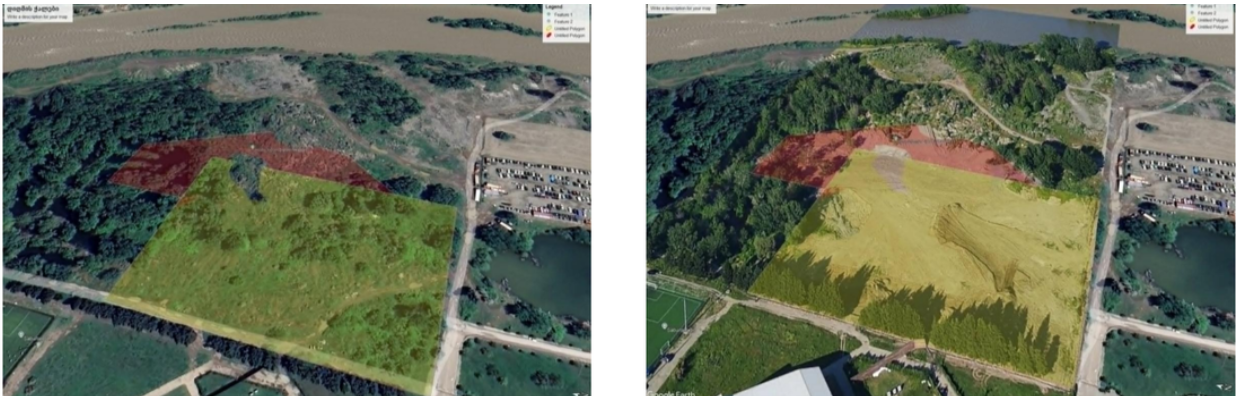
These fast-tracked decisions underlined how easily institutions can disregard the voices of local people.
‘After all the enormous effort it took to win the case in court, and the creation of such an important document as the rehabilitation strategy – and despite the heightened awareness now shared among decision makers, who understand how precious this territory is to us and what it means for the city,’ Ana says, ‘despite all of this, the officials in charge can sell it off with a single signature, rezone it with a single signature, and treat citizens and everything we want as if it counts for nothing.’
‘There’s no trust in the institutions,’ Ana says, ‘and with every subsequent step, as I get to know the system better, I have less and less faith that anything can actually come of it.’
Despite this lack of faith, in response to the renewed threat, the initiative once again took up the fight. Ana appealed almost all of the administrative decisions and filed a lawsuit at the same court against the four decisions that paved the way for the development.
In parallel, in August 2026, the initiative submitted a complaint to the Standing Committee of the Bern Convention, requesting that the Georgian government and Tbilisi City Hall halt construction and begin restoration in line with the existing rehabilitation strategy.
Notably, Georgia is an active party to the Convention. In September, it hosted the 16th Meeting of the Group of Experts on Protected Areas and Ecological Networks in Lagodekhi, and will report on its progress at the UN Biodiversity Conference (COP17), which opens in Yerevan, in neighbouring Armenia, on 19 October.
Like other parties to the Convention on Biological Diversity, Georgia has signed up to the global goal of protecting and effectively managing 30% of the world’s land and sea by 2030, to which each country is expected to contribute under Target 3 of the Global Biodiversity Framework.
The Otter Island site should be included among the representative areas that Georgia protects to help meet this goal, which in turn requires safeguarding the meadows that sustain the island.
Citizens, institutions and their responsibilities
Dighomi Meadows is the story of a floodplain forest deliberately ravaged and of a relentless struggle to protect it. It is also a story of institutional failures and of citizens taking up the duties these institutions shirked. The bodies charged with protecting the site, from the environment ministry to City Hall, have treated the meadows as an inconvenience or an exploitable resource.
The positive role the ADB played in developing the rehabilitation strategy – and in opening the process to public deliberation – has also been undone, turning the Bank’s involvement into yet another institutional failure. ‘The ADB is a fairly reputable institution, involved in many projects,’ Ana says, ‘and it truly could have, and should have, played a positive role in the Dighomi Meadows story.’
Ana argues that the Bank never secured the single most important commitment that would have made its work count – a promise from City Hall not to rezone or sell the land the strategy asked to keep undisturbed. ‘City Hall treats [the strategy] as merely a recommendation,’ Ana says, ‘and it disregarded it entirely.’
The ADB loan financed the strategy on the premise that City Hall would act on it. Yet once the strategy was complete, and soon afterwards breached, the Bank walked away with barely a question asked. The Bank’s Livable Cities Investment Program is supposed to deliver a better urban environment and greater climate resilience for city residents.
But if one of the most prominent, publicly endorsed, bottom-up projects in its Georgia portfolio is allowed to vanish – placing the floodplain’s survival at serious risk – it raises the question of whether the money the Bank invests here truly serves its intended purpose.
The strategy’s hefty price tag of USD 480 000 should prompt taxpayers in the ADB’s shareholder countries to ask whether it was well spent – and it should leave people in Georgia angry at repaying a loan for a now-abandoned plan.
Ana and the initiative, through their sustained campaign, drove the intruders out once. That they keep fighting back, in an increasingly authoritarian state, is as admirable as it is dangerous. It also contrasts with the stance of far more powerful institutions and raises the question of whether anyone with the power to protect the meadows is willing to use it.
Tags: ADB | Georgia | biodiversity
[yuzo_related]