Since joining the EU in 2007, Bulgaria has absorbed about BGN 32 billion (EUR 16.4 billion) in EU funds, most of it spent on infrastructure such as the Sofia metro and motorways, according to a January 2025 analysis by the Institute for Market Economics, a Bulgarian think-tank.
Daniel Popov, National campaigner | 9 November 2026
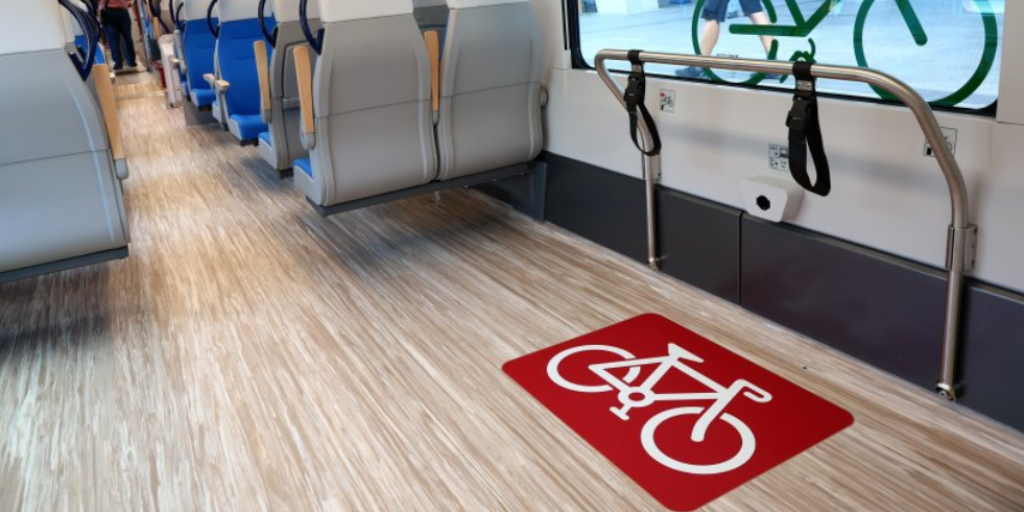
Photo credit: Bulgarian Telegraph Agency
Bulgaria has the second-highest road fatality rate in the EU after Romania, has not completed any of its Trans-European Transport Network (TEN-T) corridors and lacks adequate rail services to neighbouring EU countries and central Europe. It also has one of the lowest shares of rail in passenger transport in the EU: in 2023, cars accounted for 86% of passenger-kilometres on land and trains for just 2.3%, against an EU average of 8.4%.
Why the funds fell short
First, in line with political priorities, EU funding programmes focused on building and rehabilitating infrastructure. Large projects were poorly assessed and planned, so they took far longer and cost far more than expected. Construction companies, and the firms supervising them, lacked the capacity to deliver good work on time. Persistent problems with public procurement and weak administrative capacity led to delays, poor-quality procedures and decisions that breached legal requirements, often ending in financial corrections.
Second, over the years the administration got better at absorbing EU funds, but not much better at adopting and implementing EU policies. Some municipalities, for example, used EU funds to buy new low- and zero-emission buses and trams, yet air quality and congestion in cities barely improved. The administrative and political will was lacking to introduce the measures needed to change travel behaviour and limit the wider costs of transport.
Recovery plan exposes vicious circle
The political and administrative system built around EU funds received a serious shock when it had to deal with the EU’s Recovery and Resilience Facility, a new, performance-based instrument. Plans under the facility had to allocate at least 37% of their budgets to green measures, and payments depended not only on spending the money but also on completing reforms.
First, the plan, its priorities and its investments were rewritten several times by successive governments, showing that the administration followed political interests rather than the EU’s policy and strategic direction. When the first draft was published in October 2020, the Bulgarian environmental group Za Zemiata wrote in an open letter that ‘quoting European clichés cannot cover up the incompetence of the administration’ and that ‘strategic documents created by a government associated with serving lobbyist interests, devoid of competence and avoiding difficult decisions, have no future’.
Second, once the plan had been brought more or less into line with EU goals and approved by the European Commission, the usual problems with absorbing EU funds emerged. The administration was unable to conduct negotiations and public procurement adequately and on time, and it could not handle projects that did not attract big business interests. As a result, a number of projects, particularly green ones, were simply dropped: in December 2023, five climate, energy and environment projects were cut from the plan altogether.
The process also exposed a new problem: the political factor. Over the past five years, Bulgaria has gone through several elections and a string of new and caretaker governments, and most of the reforms had to be voted on in parliament. Instead of supporting the modernisation of the state and helping to unlock recovery funds, members of parliament used their power to sabotage the government of the day when it was not ‘theirs’, to trade favours and apply political pressure, or to stir up populist anti-EU scandals. In September 2024, for example, members of parliament blocked the parliamentary rostrum to stop a debate on amendments to the recovery plan.
As the facility draws to a close in 2026, it is clear that, despite these obstacles, its funding model has driven significant change in Bulgaria, towards an economy and society more resilient to modern challenges. Many crucial reforms have also been formally adopted, though it remains to be seen how they will be implemented in practice.
From construction to public service
One very positive example is the investment of about EUR 506 million in rail passenger transport, which is paying for 12 InterCity-type trains, 20 suburban trains and 9 shunting locomotives. This is the first time EU funds have been invested in rolling stock in Bulgaria: the authorities had rejected this option when drawing up the 2014–2020 and 2021–2027 programmes. It marks a significant shift in institutional priorities, from building infrastructure to improving public services.
An important additional benefit is the reforms the plan required: updating the transport sector’s strategic framework and ensuring effective access to integrated public transport. These were delivered through a new Public Transport Act, which makes rail the backbone of the transport system, introduces integrated national, regional and municipal transport schemes and creates a single ticket valid across different modes of transport.
In April 2025, the EU-funded Transport Connectivity Programme 2021–2027 also used the flexibility of its mid-term review to fund five additional trains while the recovery plan tenders were blocked. Bulgaria’s example shows that, even in a difficult institutional and political environment, EU funds can deliver much-needed results for European taxpayers, and that strong requirements on reforms and performance give the necessary impetus to the rule of law and good governance.
Lessons for next EU budget
The next EU long-term budget is expected to place an even stronger focus on the performance and efficiency of EU funds. Drawing on this example and on more than a decade of work on EU cohesion funding for transport in Bulgaria, we make four recommendations.
First, an information campaign is badly needed on the goals of EU policies, the role of EU funds in implementing them and how the results show in people’s daily lives. This could help counter Euroscepticism and encourage active, meaningful public participation.
Second, EU and national institutions are funded with public money, so all negotiations and decisions between them on EU funds should be fully disclosed to taxpayers.
Third, when approving national plans and programmes, the Commission should insist that they address the country-specific challenges identified in the Rule of Law Report and the European Semester, with particular attention to the regional level.
Fourth, Bulgarian governments should start using EU loan instruments designed to meet specific EU policy targets instead of expensive external state borrowing, which often increases the burden on taxpayers without tangible benefits.
Never miss an update
We expose the risks of international public finance and bring critical updates from the ground – straight to your inbox.
Theme: Public transport
Location: Bulgaria
Project: After recovery towards cohesion
Tags: European Green Deal