Over the last year and half, the Latvian government has proposed multiple amendments to national environmental policies, often under the guise of ‘reducing administrative burdens’. But while simplifying procedures can speed up decision-making and ease workloads for businesses and landowners, the collateral damage can be significant – with nature, ecosystems and our collective well-being all at risk.
Kristīne Ketrina Putniņa, Biodiversity campaigner, Green liberty, Latvia | 26 February 2026
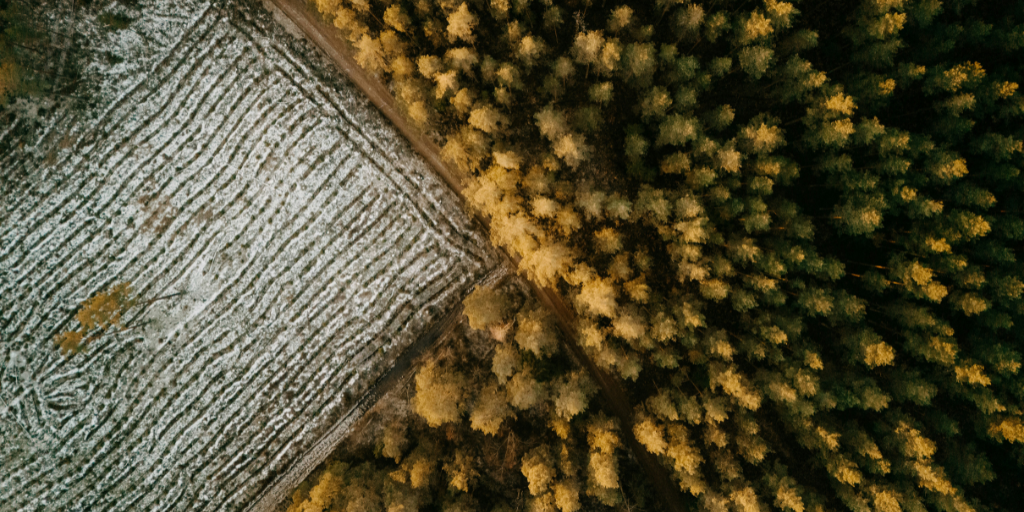
Photo by Aivars Vilks on Unsplash
Latvia’s forests, in particular, are coming under increasing threat from short-sighted policy proposals that prioritise short-term profit over long-term sustainability.
Latvia joins EU deregulation drive
The push to increase competitiveness by simplifying regulation has sat high on the EU agenda in recent years, translating into initiatives at both EU and national levels. The European Commission, for example, has proposed a number of ‘omnibus’ packages aimed at streamlining legislation, with EU Member States simultaneously reviewing which requirements can be reduced to improve operating conditions for businesses and boost economic growth.
Capitalising on this deregulation trend, Latvia’s Ministry of Agriculture has put forward a series of far-reaching proposals aimed at reshaping forestry policy.
Forestry safeguards under pressure
In October 2024, the Ministry proposed amendments to logging regulations that would have significantly weakened safeguards, including more than doubling the maximum size of clearcuts in many forests as well as expanding canopy gaps – openings in tree cover – to a quarter of the permitted size.
The amendments also sought to considerably lower thresholds for declaring forest stands unproductive, effectively making them eligible for harvest sooner. Additionally, under the pretext of disease prevention, the rules for harvesting tree species like aspen and spruce were set to be eased. According to the Ministry, the aim was to grant forest owners greater freedom and to accelerate the permitting process.
Fortunately, sustained pushback from environmental organisations, certain political parties within the government, and concerned institutions led to the postponement of these amendments. The Ministry is currently organising another round of discussions with stakeholders, with a significantly reduced set of amendments now under consideration.
But these are not the only restrictions the Ministry is intent on loosening. In September 2025, the Ministry proposed amendments to the Forest Law, allowing a consultation period of just three working days. The proposals included a substantial reduction in the minimum harvest age for several tree species and a highly restrictive and baseless definition of ‘old-growth forests’, setting a minimum area of 30 hectares along with other excessive requirements.
The proposals also attempted to introduce an unlawful provision, namely that any forest management activities compliant with the Forest Law would automatically satisfy nature protection legislation, even though many key protection measures are not covered under the Law. As before, efficiency was used as a justification for deregulation.
Once again, due to numerous objections from environmental organisations, institutions and other stakeholders, the amendments were withdrawn. A key counter-argument in both cases was the precedent set by a 2024 Constitutional Court case, in which amendments significantly reducing minimum tree diameters for harvesting were repealed due to the lack of a proper environmental impact assessment.
Defence at all costs?
Similar trade-offs have emerged in the context of efforts to increase logging, but under a different pretext – generating additional revenue to support Latvia’s defence spending. While investment in defence infrastructure is undeniably necessary in today’s geopolitical climate, funding sources should seek to avoid creating long-term damage elsewhere. In May 2025, the Minister of Agriculture made the first of several attempts to significantly increase allowed harvesting volumes in state forests until 2030, arguing it would raise over EUR 100 million, including funds for defence.
However, the proposal was met with widespread criticism: not only on ecological grounds, but also from an economic perspective. Critics contend that such a short-term approach – one reliant on a sudden intensification of harvesting – would likely lower timber prices as well as anticipated profits, and limit harvesting potential in the coming years.
Another objection concerns the lack of existing capacity within the country to harvest and process such volumes. This will likely result in delays and an increased share of low-value timber exports, given that most of Latvia’s exported timber is already minimally processed wood, including roundwood, fuel-wood, sawn wood, and plywood.
Governing without a plan
Notably, all of the Ministry’s legislative efforts have been pursued without an updated mid-term forestry policy planning document. Latvia’s existing forest policy guidelines cover the period from 2015 to 2020, yet no new document has been adopted since.
Draft guidelines released for consultation in autumn 2025 were widely criticised – including by other state institutions – for neglecting the social and ecological functions of forests emphasised in the national forestry policy. Pushing through legal amendments in the absence of clear, balanced and updated policy guidelines provides yet another example of irresponsible and short-sighted governance in action.
How far will deregulation go?
This period has proved demanding for both forestry institutions and nature protection organisations, but the fight is far from over. Removing environmental safeguards may indeed make economic activity easier in the short term, but at what cost?
Nature is not limitless – ecosystem capacity and natural resources are finite, and recovery can take decades. This is why it’s so essential to balance the environmental with the social and economic – the latter two being entirely dependent on the first. Clean air, fresh water, healthy soils, and resilient ecosystems are prerequisites for human well-being.
Latvia’s forests are a national treasure, and should offer far more than just short-term economic gains for the privileged few. State-owned forests, comprising roughly half of the country’s total forest area, should lead by example. They must provide benefits that go beyond timber profits and instead serve to safeguard Latvia’s rich local biodiversity.
Time for action
In Latvia, individuals and civil society organisations have the right to participate in public consultations and decision-making processes, defending their right to a healthy environment. They can also make their voices heard through elections and by supporting political parties that act responsibly and plan for the long term.
Similar opportunities exist at the EU level. While the EU’s recent call for feedback on simplification has now closed, engagement remains possible through initiatives such as the Hands Off Nature petition, which calls on EU policymakers to halt the erosion of environmental safeguards. Now is the moment to speak up and push back – before short-term political choices turn into irreversible environmental damage.
Never miss an update
We expose the risks of international public finance and bring critical updates from the ground – straight to your inbox.
Institution: EU
Theme: deregulation | forestry | biodiversity
Project: EU funds and biodiversity
Tags: biodiversity | deforestation

