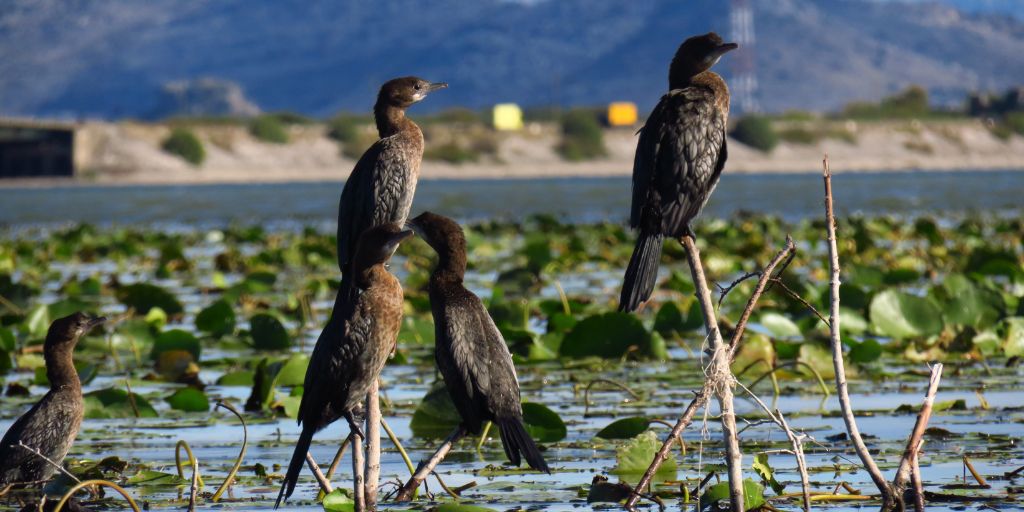
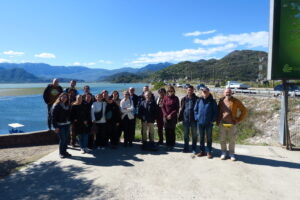
At the 15th meeting of the Bern Convention’s Group of Experts on Protected Areas and Ecological Networks – held from 7 to 8 October 2025 in Bar, Montenegro – participants reviewed progress towards establishing the Emerald Network of protected areas. As part of the programme, the group visited Lake Skadar, one of Montenegro’s key Emerald sites, acknowledging the government’s efforts to safeguard this unique ecosystem.
Branka Španiček, Andrey Ralev, CEE Bankwatch Network, Andrijana Mićanović Montenegrin Ecologists Society, Friedrich Wulf, ProNatura/Friends of the Earth Europe | 9 October 2025
Strong interest not enough
Yet despite acknowledging some progress, the expert group agreed on the urgent need to put more valuable sites under protection – seen as crucial for preventing the extinction of threatened species and habitats and meeting the objectives of the Convention’s strategic plan until 2030. For instance, the Balkan region in particular is home to many endemic species that occur nowhere else on the planet, including the Dalmatian minnow (Delminichthys adspersus), the Neretva nase (Chondrostoma knerii) and the Vardar streber (Zingel balcanicus).
At the meeting, several Balkan countries expressed strong interest in expanding the Emerald Network, but unfortunately no concrete deadlines were set for submitting new sites. Serbia has prepared a map and list of potential Emerald sites, but has yet to submit them to the Bern Convention. Montenegro has mapped nearly its entire territory, but biological data require analysis. And in Bosnia and Herzegovina, data availability remains low, with more research needed.
Since 2011, no additions to the Emerald Network have been made, primarily due to political and administrative obstacles, even though sufficient scientific data has long been available supporting the inclusion of new sites. In December 2022, a coalition of scientists and environmental organisations proposed a shadow list of 88 sites to be added to the Network.
Environmental harms unresolved
Regrettably, many existing and potential Emerald sites remain under severe threat from large infrastructure and mining projects, which are being prioritised over environmental protection and sustainable development.
This has resulted in cases of extensive degradation that remain largely unaddressed. Sites such as Komarnica Canyon and the Lower Piva River Canyon in Montenegro, Upper Neretva and Upper Drina in Bosnia and Herzegovina, and Golija in Serbia are all at risk from planned hydropower plants that would irreversibly damage landscapes and river ecosystems.
Dozens of mines are planned for pristine natural areas all over the region. The Serbian mountain range of Fruška Gora is exposed to uncontrolled logging, while other Serbian mountain ranges like Zlatibor and Kopaonik, along with coastal Emerald sites such as Velika Plaža and Buljarica in Montenegro, continue to face strong pressure from construction.
Designation must mean protection
These cases illustrate a broader concern that Emerald site designation currently provides little real protection, as short-term economic interests often prevail over human well-being, public benefits, long-term economic growth, innovation, conservation and sustainability.
Across the Western Balkans weak enforcement, competing development priorities, and insufficient institutional commitment continue to undermine biodiversity protection. The issues observed reflect systemic regional patterns that threaten to erase some of Europe’s last intact natural areas and habitats of global ecological importance.
The Bern Convention has therefore renewed its call for national governments, international institutions, and civil society organisations to intensify joint efforts to safeguard these irreplaceable ecosystems. Urgent action is needed to ensure that Emerald Network sites are not merely symbolic designations, but living, protected spaces where nature and local communities can thrive, embodying the commitment of all European states to promote conservation and the fight against biodiversity loss.
 |
 |
 |
 |
The project benefits from the support of the Donors Initiative For Mediterranean Freshwater Ecosystems.
This document was produced with the financial assistance of the Donors Initiative For Mediterranean Freshwater Ecosystems. The contents of this document are solely the liability of CEE Bankwatch Network and under no circumstances may be considered as a reflection of the Prince Albert II of Monaco Foundation or Donors Initiative For Mediterranean Freshwater Ecosystems’ position.
Never miss an update
We expose the risks of international public finance and bring critical updates from the ground – straight to your inbox.
Project: Emerald Network in the Western Balkans
Tags: biodiversity

