As the European Commission puts the final touches on a list of priority energy projects brimming with hydrogen infrastructure, both civil society and EU agencies are warning that a hydrogen expansion risks undermining the energy transition.
Ido Liven, Communications officer, CEE Bankwatch Network | 29 October 2025
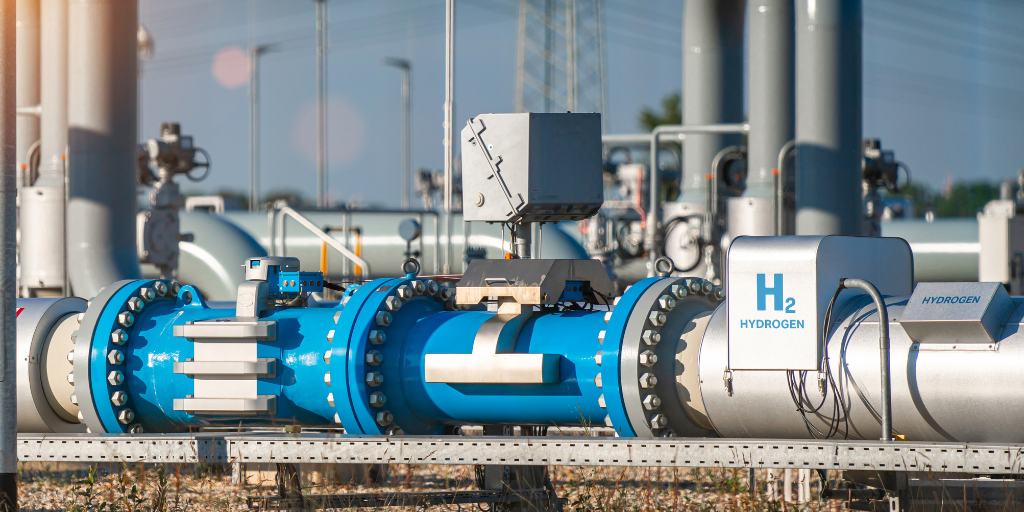
The European Commission is currently finalising a list of transboundary energy projects that Member States want to see fast-tracked. These projects are called Projects of Common Interest (PCI) and Projects of Mutual Interest (PMI), and energy infrastructure projects that win this lucrative title get benefits such expedited permitting and privileged access to EU subsidies.
The PCI/PMI list could have helped stimulate the energy transition had it not been captured by fossil gas interests and myopic government officials.
A leaked draft of the list has over a hundred hydrogen projects – twice as many as in the previous PCI list – including electrolysers, hydrogen storage facilities, hydrogen reception facilities and pipelines. Lots of pipelines. In fact, more than half of the hydrogen projects that were shortlisted are pipelines. And roughly 75 per cent of these pipelines are intended to pump fossil gas-based hydrogen, according to analysis by Food and Water Action Europe.
If these projects materialise, they will entrench Europe’s reliance on fossil gas and, hence, and undermine the EU’s decarbonisation effort.
And it’s not only climate activists sounding the alarm on the PCI process. The EU’s Agency for Cooperation of Energy Regulators (ACER) has an integral role in the PCI process, assessing the consistency and transparency in the screening procedures.
In a recent expert opinion, ACER questioned the credibility and robustness of this process and called for stronger transparency in the selection of energy infrastructure projects.
In the previous round, in 2023, ACER concluded it was unable to assess whether proper regulatory criteria, mainly the application of the TEN-E Regulation criteria, and the cost-benefit analysis across all projects. In its recent opinion, released in early October, the agency underlined that many of the concerns raised two years ago remain, particularly regarding the selection process, the identification of infrastructure needs and the methodologies used to evaluate projects.
ACER’s latest findings echo other expert voices. The European Scientific Advisory Board on Climate Change similarly concluded in 2023 that the Ten-Year Network Development Plan (TYNDP) process, which is the basis for PCI and PMI selection, failed to adequately reflect the transformational changes and rapid emission reductions required to meet the EU’s 2050 climate neutrality and resilience targets. These shortcomings extend across the entire TYNDP process — from scenario development and system needs assessment to the cost-benefit analysis and the subsequent PCI/PMI selection.
In the current cycle, Bankwatch and other civil society groups called out several particularly questionable hydrogen projects that had been submitted by Member States. Though some have since been dropped for various reasons, others still appeared in the latest draft of the list.
Perhaps one explanation for this is that 90 percent of the hydrogen projects on the draft list were proposed by members of ENTSO-G, the lobby group of the European gas transmission industry.
EU governments and the Commission, like the fossil energy industry, have been fueling the hydrogen hype as a decarbonisation panacea. Yet, a closer look reveals that these ambitions are, at best, dangerously out of touch with reality. At worst, hydrogen expansion, surely if enabled with EU public money, would either chain Europe to fossil gas imports for decades or end up birthing countless stranded assets.
A Bankwatch report from December 2024, showed that the hydrogen strategies of Poland, Romania and Hungary are little more than exercises in wishful thinking that overlook serious issues of cost and efficiency.
Whereas the EU – for instance, in the Clean Industrial Deal communication – supposedly focuses on ‘green’ hydrogen, that is, H2 produced with renewable energy sources, the three governments are entertaining all options across the ‘hydrogen rainbow’. And governments’ proposed projects for PCI status reveal that their actual priority is fossil hydrogen.
On Friday, October 24, the final version of the proposed list was approved by the High Level Decision Making Body. Ahead of its decision, Bankwatch and 33 other NGOs sent a joint letter calling for the exclusion of all hydrogen projects from the PCI/PMI list, except for electrolyser projects powered by additional renewables. The groups also called for a review of the TEN-E Regulation, which governs the PCI process, to assess whether the current framework truly aligns with the EU’s efforts to address the climate crisis and energy objectives.
By the end of November the European Commission is supposed to release the PCI/PMI list in the form of a delegated act. Later, the European Parliament and the Council have a two months period during which they can object to the delegated act as a whole.
There is no doubt that the EU should prioritise genuinely sustainable energy infrastructure. Electrification based on renewables has to be ramped up and Europe’s grids are in urgent need of upgrade. This is the EU’s actual common interest, not more pipe dreams.
Never miss an update
We expose the risks of international public finance and bring critical updates from the ground – straight to your inbox.

