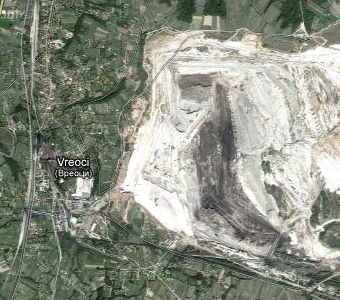
EBRD: Don’t open pandora’s box with lignite open cast mine in Serbia
Blog entry | 4 July, 2011Before making any decisions on the planned EUR 80 million loan for the Kolubara lignite mine project in Serbia, the European Bank for Reconstruction and Development’s Board of Directors should take note of the controversy the bank will get involved in. Not only are the climate impacts of lignite well known, but the project is also indirectly connected to the resettlement of nearby residents.
Read moreVideo: Polish perspectives on the EU presidency
Blog entry | 1 July, 2011Today Poland takes the helm of the EU presidency, but the country’s recent move to unilaterally block a 25 percent reduction target for EU carbon emissions has solidified expectations that Poland would hinder a more ambitious EU climate policy agenda.
Read morePolish Presidency highlights EU climate paradox
Press release | 1 July, 2011As Poland starts its EU Presidency today, serious doubts loom over its willingness to provide ambitious leadership on EU climate policies. Paradoxically, it is the EU’s own public banks which are sponsoring the country’s unfettered coal industry, the root cause of Polish climate scepticism.
Read moreCivil society groups in the Arab region say Western financial aid plan could divert the revolutions’ goals of economic and social justice
Press release | 27 June, 2011Arab civil society and international NGOs are opposing the EU and US backed financial aid package for post-revolutionary countries in their region on the grounds that it could damage the democratic transitions and divert the revolutions’ goals of economic and social justice.
Read more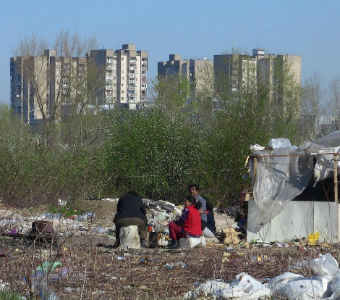
Deja-vu in Belgrade
Blog entry | 22 June, 2011Bankwatch’s coordinator in Serbia Zvezdan Kalmar finds himself in a situation similar to the one when campaigning on the Gazela bridge project: Roma families live in uncertainty about when they’ll be resettled to make way for road construction, all the while with little influence about how decisions are made.
Read moreLetter reiterating Vinci’s failure to respect Global Compact commitments on human rights
Publication | 20 June, 2011Bankwatch and the Movement to Defend Khimki Forest wrote to the Global Compact on 28th March 2011 regarding Vinci’s non-compliance with its Global Compact Commitments in relation to the first section of the Moscow – St. Petersburg motorway project. Our letter subsequently formed the basis of an enquiry to Vinci by the Business and Human Rights and Human Resource Centre, to which Vinci responded on 26th April 2011. Having carefully reviewed Vinci’s response, we still believe that the company is not in compliance with its Global Compact commitments.
Read moreBriefing: The EBRD and the Serbian coal sector
Publication | 20 June, 2011The European Bank for Reconstruction and Development and German development Bank KfW are considering supporting the development of a new field in the lignite open pit mine in the Kolubara mining complex in Serbia. Interestingly, the investment is categorised as “Environmental Improvement” on the EBRD’s website. But no matter how efficient future processing is, investments into perpetuating lignite production – the dirtiest of fossil fuels – instead of clean electricity generation alternatives rather resembles re-arranging the deck-chairs on the Titanic than serious ‘environmental improvement’.
Read morePublic finance for mining must bring more than a mirage of development benefits in Mongolian desert
Press release | 13 June, 2011Ulan Baatar, Mongolia – Civil society groups are demanding that investments from international financial institutions to extract resources in Mongolia’s Gobi Desert guarantee that livelihoods are protected for those living near the mines and profit windfalls are used as an impetus to social and economic development for the region.
Read more
Transparency improvements grind to a halt at the European Bank for Reconstruction and Development
Blog entry | 10 June, 2011Bankwatch research co-ordinator Pippa Gallop discusses the European Bank for Reconstruction and Development’s draft public information policy and how the bank has come to a standstill with improving its transparency rules.
Read more
