The hydropower plant Boskov Most, Macedonia
Publication | 6 May, 2014In November 2011 the European Bank for Reconstruction and Development approved a EUR 65 million credit to ELEM, a Macedonian state-owned company for the construction and management of the hydro power plant “Boskov Most”. Around 80% of the project falls into the territory of the “Mavrovo” National Park.
Read morePlanned contract for Plomin C coal plant most likely illegal state aid, says legal analysis
Press release | 5 May, 2014Zagreb, 05.05.2014 – A planned long-term power purchase agreement in which Croatian electricity company HEP will commit to buying at least 50% of electricity from the planned Plomin C power plant for 20-30 years will most likely be illegal under EU state aid rules, according to a new legal analysis by Hungary’s Environmental Management and Law Association (EMLA).
Read more
New online toolkit to help tackle the Kings of Coal in southeast Europe and Turkey
Blog entry | 5 May, 2014Coal investments are a dying breed in many countries, but some investors are still ready to try their luck in southeast Europe and Turkey. For campaigners who want to communicate with these actors Bankwatch has developed the user-friendly online toolkit Kings of Coal in three languages.
Read moreThe Shuakhevi hydropower plant project, Georgia
Publication | 2 May, 2014The European Bank for Reconstruction and Development has approved a loan of up to USD 86.5 million for Adjaristsqali Georgia LLC (AGL), a subsidiary of the Norwegian Clean Energy Invest for the construction of the 185 MW Shuakhevi hydropower plant (HPP). The project involves the construction of two dams and three diversion tunnels. Bankwatch member group Green Alternative has concerns about the possible negative impacts of the Shuakhevi HPP and the overall justification for the project, both explained in this briefing.
Read moreDariali hydropower plant project, Georgia
Publication | 2 May, 2014The Georgian company JSC Dariali Energy has requested a loan of up to USD 80 million from the EBRD for the 108 MW Dariali hydropower (HPP) project. The project involves the construction of a derivation-type HPP on the Tergi river in the municipality of Kazbegi. The project will divert water from the town of Stepatsminda towards the powerhouse close to the border with Russia, leaving eight kilometres of river without a sufficient amount of water.
Read moreStatement on Russia’s invasion of Ukraine and threat of war
Press release | 29 April, 2014CEE Bankwatch Network strongly condemns the Russian government’s military invasion and annexation of Crimea and Sebastopol. We hope that in the end the voices of those who have been demonstrating for peace in Moscow and elsewhere, in both Russia and Ukraine, will prevail. The European Union has already responded to the Crimean declaration of independence by announcing travel bans and bank account freezes for 48 individuals from Russia and Ukraine linked to the Crimean breakaway.
Read more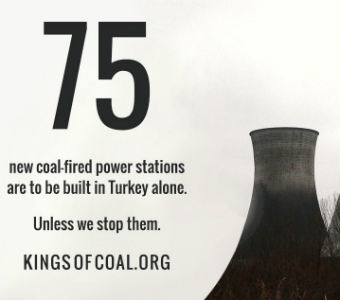
The case of a ‘secret’ coal plant in Turkey suggests a polluted future for the country
Blog entry | 28 April, 2014The SOCAR Refinery project and its ‘secret’ coal power plant show the magnitude of the problems that the mixture of business interests, coal and neglect of local health concerns may cause in Turkey.
Read more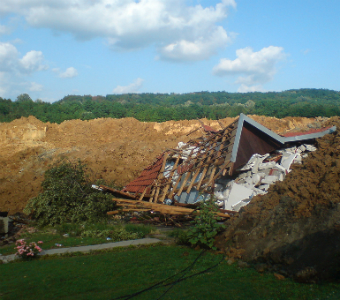
Serbian NGO presses criminal charges against Kolubara mining company over landslide
Blog entry | 16 April, 2014One year after a landslide destroyed thirteen houses the Kolubara mining company continues to dump waste in the same area without information from its investigations forthcoming. Locals fear that more landslides may occur. Bankwatch member group CEKOR has now increased pressure on the company and the EBRD.
Read moreUnlocking accountability: Complaint mechanisms at the international financial institutions
Publication | 15 April, 2014This leaflet provides guidance for people affected by the projects and programmes of international financial institutions. It explains in brief how the safeguard policies of the World Bank group, the EBRD and the EIB function and how to address the banks’ complaint mechanisms. The leaflet is also available in: Russian (pdf)
Read more
Threat posed by hydro to Mavrovo National Park under the spotlight at Skopje conference
Blog entry | 15 April, 2014On Thursday in Skopje, over 100 people attended the first public conference [mk] regarding the two planned hydropower plants in the Mavrovo National Park, one of the oldest and most valuable protected areas in the country. A petition to save the park that was launched one day earlier has already gathered over 13 000 signatures.
Read more
