EU Reform and Growth Facility not yet speeding up energy transition in Western Balkans – new report
Two years after it was announced, the European Union’s Reform and Growth Facility for the Western Balkans is struggling to deliver on its goals, according to a new analysis by CEE Bankwatch Network (1). The report reveals that a significant proportion of planned energy-related reforms are delayed and raises serious concerns about the suitability of performance-based models for the bulk of future EU funding in the region.
5 December 2025
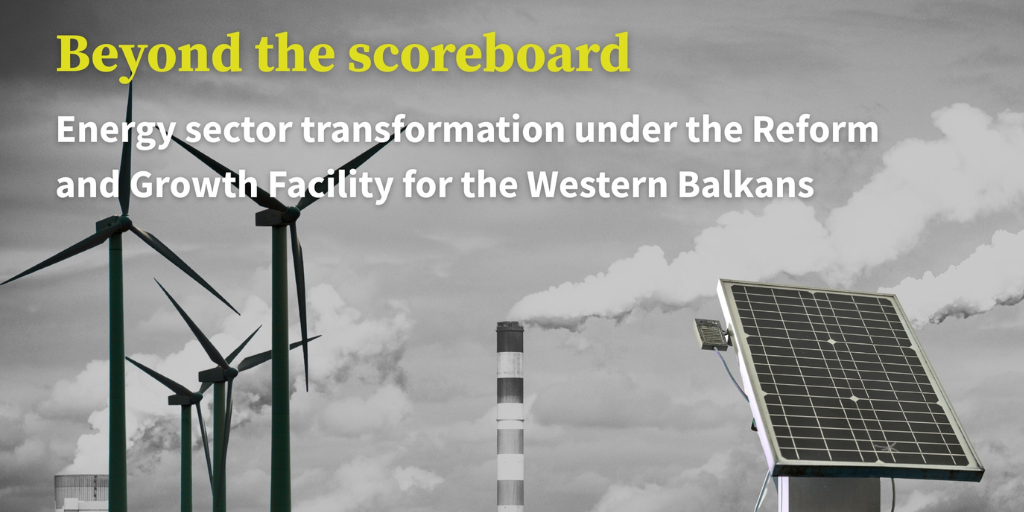
The financing instrument is part of the European Commission’s Growth Plan for the Western Balkans, intended – among others – to accelerate the enlargement process. To access the funds, the Western Balkan countries prepared Reform Agendas – action plans covering six policy areas, including energy and green transition. The process was plagued with issues from the very beginning – the preparation of the Reform Agendas was rushed, there were no public consultations, and the resulting documents lacked ambition and focus.
Bankwatch’s analysis finds that around one third of the 100 energy-related reforms in the Agendas are overdue obligations under the Energy Community Treaty that the countries should have implemented years ago. Now they could be awarded EUR 275 million for completing them.
The report questions the decision to reward the countries for their late reforms, but finds that even this is not having the desired effect.
With the complicated political situation in Serbia and Kosovo impeding progress in the energy sector, and Bosnia and Herzegovina only recently having completed its Reform Agenda, only Albania, Montenegro and North Macedonia are completing any reforms. Even they have completed only nine reforms, with a prospect of completing four or five more until the end of December 2025. This means that regionwide, less than 20 per cent of the 50 energy reforms due have been completed.
As the overall deadline for implementing the measures is August 2027, each delay reduces the likelihood of the countries being able to access the full sums available.
Davor Pehchevski, Balkan energy coordinator at Bankwatch – ‘These reforms will speed up the decarbonisation of the Western Balkan economies, mitigate the impacts of the Carbon Border Adjustment Mechanism, and provide benefits such as clean air, increased comfort and decentralised electricity generation for their citizens. However, the governments are obviously struggling to implement what is required of them. Whether it is lack of will or lack of capacity, the whole instrument is at risk of failing.’
Pippa Gallop, Southeast Europe energy policy officer at Bankwatch – ‘With such a tight timeline, the Commission needs to decide swiftly how to get the process on track. But our findings also raise fundamental questions, as the Commission’s proposal for the next EU budget relies almost entirely on similar funding instruments in the region. As the EU institutions decide on the budget in the coming months, they need to probe whether this makes sense. In any case, governments must not be rewarded for overdue legal obligations.’
Contacts
Davor Pehchevski, Balkan Energy Coordinator, CEE Bankwatch Network
davor.pehchevski@bankwatch.org, Tel: +389 71 264 087
Pippa Gallop, Southeast Europe Energy policy officer, CEE Bankwatch Network
pippa.gallop@bankwatch.org, Tel: +385 99 755 9787
Notes for editors
- The report is available here.
Never miss an update
We expose the risks of international public finance and bring critical updates from the ground – straight to your inbox.

