Gacko II, Bosnia and Herzegovina
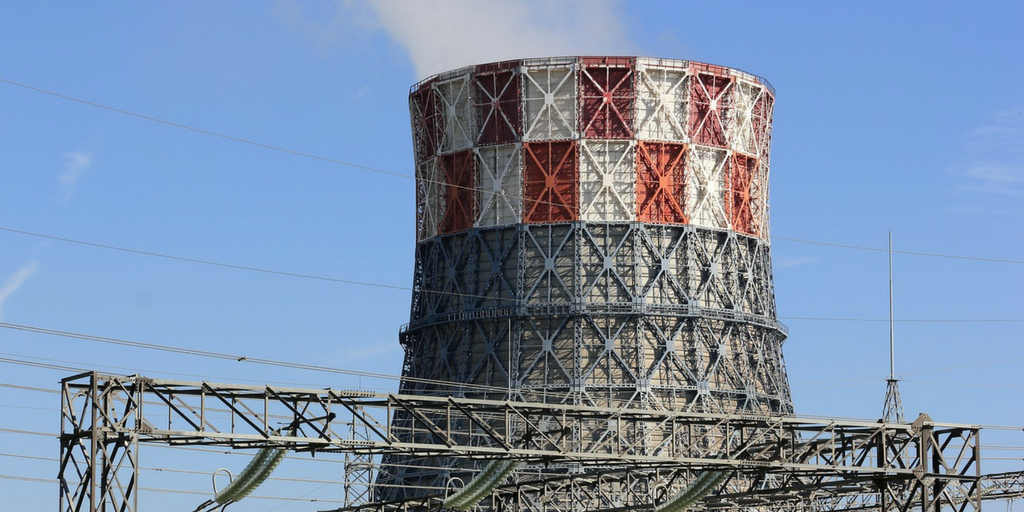
The Republika Srpska government plans to build a new 350 MW lignite power plant in Gacko, near the town’s existing plant. After years of stagnation, in August 2022 it was reported that the Czech company Witkowitz was considering investing in the project.
Stay informed
We closely follow international public finance and bring critical updates from the ground.
Background
In December 2017, a Memorandum of Understanding was signed between state-owned utility Elektroprivreda Republike Srpske, the China Machinery and Engineering Corporation (CMEC) and Emerging Markets Power Fund, to build a new 350 MW lignite power plant in Gacko, near the town’s existing plant. After years of stagnation, in August 2022 it was reported that the Czech company Witkowitz was considering investing in the project. However, it is still unclear where financing would come from.
As is too often the case in southeast Europe, there has been no convincing analysis proving that this plant is needed or that it would be the best way to provide Bosnia-Herzegovina’s energy supply in the coming years.
In April 2018 an analysis by economist Damir Miljević showed that fatal flaws in the input data make it highly likely the plant will generate losses. Three out of the main data inputs for the official feasibility study – the price of coal, electricity sales price, and the price of CO2 – are unrealistic:
- A realistic price of coal is mentioned in the study as just over EUR 18 per tonne – yet the amount used in the calculation is much lower, around EUR 13.3 per tonne.
- The Study foresees export of all the electricity generated, at a price of EUR 50 per MWh, except in exceptional cases when 30% would be sold on the domestic market at EUR 19.90 per MWh. There no evidence that the electricity would find a market in the long term and that it could be sold at this price. Moreover, the scenario including 30% of electricity being sold domestically is not even examined in the calculation – if it was it would show that the plant is unprofitable.
- A CO2 price of EUR 5 per tonne is mentioned in the text, but not included in the feasibility calculation. Including even this very low CO2 price in the calculation would take the plant into the realm of unprofitability.
The analysis concludes that although the official feasibility study for Gacko II claims it would generate profit of around EUR 23 million per year, with more realistic input data, a loss of minimum EUR 1.15 million per year looks more likely.
By now the study is also very much out of date, and the impacts of the EU’s planned Carbon Border Adjustment Mechanism would need to be taken into account for any electricity planned for export.
A March 2023 study by IEEFA found that Gacko II would become a stranded asset under several scenarios, even with generous assumptions that favour lignite generation, and that financing for the project is uncertain. The study also found that investing in onshore wind and utility-scale solar PV would offer safer and improving returns, quicker construction and cleaner power, as well as better access to financing.
In October 2023, an environmental impact assessment process began for the project, and a public consultation on the study was held in 2025. As of January 2026, it does not seem to have been approved.
Latest news
Kosova pritet të përfitojë rreth katër miliardë euro nëse heq dorë nga thëngjilli deri në vitin 2030
Bankwatch in the media | 12 January, 2022Kosova mund të fitojë afro katër miliardë euro nëse heq dorë nga përdorimi i thëngjillit deri në vitin 2030-të.
Read moreSa mund të përfitojë Kosova nëse heq dorë nga thëngjillI?
Bankwatch in the media | 12 January, 2022Sa më i shpejtë të jetë angazhimi i një vendi për heqjen e thëngjillit, aq më e lartë do të jetë hisja e tij në Fondin e Tranzicionit të …
Read moreΕνέργεια: Πώς οι χώρες των Δυτικών Βαλκανίων θα χρηματοδοτηθούν για την ενεργειακή τους μετάβαση
Bankwatch in the media | 12 January, 2022Ο τιτάνιος αγώνας και οι μεγάλες επενδύσεις για την απεξάρτηση από τα ορυκτά καύσιμα, τι προβλέπει η νέα έκθεση του Green Tank και το CEE …
Read moreRelated publications
Comply or Close: Eight years of deadly legal breaches by Western Balkan coal plants
Report | 23 June, 2026 | Download PDFThis report exposes the systematic, deadly breaches of air pollution limits by coal-fired power plants in the Western Balkans – eight years after new pollution standards entered force.
Electricity market integration needs environmental compliance: Joint civil society position paper on CBAM and the Western Balkans electricity sector
Report | 19 March, 2026 | Download PDFThe inclusion of electricity in the EU’s Carbon Border Adjustment Mechanism (CBAM) has raised questions about CBAM’s impacts on EU-Western Balkans market integration.
The weakest link: Towards a transmission grid that supports decarbonisation in the Western Balkans
Briefing | 26 February, 2026 | Download PDFFor the Western Balkan countries to speed up their energy transformation, it is crucial to improve their transmission grids.

