Kostolac B power plant (B1, B2), Serbia
The Kostolac B power plant, consisting of 2 units of 350 MW each, first started operating in 1987. In 2024, the plant delivered 4359 GWh of electricity to the grid, around 14 per cent of the country’s coal-based generation.
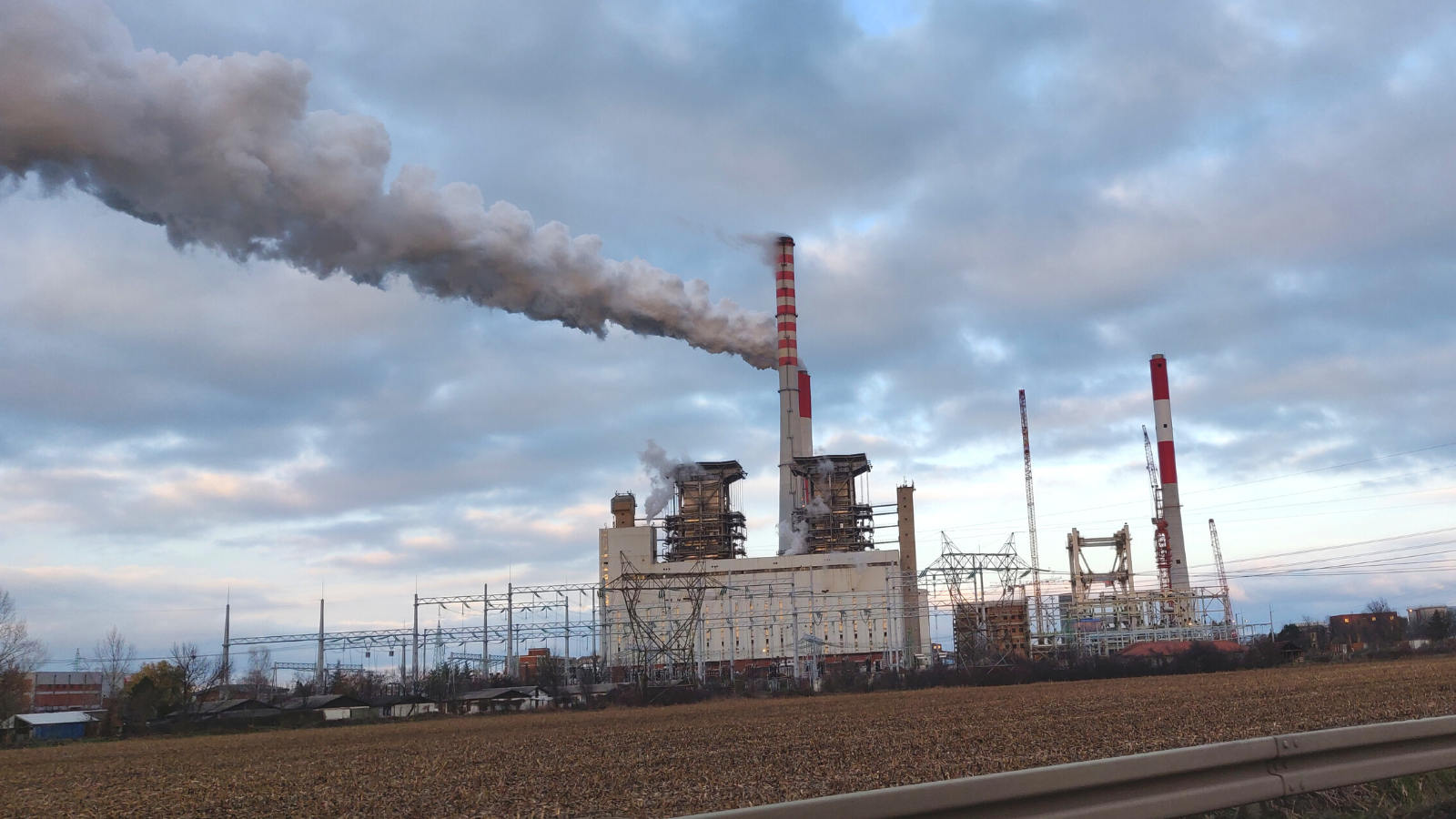
Photo: Kostolac B power plant, Serbia, Dec 2021.
Stay informed
We closely follow international public finance and bring critical updates from the ground.
Background
Serbia’s energy utility EPS secured financing for a complete overhaul of Kostolac B1 and B2 in December 2011. A USD 293 million loan was taken by the Government of Serbia on behalf of EPS from China Exim Bank to equip the two units with flue gas desulphurisation (de-SOx) technology and bring the plant’s SO2 emissions in line with the Large Combustion Plant Directive. This should have been done by the time the Directive entered into force in January 2018. The company contracted for the works was the China Machinery and Engineering Corporation (CMEC), the same company which has built a new unit at Kostolac B.
The works were finalised in July 2017, according to the Government. However, EPS’ 2018 Environmental Report shows that the application for a construction permit for the de-SOx installation was submitted only in November 2018 – more than a year after the opening ceremony for the facility. The permit was actually rejected twice – once in December 2018 and once in January 2019 – although the grounds on which rejections were issued by the Serbian authority are unknown.
The only explanation we received at the time from EPS and the Serbian Ministry of Energy and Mining was that the gypsum landfill was not ready for the de-SOx to start operation.
In December 2019, EPS launched a public consultation for an ‘updated’ Environmental Impact Assessment (EIA) report for the desulphurisation unit at Kostolac B, and public consultations were held in January 2020. The decision approving this new EIA for the already built de-SOx facility was made in August 2020.
In April 2021, the Ministry of Mining and Energy announced that in fact the facility has been operating in testing mode since October 2020 but annual emissions in 2020 were much higher than those in the previous year. Kostolac B released 95,097 tonnes of SO2 in 2020, which was enough to breach the national – not plant level – 2020 ceiling for this pollutant by 1.74 times.
In 2021, the plant finally started to decrease its sulphur dioxide emissions. It emitted 26,015 tonnes of SO2 – a significant reduction compared to 95,097 tonnes in 2020 – but still 1.6 times as much as allowed. However, in 2022 and 2023, its SO2 emissions increased, emitting nearly 5.8 times as much as allowed in 2023.
Since the period between the start of testing and requesting the operating permit for the desulphurisation equipment could not legally be longer than a year, EPS requested an operating permit in October 2021. The Ministry neither approved nor rejected this, so EPS made several more requests before finally obtaining the operating permit in January 2023.
In 2024, Kostolac B finally started to decrease its emissions, but it still emitted 2.3 times as much as allowed, or 15,218 tonnes.
Latest news
Energy Community: Bosnia-Herzegovina guarantee for Chinese loan for Tuzla 7 is state aid, breaks EU law
Press release | 5 March, 2019The Energy Community confirmed today that the loan guarantee the Federation of Bosnia-Herzegovina Parliament wants to approve for the EUR 614 million China Exim Bank loan for the Tuzla 7 coal power plant indeed constitutes state aid according to EU law. The Energy Community had commissioned an expert analysis to look into the issue following a complaint by Aarhus Resource Centre and Bankwatch.
Read moreBalkanske termoelektrane trovači vazduha
Bankwatch in the media | 27 February, 2019Evropska energetska zajednica, u saradnji sa koalicijom nevladinih organizacija koje se bore protiv zagađenja, predstavila je ovih dana analizu u kojoj se navodi kako 16 termoelektrana na ugalj u zemljama Zapadnog Balkana zagađuje region i Evropu više nego sve druge evropske elektrane na ugalj, kojih ima 250. Balkanske termoelektrane trovači vazduha
Read moreEnergetska zajednica ponovo je upozorila delegate u FBiH parlamentu
Bankwatch in the media | 26 February, 2019Energetska zajednica zahtijeva da Parlament Federacije BiH odgodi glasanje o nezakonitoj garanciji za blok 7 TE Tuzla Energetska zajednica ponovo je upozorila delegate u FBiH parlamentu
Read moreRelated publications
Comply or Close: Eight years of deadly legal breaches by Western Balkan coal plants
Report | 23 June, 2026 | Download PDFThis report exposes the systematic, deadly breaches of air pollution limits by coal-fired power plants in the Western Balkans – eight years after new pollution standards entered force.
Electricity market integration needs environmental compliance: Joint civil society position paper on CBAM and the Western Balkans electricity sector
Report | 19 March, 2026 | Download PDFThe inclusion of electricity in the EU’s Carbon Border Adjustment Mechanism (CBAM) has raised questions about CBAM’s impacts on EU-Western Balkans market integration.
The weakest link: Towards a transmission grid that supports decarbonisation in the Western Balkans
Briefing | 26 February, 2026 | Download PDFFor the Western Balkan countries to speed up their energy transformation, it is crucial to improve their transmission grids.

