Don’t look, don’t find:
Buk Bijela’s ‘environmental impact assessment’
3 March 2026
Story by Pippa Gallop, Southeast Europe Energy Policy Officer, CEE Bankwatch Network
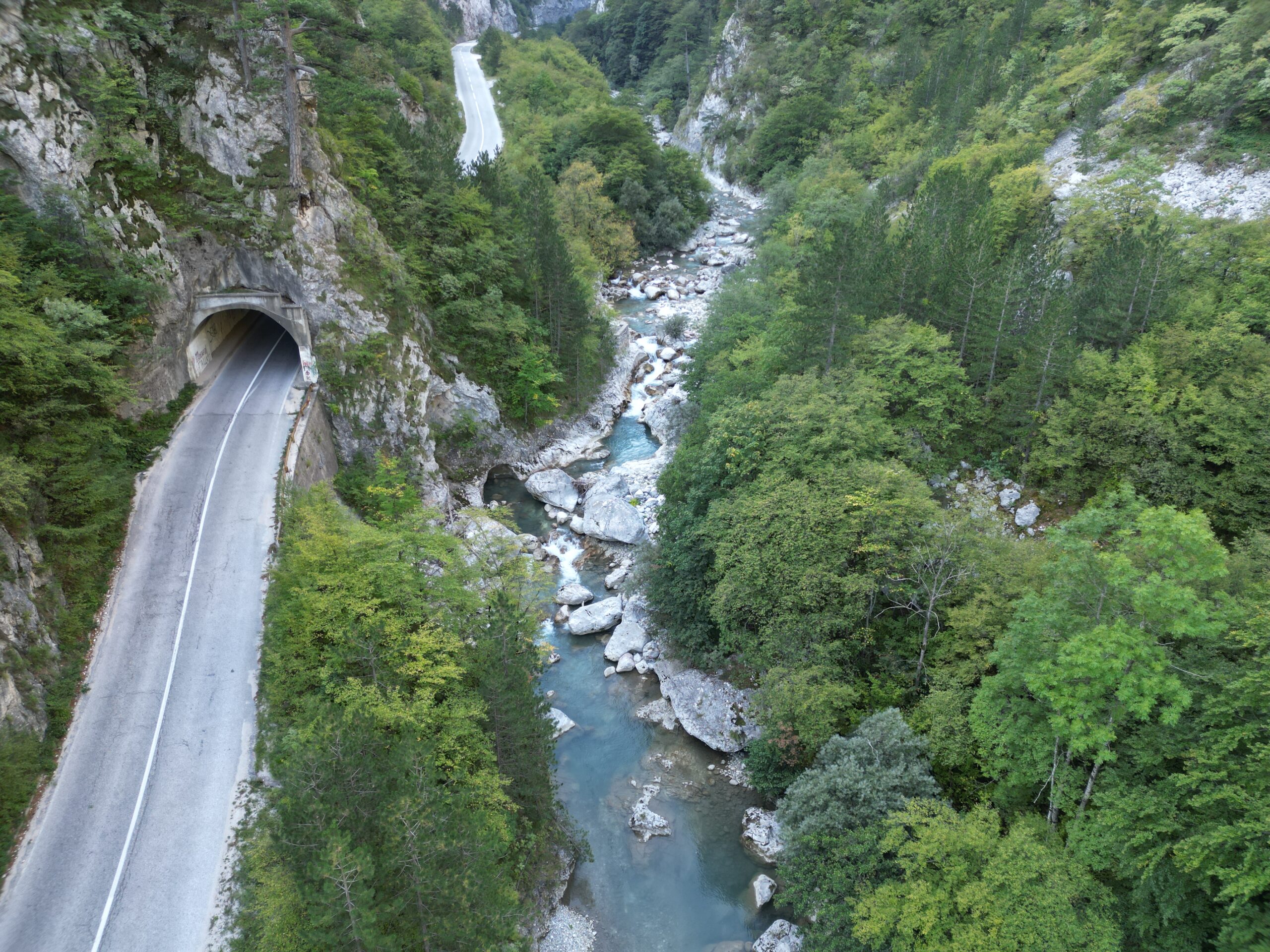
Bosnia and Herzegovina’s Upper Drina hydropower scheme would turn 30 kilometres of this iconic river into stagnant reservoirs and cut a key Danube Salmon habitat into pieces. Its largest dam would be the 118-megawatt Buk Bijela, first proposed in the 1970s but repeatedly scuppered due to its impact on Montenegro’s Tara Canyon. Now a new environmental assessment is out for public consultation, but it’s being more than economical with the truth.
The fact that a new environmental impact assessment (EIA) has been done for Buk Bijela is a success in itself. Were it not for the resistance by Montenegro’s civil society in the early 2000s and years of legal battles by civil society organisations like the Aarhus Center in Sarajevo and the Center for Environment, the dam might already be blocking the Drina by now.
But after cases at domestic courts, the Espoo Convention Implementation Committee, UNESCO and the Energy Community, in June 2024 representatives from Bosnia and Herzegovina agreed to undertake a new EIA in a process brokered by the Energy Community Secretariat.
Constitutional court battle unresolved
But that’s where the good news ends. In fact, the new EIA process should not have started yet, as a legal challenge on the concession for the project remains unresolved.
In 2020, 24 state-level parliamentarians submitted a request to Bosnia and Herzegovina’s Constitutional Court to examine the Republika Srpska government’s decisions to issue concessions for the Buk Bijela, Foča and Paunci hydropower plants on the river Drina. They claimed the decisions breached the constitution, as they prevented the state-level institutions from managing state property – in this case a river forming part of the country’s boundary.
In July 2021, the Constitutional Court made a partial decision, finding that a dispute regarding the decision by Republika Srpska to issue the concessions exists, and ordering the Bosnia and Herzegovina Commission for Concessions to resolve the matter within three months. However, due to issues regarding the Commission’s composition, the matter is still pending.
While the Republika Srpska authorities have brushed off the issue, potential contractors – Dongfang, Sinohydro and China Energy Engineering Corporation – are, rightly, taking it seriously. In 2023, local media reported their concern, and so far no contracts have been signed.
14 dams, not one
The scope of the project is also hotly disputed. The current EIA process covers the 118-megawatt Buk Bijela dam, powerhouse and 11 kilometre-long reservoir, which would be hugely damaging. But this is only a fraction of the actual project.
Buk Bijela would act as a peak load plant, meaning it would release varying amounts of water from the reservoir. This would cause high levels of biodiversity damage and could be hazardous for downstream communities as well.
To mitigate these impacts somewhat, the 44-megawatt Foča hydropower plant would be built downstream. Further down, the 43-megawatt Paunci plant would be built as well. Yet these are treated as three different projects, with different concessions, EIAs and permitting processes. Buk Bijela’s EIA insists they can all be built individually but fails to explain how the hydropeaking effects would be mitigated if Foča is not built.
And if three large dams turning the upper Drina into 30 kilometres of stagnant reservoirs wasn’t enough, eleven smaller ones are also planned to stop sediment filling up Buk Bijela’s reservoir too fast. These would include seven barriers on the river Sutjeska, one on the river Klobučarica, one on a tributary of the Jabušnica and one on a tributary of the Hrčavka. And 16 ‘consolidation belts’ would also mean significant further works in these rivers, changing their riverbeds and potentially damaging spawning grounds.
So while the EIA looks at the impacts of one dam being built, it should be looking at 14 dams and 16 more ‘consolidation belts’.
Fantasy solutions for the gymnastic Danube Salmon
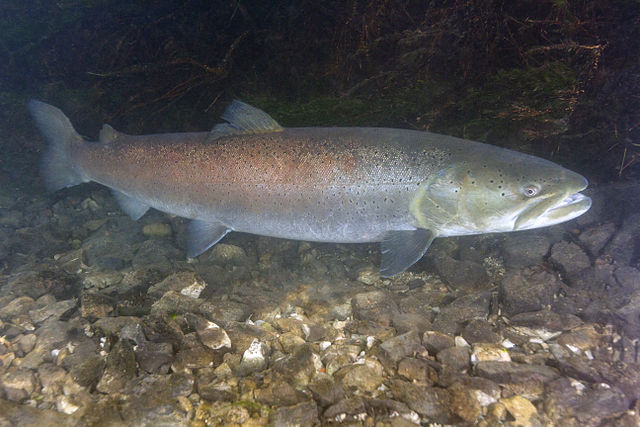
The upper Drina and its tributaries form the most important remaining habitat of the Danube Salmon (hucho hucho), classified as ‘vulnerable’ by the IUCN and protected under the Bern Convention. This majestic fish lives only in southeast Europe, and due to fragmentation of its habitats, the upper Drina and its tributaries the Lim and Tara form the longest remaining stretch (over 500 kilometres) where it can survive.
The Danube Salmon needs well-oxygenated water and clean gravel to lay its eggs, and can migrate 30 kilometres or more to find suitable locations. Drina tributaries like the Bistrica and Ćehotina have been found to be the main spawning grounds in this part of Bosnia and Herzegovina, and Buk Bijela, Foča and Paunci would cut straight through their main migration artery.
Buk Bijela’s EIA provides very little information about the current distribution and movements of the Danube Salmon, and tries to gloss over the fragmentation problem by offering fantasy solutions such as installing a fish pass – even though the freefall of the dam would be 23 metres and it’s never been proven that Danube Salmon could use such a construction.
It also prescribes restocking the river with fish bred in captivity, although scientists warn that stocking programmes often fail, and cause a series of negative effects ranging from the introduction of diseases to disruption of native gene pools and natural selection. It is also unclear who would do this, as the developer, entity-owned Elektroprivreda Republike Srpske (ERS), is an electricity utility, not a fish breeder, and a facility would have to be specially built.
In one place, the study even suggests that the Danube Salmon will be able to spawn upstream in the river Tara in Montenegro once their Bosnia and Herzegovina spawning grounds become out of bounds to them. This is the height of evidence-free thinking, as the study includes no data on whether the fast-flowing Tara – best known for rafting – contains any suitable locations for this.
Death by 1000 cuts
As if the 14 dams within the actual Upper Drina hydropower system are not enough, this part of the river basin is under attack from even more sides.
The EIA examines the cumulative impacts of Buk Bijela together with several existing and planned hydropower plants in various scenarios. These include:
- the existing Piva plant in Montenegro and Višegrad in Bosnia and Herzegovina,
- three plants on the river Bistrica near Foča, currently under construction,
- Foča and Paunci, even though they are in reality part of the same complex as Buk Bijela and should be examined as one project,
- Komarnica, planned in Montenegro upstream from Piva, and Kruševo, planned downstream from Piva,
- Ustikolina, planned downstream from Foča and Paunci, in the Federation of Bosnia and Herzegovina.
So apart from Buk Bijela, the EIA acknowledges two existing hydropower plants and eight planned or under construction in the vicinity. But none of the scenarios include the eleven anti-sediment dams on the Sutjeska and Klobučarica rivers, nor on the Jabušnica and Hrčavka’s tributaries. And in addition to these dams, 16 ‘consolidation belts’ are planned on the Hrčavka and Treskavac to stabilise the riverbeds, meaning yet more works, disturbance and damage.
And in addition to that, the EIA doesn’t include several dams planned on the river Ćehotina, both in Bosnia and Herzegovina and upstream in Montenegro, nor does it mention a small hydropower plant planned on the Bjelava.
In reality, not one river or stream in the area would remain untouched by all these plans, with devastating results.
‘Low to moderate’ impacts on birds and animals
Even taking into account only a small part of the actual damage that would be done by the Upper Drina hydropower scheme, even this study has to admit that some habitats would be destroyed by Buk Bijela, including those of the white-throated dipper and otter. But it assumes they can just move, as if there is an infinite amount of suitable habitat elsewhere for them.
Similarly with the Danube Salmon, the study acknowledges that habitat fragmentation can lead to genetic changes in the population, but due to the length of the remaining river stretches, claims there should be no genetic depletion in this case – easy to say if their migration routes are not known and the tens of other planned dams are not included in the analysis.
Overall, the study follows the well-worn technique of pretending the project is much smaller than it is, to downplay the damage. Although it partly admits the problem is bigger in the section on cumulative impacts, for the rest of the study it assumes only one dam will be built.
Even this one would be a disaster for the upper Drina. But the study follows many others before it with a fatal assumption that the affected species will simply adapt or move somewhere else. When will governments finally realise that this cannot happen indefinitely? The upper Drina is not replaceable, nor can it be fragmented into dozens of pieces with no negative impacts.
It’s been done before and we’ll have to do it again: Buk Bijela must be stopped.
Read more about the Buk Bijela project.
Photos: Ante Gugić except when written otherwise

