
Ukraine Reconstruction Campaigner
Email:Tel.:
Anna is Bankwatch’s Ukraine Reconstruction Campaigner, working on green reconstruction and environmental safeguards in Ukraine’s recovery. Her work focuses on alternative sources of energy for communities, energy resilience, and the alignment of Ukraine’s energy policy and public investment management system with EU standards. Originally from Kyiv, she holds an MSc in Environmental Sciences and Policy from Central European University and is based in Bratislava.
More from
In recent years the EBRD has increased its funding for hydropower plants (HPPs) of all sizes. While small hydropower plants are seen by many as a far safer technology than large hydropower plants, they too can cause interruptions in river flows, loss of biodiversity and the degradation of habitats, disruptions for migrating fish and a lack of water for irrigation and drinking in downstream communities. The updated EBRD Environmental and Social Policy should include safeguards to ensure that small HPPs are truly sustainable.
Kolubara B: a project of the previous century
May 10, 2013 | Read more
The energy sector in Serbia is reminiscent of the industrial development strategy of the former socialist Yugoslavia, with thousands of megawatts of power plant capacities planned, and much of that production to be wasted, while people remain unable to afford their energy bills. The EBRD is set to fund this scenario with its support for a lignite-based, inefficient economy in Serbia. This briefing outlines arguments against financing the Kolubara B lignite power plant in Serbia.
In 2009 the EBRD established the EUR 50 million facility to support the development of small-scale projects in all renewable energy generation sectors, including hydro, wind, biomass and solar power. While the initiative is welcomed and timely, the first projects to be developed were not transparent practices in the project development, jeopardising the whole notion of renewable energy as sustainable and socially-acceptable.
The briefing outlines arguments against the 600 MW Kosovo e Re project that involved the construction of a new coal plant close to Prishtina. The project has been heavily promoted by the World Bank and by the US, and now also looks set for funding by the European Bank for Reconstruction and Development. The bank’s new draft Country Strategy for Kosovo, which was approved by the EBRD’s Board of Directors on 1 May, clearly shows the bank’s interest in the project.
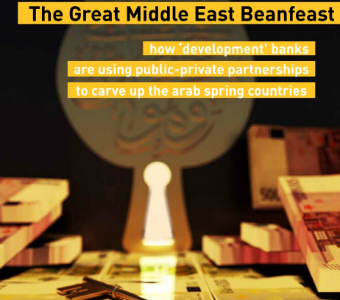
A new report takes a critical look at the engagement of European development banks in Egypt after the popular uprisings in the Middle East and North African region. This article appeared originally on the Counter Balance blog and has been shortened and slightly edited.

