Kolubara lignite mine, Serbia
ARCHIVED: Linked to a slew of controversies, the Kolubara lignite mine in Serbia will receive loans from European public banks. Corruption allegations, pollution at local level, irregularities in resettlement of local populations and not to forget a climate damaging approach to energy investments should be reason enough to find alternatives to lignite mining.
Stay informed
We closely follow international public finance and bring critical updates from the ground.
Key facts
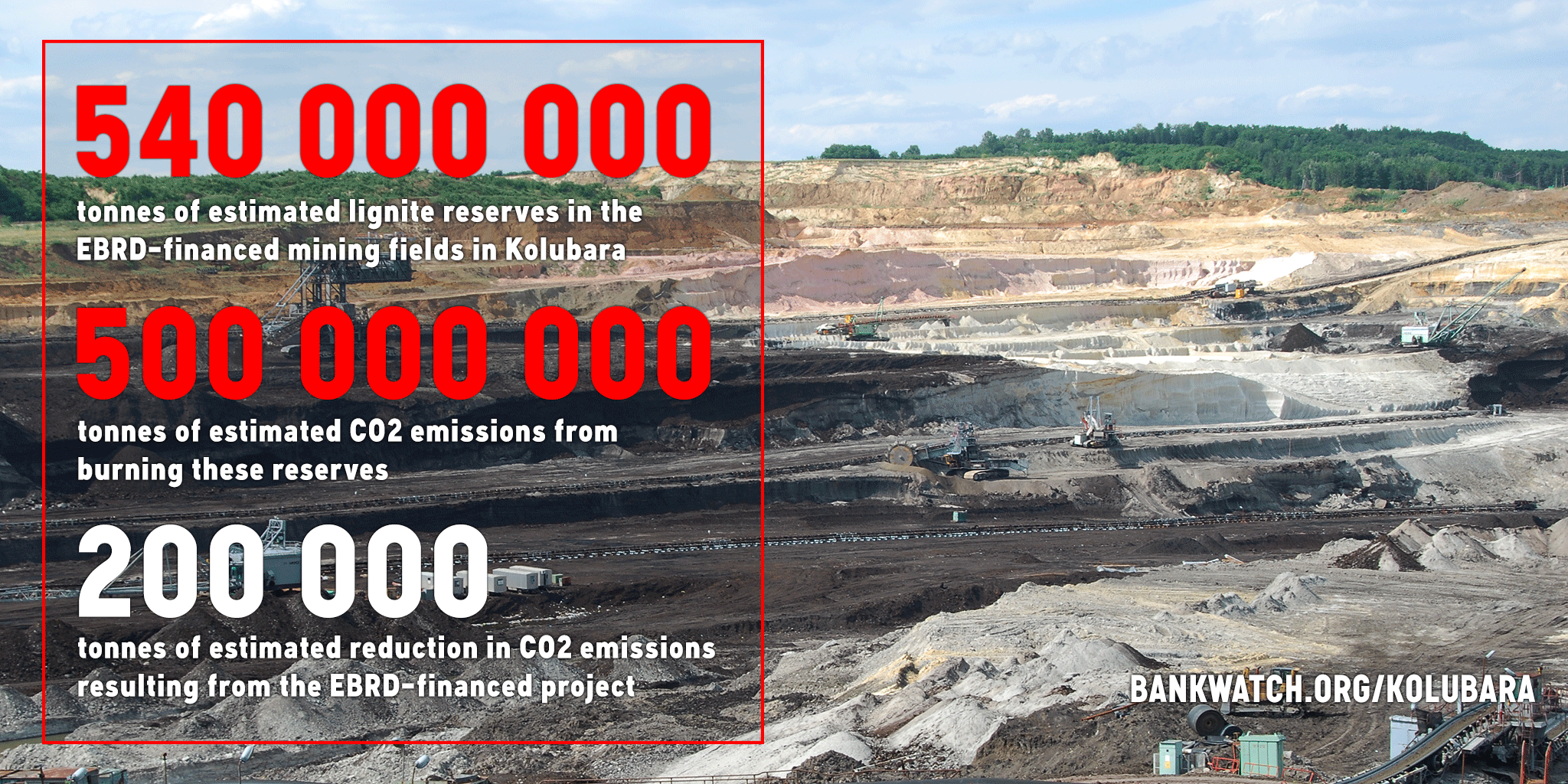
Planned investment: development of a new field in the lignite open pit mine in the Kolubara mining complex (located 60km south of Belgrade, spanning over 600 square kilometres)
Loans: European Bank for Reconstruction and Development (EBRD) – EUR 80 million; German development Bank KfW (EUR 65 million loan plus a grant of EUR 9 million).
Corruption: Several high ranking employees were under arrest in 2011. Allegations of corruption against the project promoter EPS are under official investigation.
Loan approved: The EBRD approved the loan without proper time to assess the loan’s impacts on the local population and the Serbian energy sector.
Background
The Serbian energy sector - dominated by lignite and the company EPS
The state-owned energy provider Elektroprivreda Srbije (EPS), owner of the Kolubara mining complex (via its daughter company RB Kolubara), dominates the Serbian energy sector:
- 69% of total electricity generation in Serbia is based on lignite (2010). 75% of the lignite production is coming from the Kolubara basin.
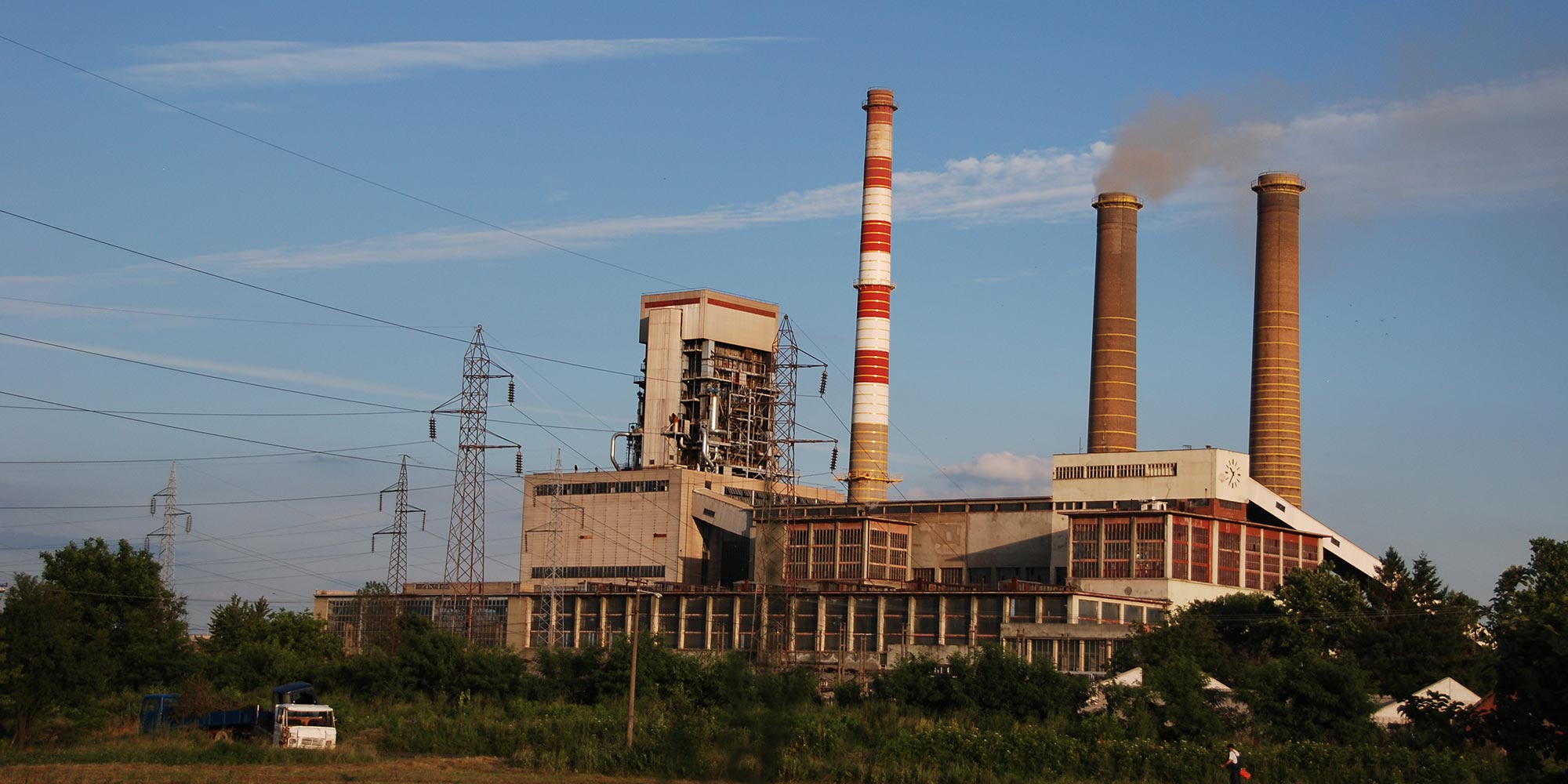
- Power plants within the Kolubara/Obrenovac thermal and mining complex produce more than 50 percent of Serbian electricity.
- The vertically integrated power company has a monopoly in lignite mining, electricity generation and distribution throughout the country.
The company becomes even more powerful through close personal connections between ruling political parties and the EPS management, allowing EPS to influence political decision on the Serbian energy sector to its own advantage. The Strategy for the development of the energy sector in Serbia until 2015 for instance clearly favours the interests of EPS and its coal business.
The additional support for EPS by European public banks does not only strengthen its dominant position in the Serbian energy sector. It also directly contributes to the country’s long-term reliance on lignite, one of the dirtiest and most climate damaging fossil fuels.
Future prospects for the energy sector
Lignite, mined in opencast pits, remains one of the main fuels for power generation within the long-term development plans of EPS.
According to official assessments the Kolubara basin has still 2.1 billion tonnes of lignite at disposal in its underground layers. Depending on the dynamics of exploration, Kolubara is expected to produce coal for another 50 years.
More controversies around Kolubara
Corruption in Kolubara
In October 2011, 16 current and former members of the EPS management, including directors of the Kolubara mining complex, were arrested for embezzlement.
The case was already under investigation when the EBRD approved the Kolubara loan and Bankwatch made sure the EBRD was informed. But instead of waiting for the results of the police investigation, the EBRD chose to rush into the loan.
Resettlement of local communities
Local communities are not against coal exploration as such but they are fighting the expropriation of properties and are tired of the pollution from decades of coal development in the Kolubara complex.
Vreoci
To further develop another mining field in Kolubara (field D), EPS tries to have 1180 households in the village of Vreoci resettled.
Villagers agreed with the Serbian government, that the village will be resettled collectively, but so far, no concrete plans have been established.
Instead, the Kolubara company offers insufficient compensation to households individually. Families are under pressure, live in unhealthy conditions and have been stigmatised in the Serbian media.
In summer 2011, authorities began to excavate bodies from the village’s cemetery, ignoring objections by inhabitants and the fact that no agreement had been reached.
The EBRD points out that their loan is not connected to field D. The bank therefore does not feel responsible to ensure a fair resettlement in Vreoci.
But the director of fields C and D has stated in an interview with our campaigner that those fields are technologically and geologically interconnected and that their conceptual separation would be artificial.
An AlJazeera reportage on the issues surrounding resettlement near the Kolubara mines.
(Not available in English)
Barosevac
Directly affected by the EBRD’s project is the Barosevac community. The EBRD’s project summary document (PSD) states:
Land acquisition and resettlement was substantially completed in 2008 in line with Serbian legal requirements.
That this isn’t the case proved a Bankwatch fact-finding mission to Kolubara in summer 2011:
- The Barosevac cemetery has not been removed – a precondition for opening the EBRD supported mining field C. None of the landowners have given their consent for the removal of graves.
- 21 Barosevac households so far not included in the resettlement plans are located only 50 meters from the open pit mine. Despite the heavy impacts from the mining operations (for instance cracks in their homes), these households are not to be resettled and will not receive compensation.
Is there a way forward?
The only proper solution to the range of problems with Kolubara would be not to finance the project at all. Instead, the EBRD could identify investments that counter the dominance of lignite in the Serbian energy sector and that help to increase the share of renewable energy in the country (currently only about 1%, excluding large hydro installations).
In case of the Kolubara investment, the least we ask of the EBRD is to make sure EPS respects the agreement with local communities, prepares a detailed plan for the collective resettlement of Vreoci and offers adequate compensation for families in Barosevac.
Read more:
EBRD support for Kolubara paving the “ash way” for development of Serbia
Briefing with more detailed recommendations
November 2011
Latest news
Serbia: key national plan risks cementing coal dependence
Blog entry | 29 June, 2021The Serbian government’s 15-year national Spatial Plan is so keen to stick to business-as-usual it is openly ignoring some of the country’s most pressing issues to justify plans for six new fossil fuel-based power plants. Belgrade also doesn’t appear to care much about what Serbia’s neighbour to the east thinks regarding the implications these disastrous plans would have for them.
Read moreHow Serbia’s addiction to coal could cloud its future in Europe
Bankwatch in the media | 21 November, 2020Source: How Serbia’s addiction to coal could cloud its future in Europe
Read moreThe loan that made sense until it didn’t
Blog entry | 11 May, 2018During the annual meetings of the European Bank for Reconstruction and Development, the bank is the subject of a complaint for policy violations via a EUR 200 million loan to Serbia’s state-owned energy utility: money earmarked to prepare the fossil fuels-based company for the realities of adhering to stricter EU legislation will instead enable it to extract and burn even more fossil fuels.
Read moreRelated publications
Western Balkan coal power plants polluted twice as much as those in the EU in 2019
Briefing | 12 July, 2021 | Download PDFThe non-compliance of Western Balkan coal power plants with the emission limits enshrined in the Energy Community Treaty is reflected in the region’s high sulphur dioxide (SO2), nitrogen oxides (NOX) and dust emissions. This briefing looks mainly at th
The great coal jobs fraud (2018 UPDATE)
Study | 28 June, 2018 |This study, an update of our November 2016 analysis, examines the claims and finds that in almost all cases, they are exaggerated. In fact, even the current levels of employment cannot be maintained and some companies such as Elektroprivreda Srbije and
Thermal and coking coal in the EBRD’s draft Mining Strategy
Policy comments | 20 November, 2017 | Download PDFIn its new draft mining strategy, the European Bank for Reconstruction and Development demonstrates that it is still ready to finance coal mining.

