Sostanj lignite thermal power plant unit 6, Slovenia
In 2016 a new 600 MW unit at the Šoštanj lignite power plant (TEŠ6) started commercial operations. It has turned out to be a financial disaster. Slovenia’s official coal exit date is 2033, but the plant will likely close much earlier.
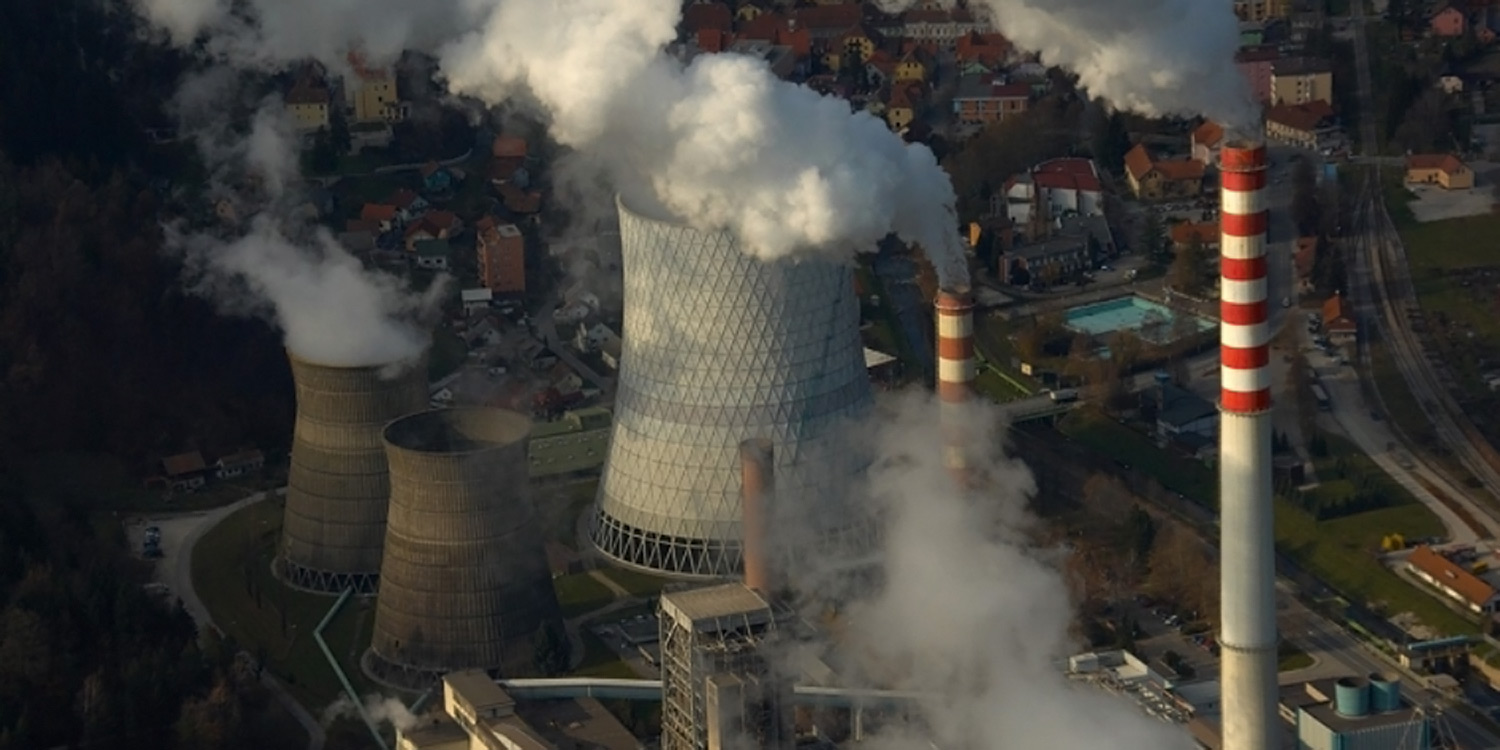
Source: www.focus.si
Stay informed
We closely follow international public finance and bring critical updates from the ground.
Key facts
Loans from the European Investment Bank (EUR 550 million) and the European Bank for Reconstruction and Development (EUR 100 million) added up to more than 50% of the overall costs of the investment.
In 2013, a senior EIB source described TEŠ6 as “one of those projects that tends to haunt you”.
Background
NGOs such as Focus raised numerous issues with the Slovene government and international financial institutions but they showed no sign of taking concerns into account until the project was considered a fait accompli.
The TEŠ power plant has made a loss every year since TEŠ6 started operating, except for 2021 when it received compensation from the corruption case related to the unit. In 2023, losses amounted to nearly EUR 46 million. In late 2024, the government stepped in to bail out the plant with EUR 405 million until 2027 so it can continue providing heating to the local community.
The project is a prime example of what happens when planning is based on vested interests instead of evidence and analysis.
High carbon lock-in
Initial concerns around TEŠ6 by civil society groups like Focus centred around its climate impact, since it emits around 3.4 million tonnes of CO2 per year. Its promoters argued that the new unit would increase efficiency and reduce CO2 emissions, but failed to understand the speed of greenhouse gases reductions needed.
Doubling of initial costs
Between 2006, when the project was announced, and 2014, the the costs more than doubled (pdf) from around EUR 600 million to EUR 1.43 billion.
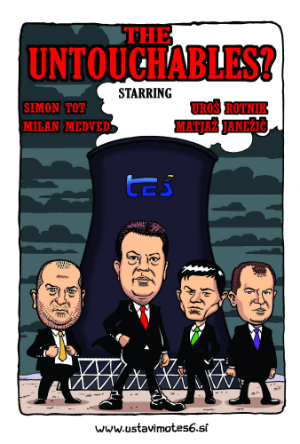
The reasons for this are numerous but include alleged fraud of EUR 284 million that benefitted lead equipment supplier Alstom.
Corruption charges
In a report from February 2012, the Slovenian Commission for the Prevention of Corruption issued serious warnings that:
the project [TES 6] is designed and implemented in a non-transparent manner, lacks supervision and is burdened with political and lobbying influences, and as a result there has been [and still is] a high risk of corruption and conflict of interest.
After a lengthy investigation, in October 2014 ten people were charged with fraud in relation to the project.
Read more:
The dirty French-Slovenian connection
Press release | February 23, 2012
EBRD freezes loan disbursements in Alstom’s coal project over corruption allegations. NGOs call on the EIB to follow suit
Press release | April 18, 2012
Dubious economic assumptions
An analysis (pdf) carried out by consultants CE Delft in 2011 showed that the projected price of coal was unrealistic and that the project would be very sensitive to electricity prices.
Both of these issues have turned out to be serious problems.
One of the assumptions behind the project and conditions for the state guarantee for the first EIB loan was that the price of lignite from Velenje mine would not exceed 2.25 EUR/GJ in 2015 or 2.73 EUR/GJ in 2054. However, in 2015 the production price was already EUR 3.09 per GJ, while the sales price was lower and thus not sustainable. In 2022, the plant even supplemented domestic coal with lignite imported from Indonesia, due to difficulties in mining sufficient amounts.
Unrealistic claims about employment
One of the key arguments for construction of TEŠ6 was that it would enable long-term employment in the plant and nearby Velenje mine, and that the Šaleška Valley would otherwise face a social disaster.
However in October 2014, the management of TEŠ announced its plans to optimize the functioning of TEŠ: reorganization of the company led to half – 226 of the current 452 – employees being laid off.
The number of workers at the mine has also declined, from 2,465 in 2014 to 1,941 in 2023.
Lessons to be learnt
TEŠ6 is a good example of what can happen when a project is pushed forward to satisfy narrow interests without adequate transparency, public participation or an examination of alternatives. Had the project been opened up to scrutiny at an earlier stage, the mistaken assumptions behind the project could have been discussed and serious mistakes avoided.
It also vividly illustrates the fact that lignite can no longer be considered cheap and shows that ignoring economic warning signs early on will most likely backfire later on.
Latest news
Slovene prosecutors file charges over coal plant corruption
Blog entry | 25 May, 2020The long-running saga of Slovenia’s overpriced Šoštanj 6 coal power plant took a dramatic turn last week when Slovene prosecutors filed charges including money laundering against 12 people and two companies. Meanwhile, in 2018, the Šoštanj power plant as a whole generated a net loss of EUR 58.5 million. Why are nearby Serbia and Bosnia-Herzegovina – both countries that are planning new coal plants – not learning any lessons?
Read moreDeceptive promises of new jobs in the coal sector don’t help workers, communities or the climate
Blog entry | 14 November, 2016Now is the time for southeast Europe to start an inclusive and just transition away from lignite, argues new Bankwatch research.
Read moreOverblown job promises in southeast Europe’s coal sector show the need for a just transition – report
Press release | 14 November, 2016Promises for new jobs in south-east Europe’s coal sector are exaggerated, a new Bankwatch report reveals. Hardly any coal operations across the region are economically viable, and as a result many coal workers, especially in the mines, are set to lose their jobs, even if the plans for countless new power plants materialise. Governments, coal workers and their wider communities need to work together towards a just transition.
Read moreRelated publications
Western Balkan coal power plants polluted twice as much as those in the EU in 2019
Briefing | 12 July, 2021 | Download PDFThe non-compliance of Western Balkan coal power plants with the emission limits enshrined in the Energy Community Treaty is reflected in the region’s high sulphur dioxide (SO2), nitrogen oxides (NOX) and dust emissions. This briefing looks mainly at th
The great coal jobs fraud (2018 UPDATE)
Study | 28 June, 2018 |This study, an update of our November 2016 analysis, examines the claims and finds that in almost all cases, they are exaggerated. In fact, even the current levels of employment cannot be maintained and some companies such as Elektroprivreda Srbije and
Why coal is not the way forward – facts versus myths
Briefing | 14 November, 2016 | Download PDFCoal is the single biggest contributor to global climate change. But governments and investors planning new coal capacities have a range of flimsy arguments why coal would be the best or the only alternative. This briefing busts a number of myths surrounding coal, such as “coal is cheap”, “alleviates poverty” or “coal is clean”.

