• Skip to primary navigation
  • Skip to main content
  • Skip to footer

Bankwatch

  • About us
    • Our vision
    • Who we are
    • 30 years of Bankwatch
    • Donors & finances
    • Get involved
  • What we do
    • Campaign areas
      • Beyond fossil fuels
      • Rights, democracy and development
      • Finance and biodiversity
      • Funding the energy transformation
      • Cities for People
    • Institutions we monitor
      • European Bank for Reconstruction and Development
      • European Investment Bank
      • Asian Infrastructure Investment Bank
      • Asian Development Bank (ADB)
      • EU funds
    • Our projects
    • Success stories
  • Publications
  • News
    • Blog posts
    • Press releases
    • Stories
    • Podcast
    • Us in the media
    • Videos

Home > Archives for Timeline Stories

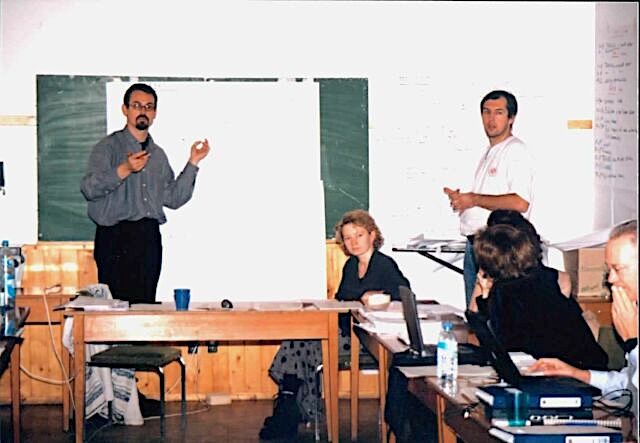
In March, Bankwatch held a regional meeting in Lviv, Ukraine, to address the need for internal reforms following a period of steady growth. 

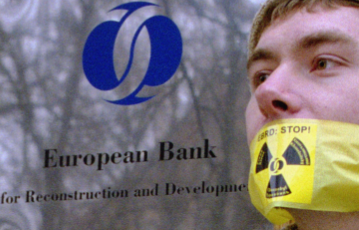
That year, the EBRD celebrated its tenth anniversary. Bankwatch marked the occasion with the publication of ‘A Decade of Misinformation and Secrecy’, a critical review of the EBRD’s policies and transparency record. 

In June, a World Bank-focused training was held in Belarus and, in July, Bankwatch participated in international climate negotiations at the Conference of the Parties to the Kyoto Protocol in Bonn. 

In October, a strategy meeting was held in Łopuszna, Poland, followed by a training session in Romania in November. Bankwatch also launched several new tools, including a training CD, a citizens’ guide to the EBRD, and an updated website to support public engagement. 
https://bankwatch.org/cool_timeline/153732

In March and April, Bankwatch took on the role of secretariat for the World Bank’s Europe and Central Asia non-governmental organisation assembly, held in Vilnius. Our responsibilities included promoting the event among civil society groups across the region, facilitating the gathering itself, and acting as a liaison between the participating organisations and the World Bank. 

In May, Bankwatch organised a training session in Baku for non-governmental organisations from Azerbaijan and Georgia, with a focus on strengthening regional capacity and campaign coordination. 

Ahead of the EBRD’s Annual Meeting in Riga, also in May, Bankwatch undertook a lobbying tour across several key European countries, including Germany, Sweden, Norway, and France, targeting decision makers in an effort to influence outcomes related to the controversial K2–R4 nuclear project. 

Immediately following the Annual Meeting, we held another internal meeting in Tartu, providing an opportunity for reflection and strategic planning. 

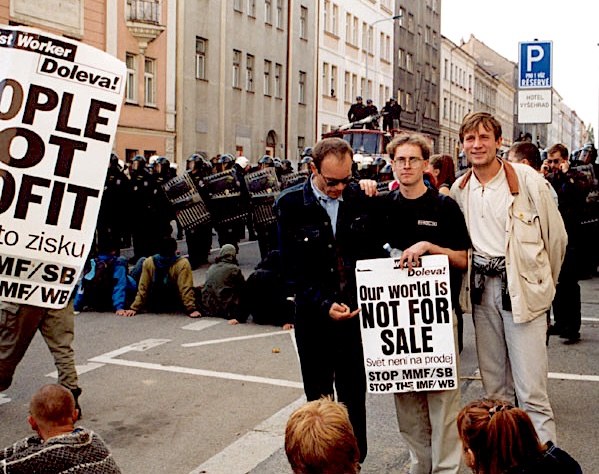
Later in the year, in September, the World Bank and International Monetary Fund held their joint meetings in Prague. On this occasion, the President of the World Bank announced a review of the institution’s policies on fossil-fuel financing – an important development for our climate-focused advocacy efforts. 

https://bankwatch.org/cool_timeline/153731

By 1999, the EU was actively taking steps toward addressing climate change and reducing emissions. While the formal launch of the European Climate Change Programme occurred in 2000 as the EU’s central instrument for this purpose and to ensure compliance with Kyoto targets, the groundwork and policy discussions were well underway. 

The year was also notable for the release of our first report highlighting the secretive nature of the EIB. This publication marked the beginning of a long and successful campaign for greater transparency and public oversight of this major public financial institution. 

In March, a significant meeting was held in the Romanian spa town of Băile Herculane, which saw the relationship between Friends of the Earth Europe and Bankwatch become more formal, reflecting the fact that approximately half of Bankwatch’s member groups were also affiliated with Friends of the Earth. 

In April, the EBRD Annual Meeting took place in London, where Bankwatch representatives held meetings with the EBRD President and Vice-President. Despite their support for the K2–R4 project, these discussions were crucial for raising our concerns about the EBRD’s accessibility to the public and its information disclosure policies and practices.  

Around this time, Bankwatch also launched the first issues of Bankwatch Mail. Topics covered included critiques of the EBRD’s strategic direction, the rush for Caspian oil, as well as environmental issues surrounding the Kumtor gold mine, the K2–R4 nuclear project, and the Nuclear Safety Account. 

https://bankwatch.org/cool_timeline/153729

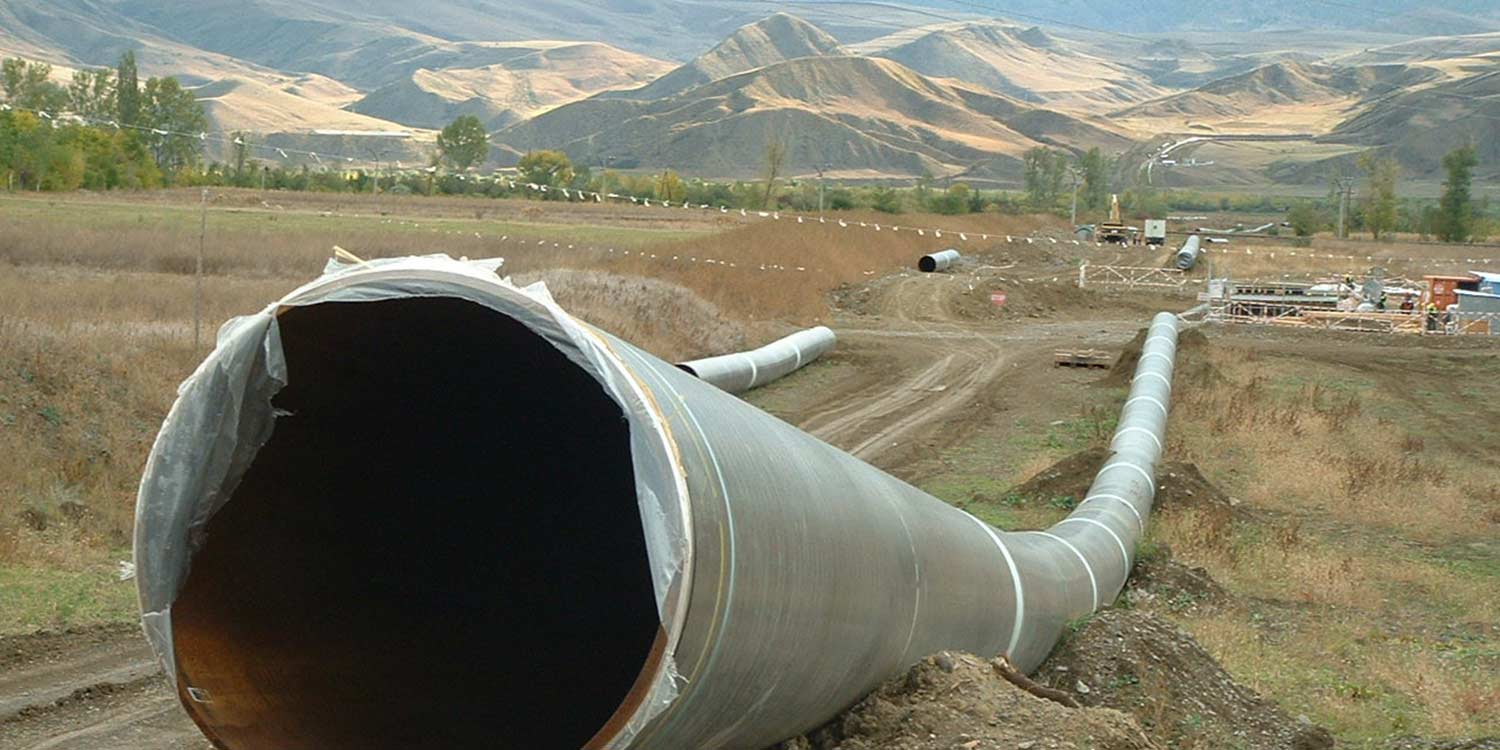
Piping for the BTC pipeline section in Azerbaijan.

In January, during a meeting in the Slovakian city of Trenčín, Bankwatch reached a key milestone in its development: the decision to become an independent legal entity. After an initially unsuccessful attempt to register the organisation in Poland, attention turned to the Czech Republic, where registration was successfully completed in November. 

In March, Bankwatch launched its first website, hosted on a server at Tartu University in Estonia, a significant step towards increasing the organisation’s visibility and outreach. 

In April, a meeting of the Stability Pact for South Eastern Europe was held in Bankya, Bulgaria. The aim was to bring together civil society organisations from across the Balkans and explore the creation of a network of south-eastern European non-governmental organisations. 

The year also saw the launch of Bankwatch’s campaign against the Baku–Tbilisi–Ceyhan oil pipeline, a major infrastructure project with serious environmental and social implications. 

In May, the EBRD held its Annual Meeting in Kyiv. Participation by local non-governmental organisations was heavily restricted, prompting Bankwatch to organise a parallel reception outside the official venue. This event provided an alternative space for dialogue and was attended by both EBRD representatives and local activists. 

In June, the Aarhus Convention was signed, establishing a legal guarantee for public access to environmental information, participation in decision-making processes, and access to justice in environmental matters. 

https://bankwatch.org/cool_timeline/153728

In 1997, the European Union (EU) began to prioritise climate change as a core environmental issue, building on the publication of the EU’s Green Paper the previous year, which introduced concepts for a future energy policy. 

In January, an internal meeting was held in the Hungarian city of Göd. The primary focus of the meeting was to launch a campaign against the completion of the K2 –R4 project in Ukraine.  

As the organisation grew, questions about the role of the network inevitably became a central theme. A key discussion revolved around whether Bankwatch should operate as a service-oriented organisation or as one focused on direct action. This question was largely answered through hands-on experience, as our network evolved into a multifunctional organisation providing services, information, and training to other groups, while also spearheading its own campaigns. 

In May, during the EBRD Annual Meeting in London, Bankwatch’s top priority was to raise concerns about the K2–R4 project. Later in June, at another internal meeting held in the Polish town of Ustroń, the debate continued over the role Bankwatch should play – should the focus be more on campaigning or on policy-making? 

By the end of year, the decision was made to organise a series of roundtable discussions at the national level, focusing on the EIB. The first of these events took place in Brussels, with the participation of policymakers, non-governmental organisations, the press, and academics. These roundtables proved to be a valuable tool in raising awareness of EIB policies, with many more held in other countries over the following years.  

The year also marked a major landmark for the network with the publication of our first report – ‘Blueprints for sustainable transportation in central and eastern Europe’.  

To round off the year, the Kyoto Protocol was adopted in December, with the EU taking a leading role in advocating for legally binding emissions targets. 

https://bankwatch.org/cool_timeline/153727

In January, during a meeting in Kaunas, Lithuania, the idea was proposed that Bankwatch should become an independent entity, rather than continue being hosted by Friends of the Earth Poland. 

In April, at the European Bank for Reconstruction and Development (EBRD) Annual Meeting in Sofia, Bankwatch made its first prominent appearance as a player at an international banking conference. The event also marked the first face-to-face meeting between Bankwatch and the EBRD President. 

Later in the year, the EBRD adopted its Environmental Procedures, which established key measures such as environmental appraisals for all projects along with principles for public consultations. Bankwatch also became actively involved in the EBRD’s controversial K2–R4 project aimed at constructing two nuclear reactors in Ukraine. 

In June, we held a meeting in the Polish village of Osieczany – a gathering that played a key role in shifting Bankwatch’s strategic focus. Initially centred on transport projects, the network began to prioritise energy issues. 

September marked the first face-to-face meeting with the Vice-President of the European Investment Bank (EIB) in Luxembourg. That same month, the first Bankwatch email list was also created. 

https://bankwatch.org/cool_timeline/153726

« Previous Page
Next Page »

Footer

CEE Bankwatch Network gratefully acknowledges EU funding support.

The content of this website is the sole responsibility of CEE Bankwatch Network and can under no circumstances be regarded as reflecting the position of the European Union.

Unless otherwise noted, the content on this website is licensed under a Creative Commons BY-SA 4.0 License

Your personal data collected on the website is governed by the present Privacy Policy.

Get in touch with us

  • Bluesky
  • Email
  • Facebook
  • Instagram
  • LinkedIn
  • RSS
  • YouTube