• Skip to primary navigation
  • Skip to main content
  • Skip to footer

Bankwatch

  • About us
    • Our vision
    • Who we are
    • 30 years of Bankwatch
    • Donors & finances
    • Get involved
  • What we do
    • Campaign areas
      • Beyond fossil fuels
      • Rights, democracy and development
      • Finance and biodiversity
      • Funding the energy transformation
      • Cities for People
    • Institutions we monitor
      • European Bank for Reconstruction and Development
      • European Investment Bank
      • Asian Infrastructure Investment Bank
      • Asian Development Bank (ADB)
      • EU funds
    • Our projects
    • Success stories
  • Publications
  • News
    • Blog posts
    • Press releases
    • Stories
    • Podcast
    • Us in the media
    • Videos

Home > Archives for Timeline Stories

In April, Bankwatch published a report on the impact of EU funding plans on climate change, warning that the EUR 177 billion in EU funds earmarked for new Member States risked undermining the EU’s own climate commitments. 

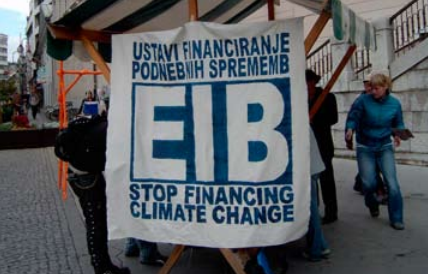
Later in the year, we helped to launch Counter Balance, a new Europe-wide coalition aimed at holding the EIB accountable for its environmental and social impacts. Alongside Counter Balance, Bankwatch joined protests at the EIB’s annual forum in Ljubljana, targeting the planned financing of the controversial Šoštanj 6 lignite power plant. 

We also organised a fact-finding mission to Vlora, Albania, where construction of an oil and gas power plant had begun with funding from the EIB, the EBRD and the World Bank – despite ongoing concerns, the plant remains non-operational to this day. 

In Poland, we marked a major campaign success by helping to protect the Rospuda Valley – a Natura 2000 site – from being damaged by the proposed Via Baltica expressway route. 

Finally, in December, the EU signed the Lisbon Treaty, formally introducing sustainable development, including environmental and social dimensions, as a central EU objective. 

The EU also agreed on the targets for its proposed Climate and Energy Package, committing to a 20 per cent reduction in greenhouse gas emissions, a 20 per cent share of renewable energy, and a 20 per cent improvement in energy efficiency by 2020. 
https://bankwatch.org/cool_timeline/153753

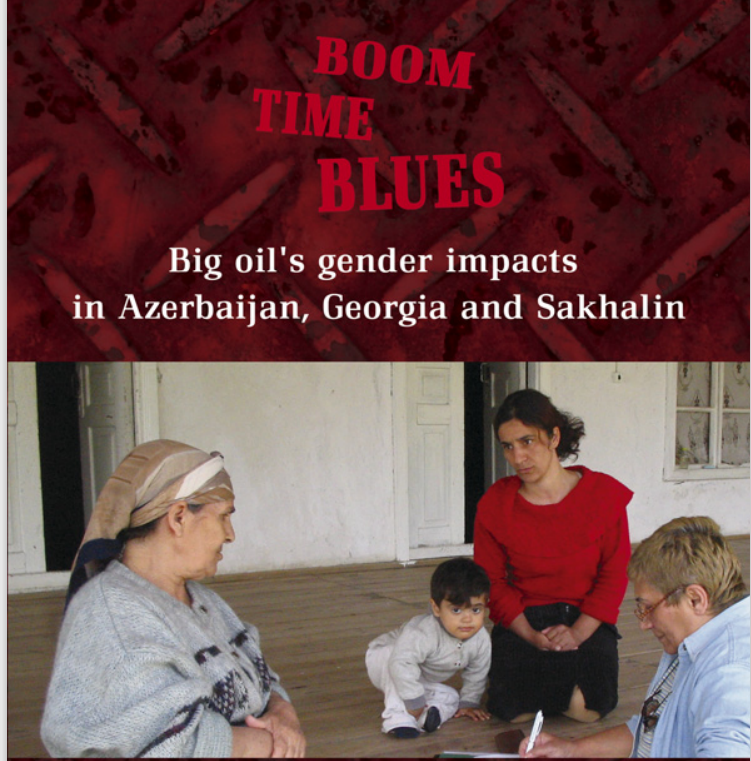
In September, Bankwatch published its widely acclaimed ‘Boom Times Blues’ report, which examined the gender impact of oil projects in Sakhalin (Russia), Georgia, and Azerbaijan. The findings prompted the EBRD to develop its first Gender Action Plan. 

In the same month, Bankwatch also released the Citizen’s Guide to European Complaint Mechanisms, enabling the public to make more effective use of EU grievance procedures. 

In October, the EU launched its Energy Efficiency Action Plan, setting out policies for reducing energy use across the Union. 

In a notable success, Bankwatch played a part in blocking a Canadian-backed proposal to extract copper and gold using cyanide technology in Bulgaria. 

https://bankwatch.org/cool_timeline/153747

In January 2005, the EU launched the first phase of the Emissions Trading System (EU ETS), establishing the world’s largest carbon market. With the aim of reducing greenhouse-gas emissions, the system set a cap on total emissions by permitting the trading of emissions allowances among companies. 

On 16 February, the Kyoto Protocol came into force, marking a significant milestone in international climate policy. The EU played a leading role in its implementation, committing to legally binding emission reduction targets. 

That year, Bankwatch celebrated its tenth anniversary and joined Green 10, a coalition of the largest environmental organisations in Europe. 

After two years of campaigning, Bankwatch scored a major success when EU support was withdrawn from a hazardous waste incinerator project in Stara Zagora, Bulgaria.  

Finally, the EIB organised its first-ever public consultation process for a policy review, responding to our sustained advocacy efforts. 

https://bankwatch.org/cool_timeline/153746

In 2004, alongside the significant expansion of the EU to 25 members with the addition of 10 new countries, primarily from central and eastern Europe, the Union took further steps to promote renewable energy and reduce its dependence on fossil fuels.  

In April, during the EBRD Annual Meeting in London, Bankwatch raised concerns about the environmental implications of the second phase of the large-scale oil and gas development on Sakhalin Island in Russia. 

In the same month, Manana Kochladze, Bankwatch’s Caucasus coordinator, received the Goldman Environmental Prize for her work on the Baku–Tbilisi–Ceyhan (BTC) pipeline. The award recognised her success in exposing environmental and social violations, leading to crucial project concessions and subsequent official acknowledgements of the project’s failings. 

https://bankwatch.org/cool_timeline/153741

In March, acknowledging the importance of sustainability for long-term economic stability, the EU introduced the Lisbon Strategy – a 10-year action and development plan for the EU economy.  

This was followed in November with the publication of the EU’s ‘Green Paper – Towards a European Strategy for the Security of Energy Supply’, which explored pathways to a sustainable energy future. 

In April, Bankwatch held its annual meeting in Šlovice, Czech Republic. Later in December, the World Bank’s Extractive Industry Review published its final report, with a panel of experts recommending that the World Bank cease investments in fossil fuels. 

https://bankwatch.org/cool_timeline/153738

In April, the EU adopted its first renewable energy action plan to boost the development and market share of renewable energy. That same month, Bankwatch held a strategy meeting in Birštonas, Lithuania, focused on the Baku–Tbilisi–Ceyhan pipeline, engaging in a detailed discussion on how to approach the case. 

The EBRD Annual Meeting in Bucharest was the most successful of all attended, with the EBRD showing a greater openness to Bankwatch’s demands. 

In June, Bankwatch played an active role in the World Bank’s Europe and Central Asia non-governmental organisation assembly in Belgrade. Additionally, thanks in part to Bankwatch’s efforts, the World Bank cancelled its loan for the controversial Roșia Montană gold mine project in Romania. 

https://bankwatch.org/cool_timeline/153733

« Previous Page
Next Page »

Footer

CEE Bankwatch Network gratefully acknowledges EU funding support.

The content of this website is the sole responsibility of CEE Bankwatch Network and can under no circumstances be regarded as reflecting the position of the European Union.

Unless otherwise noted, the content on this website is licensed under a Creative Commons BY-SA 4.0 License

Your personal data collected on the website is governed by the present Privacy Policy.

Get in touch with us

  • Bluesky
  • Email
  • Facebook
  • Instagram
  • LinkedIn
  • RSS
  • YouTube