European Fund for Strategic Investments (EFSI)
Tasked with stimulating the European economy, the new investment fund may just become an extention of the European Investment Bank’s normal lending with very limited additional (green) finance.
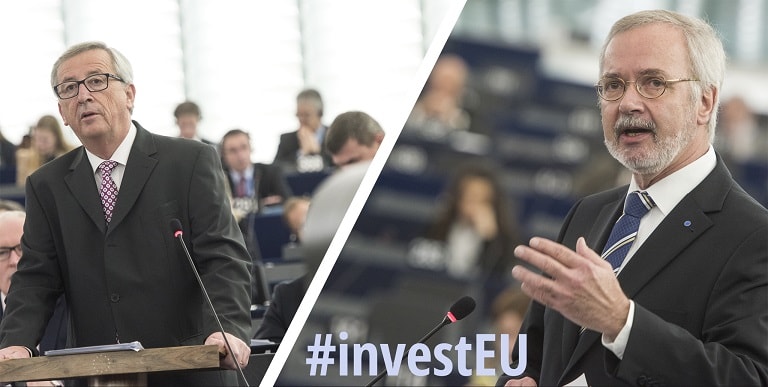
Photographs: © European Union 2014 - European Parliament" (CC BY-NC-ND 2.0 - https://flic.kr/p/pVaFbL & https://flic.kr/p/pfXPUT )
Stay informed
We closely follow international public finance and bring critical updates from the ground.
Background
Facing protracted economic downturn in Europe, the European Commission in 2015 launched with great fanfare an Investment Plan for Europe with its financial arm, the European Fund for Strategic Investments (EFSI).
Under the auspices of the European Investment Bank, the EFSI aims to stimulate the European economy and mobilise private investments by providing funding for projects with a higher risk profile than ordinary EIB activities.
Yet although the fund has been tasked specifically with financing, among others, energy efficiency and renewable energy projects and with promoting cohesion, it may not live up to this promise.
There is a risk that, being managed by the EIB, the EFSI either follows standard EIB lending practices or that ‘greener’ EIB loans are shifted to the EFSI category – with very limited additional green finance overall.
Assessment after the first year of operation
An in-depth examination by Bankwatch of the EFSI’s operations after one year suggested that cash that should be flowing into projects that boost environmental sustainability is instead fuelling outdated carbon-intensive projects like motorways, airports, and fossil-fuel infrastructure.
An opinion by the European Court of Auditors confirms that evidence for the EFSI’s added value is scarce at best, as Reuters reported in November 2016.
Also beneficiaries and national promotional banks were in doubt about the added value of the fund, as an independent report by the consultancy Ernst & Young showed in November. The report also warned that the EFSI may even crowd out existing investments.
Read more:
The Best Laid Plans – Why the Investment Plan for Europe does not drive the sustainable energy transition
An article with highlights from the study
Good and bad projects
The good: “Third industrial revolution”
The “third industrial revolution” project in Nord-Pas-de-Calais, France incorporates numerous smaller projects all working for a zero carbon energy system for the entire region. The particular financing mix could potentially serve as a good example for an investment platform under EFSI.
The bad: Bratislava bypass
The EUR 1.76 billion public-private partnership project of a 27km motorway around Bratislava is filled with controversy. It will come with high costs, damage biodiversity and likely not solve local transport problems.
Background: funding set-up
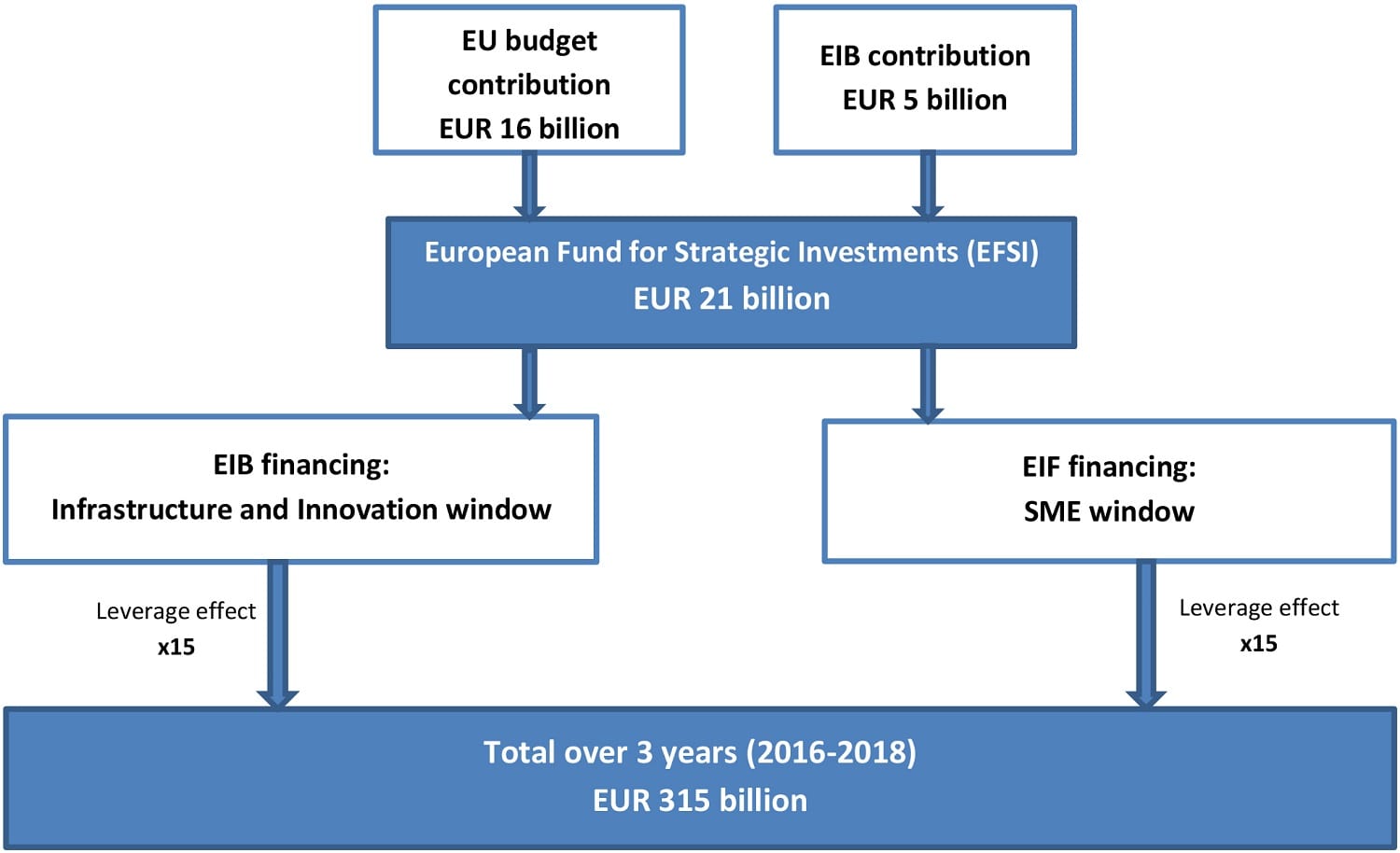
Based on a guarantee of EUR 16 billion from the EU budget and complemented by a EUR 5 billion allocation of the EIB’s own capital, the EFSI’s investment target is EUR 315 billion until 2018.
Latest news
Europe’s back is to the future: Bankwatch and Counter Balance statement on the first projects of the European Fund for Strategic Investment (EFSI)
Press release | 23 April, 2015Yesterday the European Investment Bank announced the first four projects to be financed from the EUR 315 billion EFSI. These include EUR 303 million for health care research in Spain, a public-private partnership in the Irish health sector, the expansion of the Dubrovnik airport in Croatia and a nineteenth century Italian steel factory.
Read moreParliament presses for more scrutiny of EU Investment Plan but guts green prospects
Press release | 20 April, 2015BRUSSELS – MEPs ditch ring fencing for energy savings but demand more democratic oversight over the European Fund for Strategic Investments (EFSI) that has been setup to implement Commission President Juncker’s economic recovery plan.
Read moreStatement on the European Parliament ITRE Committee vote
Press release | 15 April, 2015CEE Bankwatch Network, Friends of the Earth Europe and Counter Balance welcome yesterday’s vote to earmark EUR 5 billion for energy savings projects across Europe by the Parliament’s Industry, Research and Energy Committee (ITRE). The funds were allocated via an amendment to the European Fund for Strategic Investment regulation proposed by Commission president Juncker in December 2014. The vote also requires that any energy infrastructure project financed from the EUR 315 billion investment plan be in line with Europe’s long term energy and climate targets for 2050.
Read moreRelated publications
Doing the same thing and expecting different results?
Study | 10 November, 2017 | Download PDFAn analysis of the sustainability and transparency of the European Fund for Strategic Investments.
The winners and losers of climate action at the European Investment Bank
Briefing | 18 May, 2017 | Download PDFThis analysis of the bank’s climate action is based on the climate action database disclosed by the EIB. The database includes projects which were signed in 2016 and classified in line with the methodology approved by the bank in its Climate Strategy.
Bratislava D4/R7 Highway
Briefing | 5 May, 2017 | Download PDFThere have been a number of irregularities with the planning of the Bratislava D4/R7 project that have stirred public criticism about the imprudent spending of public money. This briefing presents a summary of the facts and allegations that can be seen

