ARCHIVED: Hydropower development in Georgia
Georgia plans to build a huge number of dams. Yet with 85 percent of electricity needs satisfied and exports not being taxed, these plans will rather benefit private investors than offering sustainable development for Georgia.
Stay informed
We closely follow international public finance and bring critical updates from the ground.
Key issues
- large dams will have adverse impacts on local communities’ livelihoods – more >>
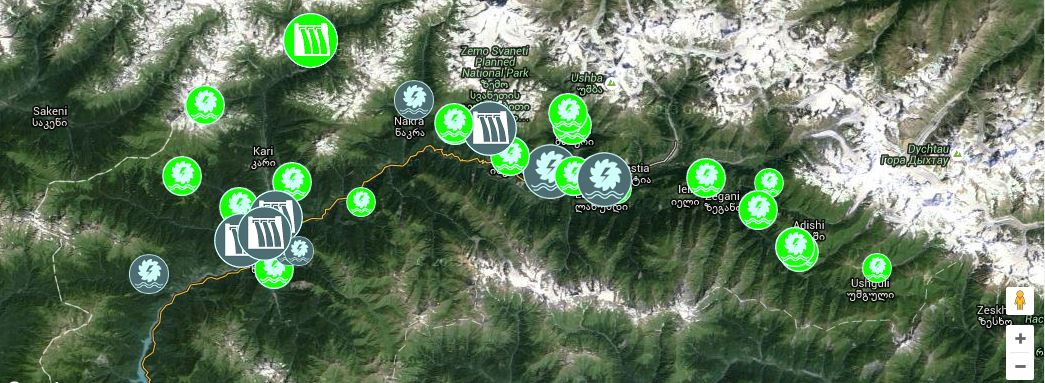
- a cascade of projects will reshape the pristine mountain area of Upper Svaneti – more >>
- land- and mud slides have already resulted in casualties, yet geological risks are not properly assessed – more >>
- legal framework in Georgia offers limited protection for people affected by expropriation and resettlement – more >>
Background
Blessed with staggering mountains, Georgia has a largely unexploited hydropower potential on which private investors, the Georgian government and international lenders have set their sight.
Experience and ongoing monitoring shows that while some hydropower projects would only bring marginal, if any, benefits for locals, the risks associated with them are largely being underestimated or ignored.
Large dams versus local communities
Khudoni
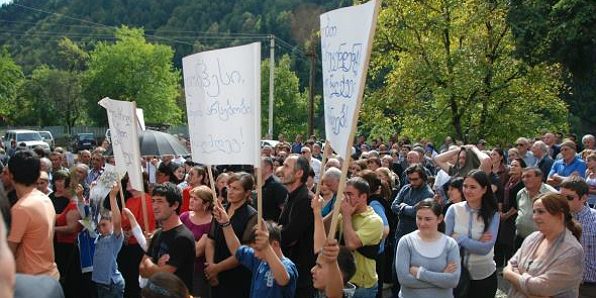
By far the most controversial hydropower project in Georgia is the Khudoni dam. It will interfere with a rich cultural heritage and 2000 people will have to be forcefully resettled.
At the same time the opaque ownership of the project company (registered in a tax haven) and its contractual obligations make the purported benefits of the 702 MW project doubtful.
Nenskra
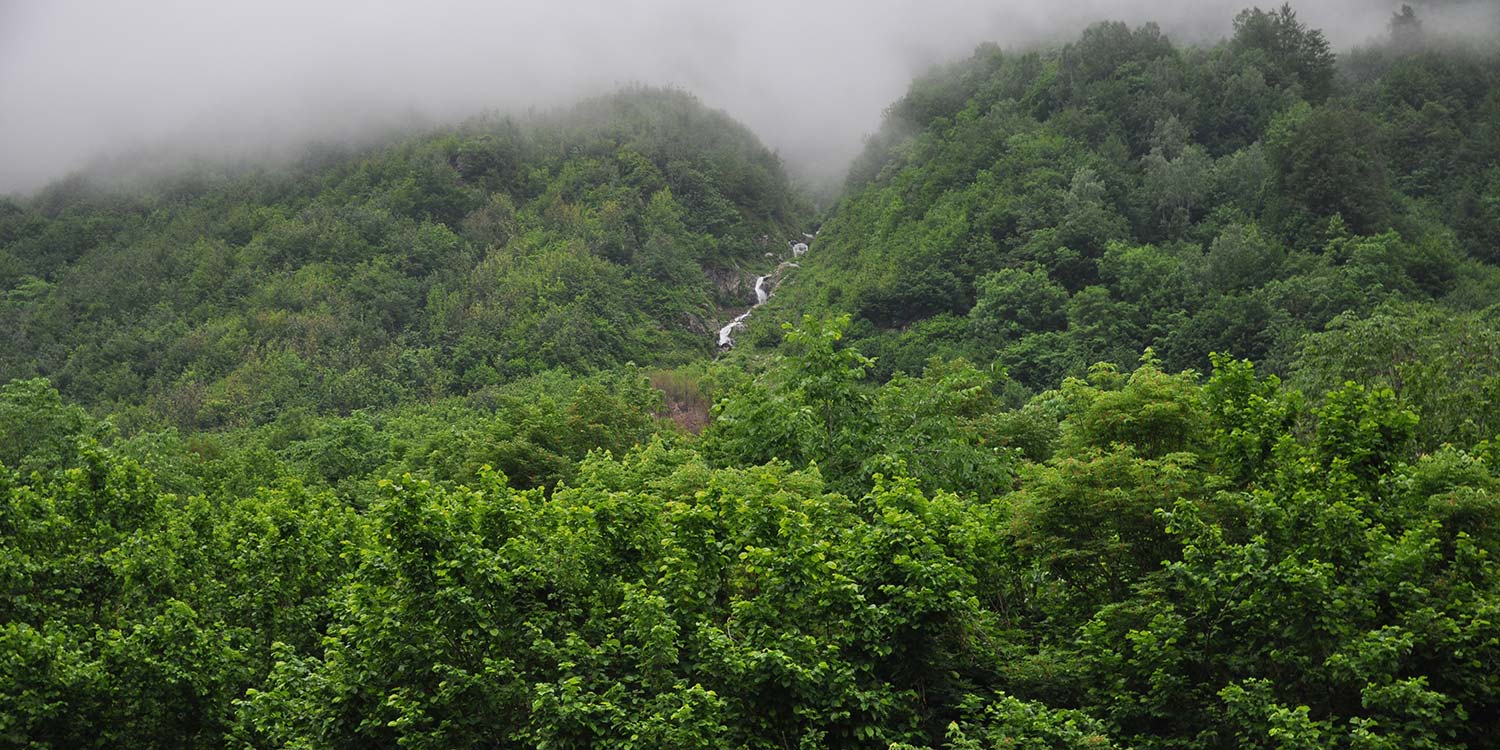
Not far from the site for Khudoni, another controversial large dam project, the 280 MW Nenskra hydropower plant, is being planned. It is the most advanced of Georgia’s massive plans for hydropower installations in the Upper Svaneti region.
It will deprive the local community of ethnic Svans of lands and livelihoods, but potential negative impacts have not been properly assessed.
A historical view on the Georgian energy sector, the effects on local communities and the role of international financial institutions.
Geological hazards in mountain areas
Also smaller projects like the Dariali (pdf) and the Shuakhevi (pdf) HPPs can pose substantial risks, even when no dams have to be built.
Apart from damaging the rivers’ biodiversity, the projects are being constructed without proper assessment of the geological conditions. Two fatal landslides in the Dariali Gorge revealed the irresponsible decision-making by the investors and the Georgian government.
Read more
Second fatal landslide in Georgian Dariali valley
Blog post | August 22, 2014
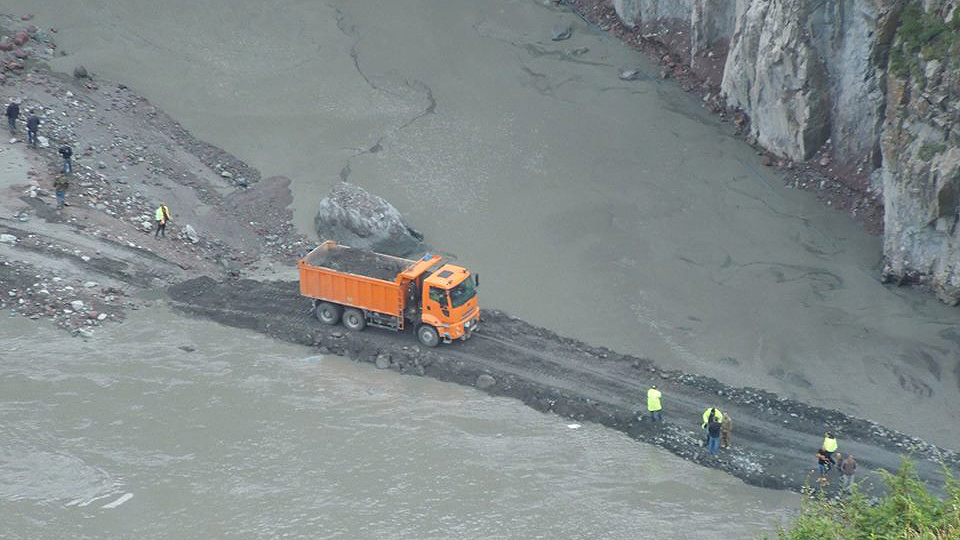
Landslides happened at the site of the Dariali hydropower construction. (Original image by Iago Kazalikashvili.)
Al Jazeera visited Georgia’s hydropower projects to report on constructions in seismically active areas.
Resettlement and lack of legal protection
Georgian communities that face hydropower projects have difficulties protecting their rights as affected stakeholders and landowners.
- Georgia’s legislation does not address the issue of involuntary resettlement caused by infrastructure projects.
- The Environmental Impact Assessment (EIA) system is ineffective in Georgia, both in terms of providing the public with information and opportunities for public participation (pdf).
- An unclear legal rights regime offers no or minimal protection for communities that make customary use of land that traditionally was in their hands. Unregistered land plots can literally be grabbed by investors for infrastructure projects.
In addition to the threat of losing their land or being resettled, farmers may have to face reduced access to water for irrigation or higher risk of flooding due to dam constructions. Both exposes them to an increased food insecurity.
Related projects
ARCHIVED: Shuakhevi hydropower plant, Georgia
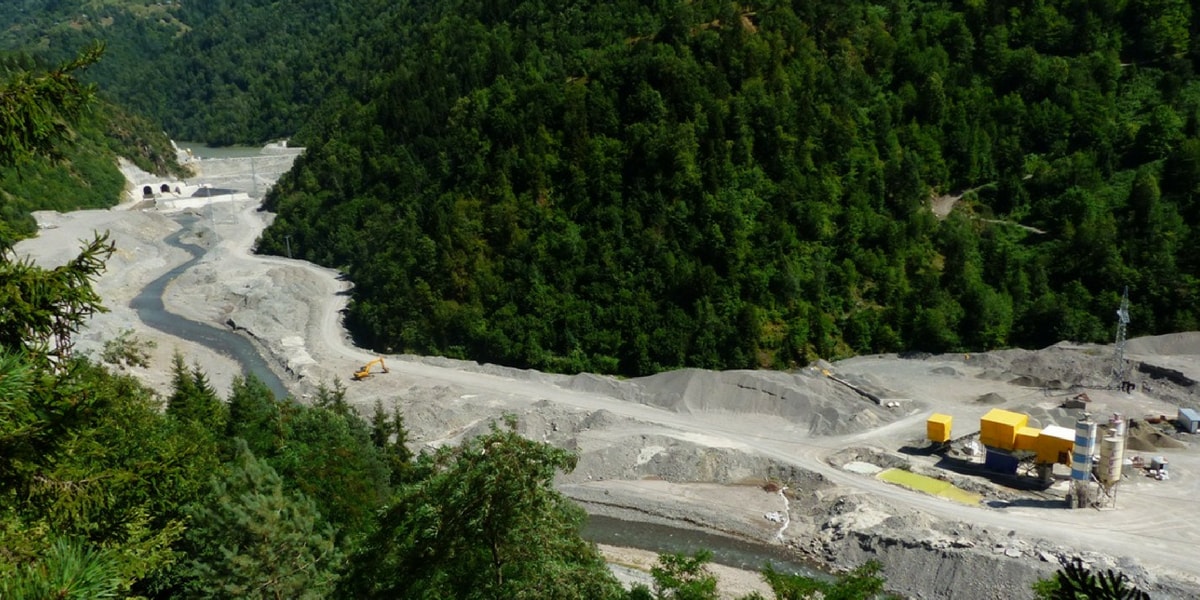
Georgia’s biggest and one of the most controversial hydropower plants is mostly famous for its failures. Two months after becoming operational in 2017 its tunnels collapsed. And after two years of repairs water is leaking from the dam. Shuakhevi hydropower plant (HPP) once promised to bring energy independence to Georgia. Instead it managed to collect an impressive ‘portfolio’ of problems in a wide range of areas: from biodiversity, to gender impacts, to community relations.
ARCHIVED: Nenskra hydropower plant, Georgia
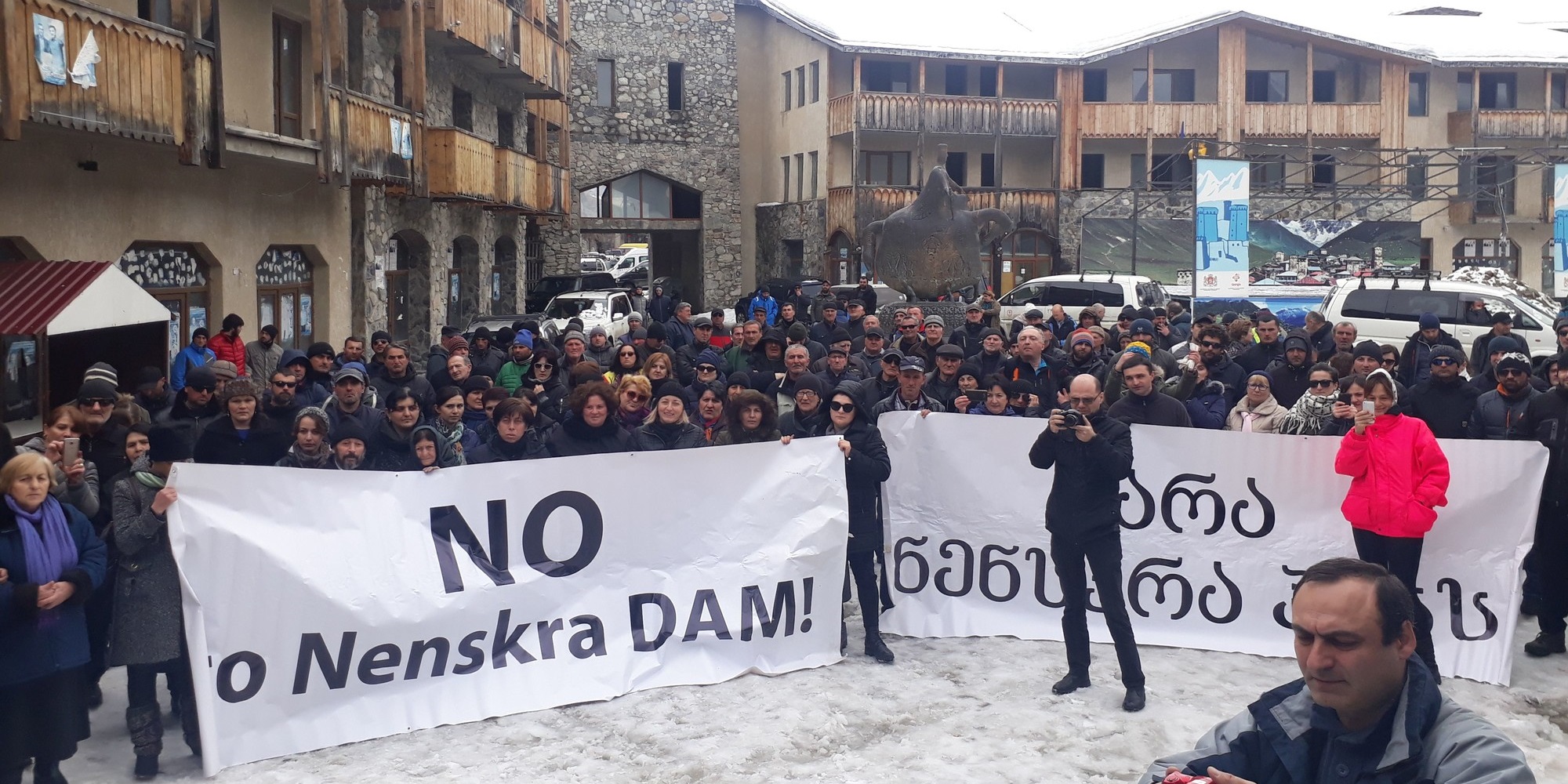
The Nenskra dam is the largest of Georgia’s massive plans for hydropower installations in the Upper Svaneti region. If realized, it will deprive the local indigenous communities of their ancestral lands and traditional livelihoods, and cause an irreversible damage to the fragile river and mountain ecosystems.
ARCHIVED: Khudoni hydropower plant, Georgia
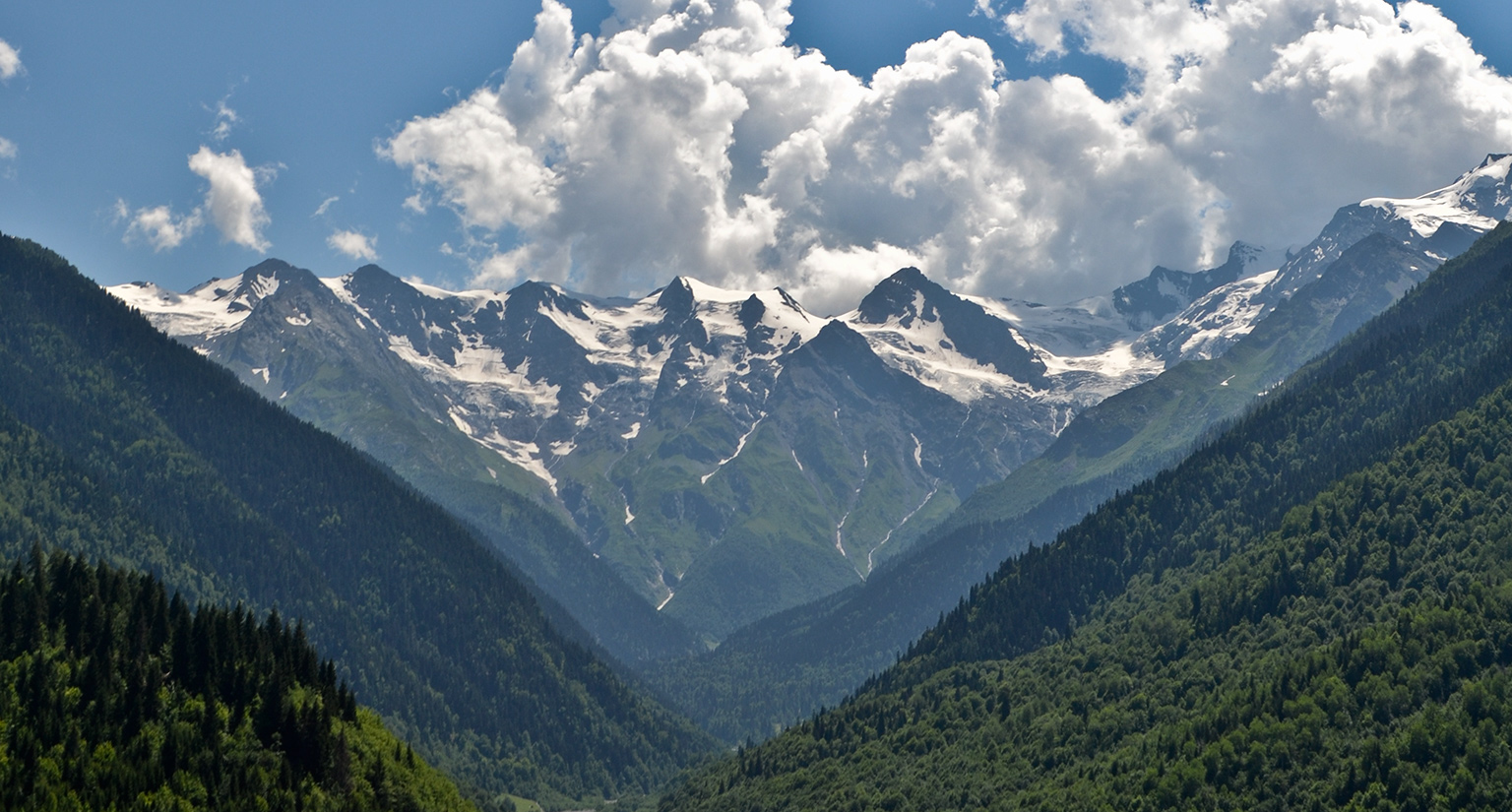
While a mountain community will have to be forced to resettle for this mega-project, the opaque ownership and weak taxation mean that benefits for Georgia are highly doubtful.
Latest news
The damage from Slovenia’s Mokrice dam won’t stop at the Croatian border
Story | 27 May, 2026Slovenia’s state-owned Hidroelektrarne na Spodnji Savi (HESS) has for two decades been trying to build the controversial Mokrice hydropower plant on the river Sava. But poor quality environmental studies have been repeatedly quashed in court by the Slovenian Native Fish Society, and a recent transboundary assessment’s claims that the impacts will stop at the Croatian border are far from convincing.
Read moreObstacles pile up for the Dabar hydropower plant in Bosnia and Herzegovina: Time to rethink the whole Upper Horizons complex
Story | 14 May, 2026When the Republika Srpska authorities signed contracts with the China Eximbank to finance the Dabar hydropower plant at the end of 2021, it seemed like the first and largest part of the Upper Horizons complex was a done deal. Today, more than four years later, obstacles are piling up for this controversial project, providing a much-needed opportunity to rethink the whole idea.
Read moreDon’t look, don’t find: Buk Bijela’s ‘environmental impact assessment’
Story | 2 March, 2026Bosnia and Herzegovina’s Upper Drina hydropower scheme would turn 30 kilometres of this iconic river into stagnant reservoirs and cut a key Danube Salmon habitat into pieces. Its largest dam would be the 118-megawatt Buk Bijela, first proposed in the 1970s but repeatedly scuppered due to its impact on Montenegro’s Tara Canyon. Now a new environmental assessment is out for public consultation, but it’s being more than economical with the truth.
Read moreRelated publications
Comments on biodiversity management plan and ecological assessment for Ombla hydropower plant, Croatia
Policy comments | 19 April, 2013 | Download PDFCroatian electricity company HEP, carried out an assessment of the planned Ombla hydropower plant’s impact on the Vilina Cave – Ombla Spring protected area. This assessment confirms that the site in question is among the most diverse such habitats in the country and that the construction of the power plant would have irreversible and long-lasting impacts on an area that set for protection as part of Croatia’s future Natura 2000 network.
A Partnership of unequals – Electricity exports from the eastern neighbourhood and western Balkans
Study | 7 June, 2012 | Download PDFCooperation in the energy sector is one of the European Union’s key priorities in its relationships with neighbouring states. Although the promotion of energy efficiency, energy savings and the use of renewable energy sources should be the primary areas of cooperation along with “energy security”, the latter receives the lion’s share of attention and in several cases also a disproportionally large amount of financial support. This can have several negative environmental and social implications as this study shows.
Revealed: EBRD climate crimes rising
Bankwatch Mail | 17 May, 2012 |EBRD efforts to clean up its energy lending in central and eastern Europe are being undermined by extensive fossil fuel investments, with astonishing increases in the EBRD’s backing for coal and oil projects in 2011.

