Kamengrad lignite power plant, Bosnia-Herzegovina
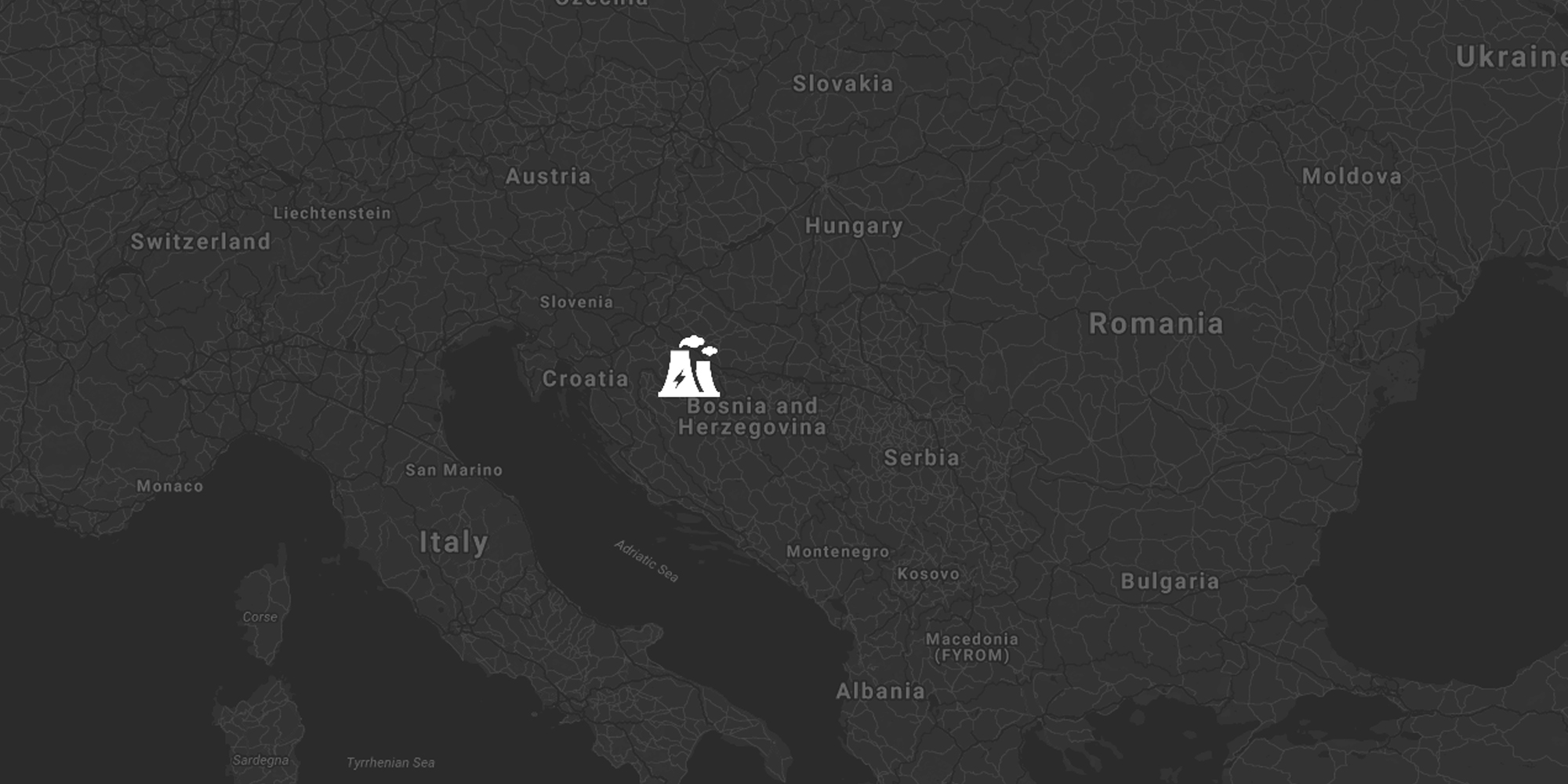
An idea to build a power plant at the open-cast Kamengrad coal mine near Sanski Most in the Federation of Bosnia and Herzegovina has been around for years, but in November 2017 it took a step forward with the signing of a Memorandum of Understanding between Energy China International and the construction supplier Lager d.o.o. for a 2 x 215 MW plant.
Stay informed
We closely follow international public finance and bring critical updates from the ground.
Background
CANCELLED: An idea to build a power plant at the open-cast Kamengrad coal mine near Sanski Most in the Federation of Bosnia and Herzegovina has been around for years, but in November 2017 it took a step forward with the signing of a Memorandum of Understanding between Energy China International and the construction supplier Lager d.o.o. for a 2 x 215 MW plant.
Few details are available about the plant, and it has no environmental permit and no financing. As with other plants across the region, unrealistic employment promises have already been made. In December 2017 head of the Sanski Most District Faris Hasanbegović stated that it would provide 1000 workplaces.
This does not appear to have convinced local people, however. As it would be a new power plant, it has attracted much more opposition locally than most other planned plants in the country. Sanski Most is located on the beautiful river Sana and prides itself on having no fewer than nine rivers in the district altogether. As a scenic and green area many of its residents feel that the power plant will spoil its potential for agriculture and tourism rather than bringing prosperity.
At a public debate on the adoption of the Una-Sana Canton spatial plan in August 2018, Sanski Most residents and the local council demanded the removal of the power plant project from the plan. This was carried out, although the plan was never adopted. In November 2019, another presentation of the Kamengrad coal power plant project appeared on the agenda of the Sanski Most Municipal Council. However, the meeting was cancelled after public pressure.
Another issue is that the concession for the mine was awarded to Lager d.o.o. after a bankruptcy procedure was carried out for the previous operator, RMU Kamengrad, but in 2017 the bankruptcy decision was declared illegal by the Constitutional Court of Bosnia and Herzegovina and returned to the Una-Sana Canton court.
As of early 2026 the plant is very unlikely to go ahead and does not appear in Bosnia and Herzegovina’s ten-year network development plans, so we consider it cancelled.
Latest news
Death by a thousand transmission lines
Blog entry | 6 August, 2026The EBRD-backed development of the 400/110/35 kV Brezna substation for Montenegro’s transmission grid is opening several crucial questions – where is the red line beyond which a project’s impact on local communities makes it unacceptable? Can this even be assessed when all the institutions and financiers involved fail to identify even the obvious impacts? And why are the project’s backers so reluctant to provide environmental documentation to the affected people?
Read moreWestern Balkans gets second chance at just transition: Can new support platform deliver?
Blog entry | 15 July, 2026For coal-dependent communities in the Western Balkans, the launch of the JET Balkans project marks a welcome end to more than two years without a dedicated regional support platform. But with political commitment, funding and transparency still in short supply, local authorities and civil society are wondering whether the initiative can turn planning into meaningful implementation, or whether it will repeat the shortcomings that have slowed just transition efforts across the region.
Read moreWestern Balkans coal plants continue to breach pollution limits despite legal deadlines, report says
Bankwatch in the media | 8 July, 2026Coal-fired power plants across the Western Balkans emitted sulphur dioxide at more than six times legal limits in 2025, with dust pollution reaching its worst level since current emissions rules came into force eight years ago.
Read moreRelated publications
Kolubara B: a project of the previous century
Briefing | 10 May, 2013 | Download PDFThe energy sector in Serbia is reminiscent of the industrial development strategy of the former socialist Yugoslavia, with thousands of megawatts of power plant capacities planned, and much of that production to be wasted, while people remain unable to afford their energy bills. The EBRD is set to fund this scenario with its support for a lignite-based, inefficient economy in Serbia. This briefing outlines arguments against financing the Kolubara B lignite power plant in Serbia.
Input for online questionnaire on Projects of Energy Community Interest
Policy comments | 29 April, 2013 | Download PDFOur input expresses our main concern relating to the need to develop an energy sector in southeast and eastern Europe that is in line with EU environmental and climate policies and legislation, as well as one which addresses the increasing problem of energy poverty through sparing and efficient energy use. We underline the need for the PECIs projects to be in line with current and forthcoming EU legislation and policies on climate, environment, renewable energy and energy efficiency.
NGO letter regarding Projects of Energy Community Interest
Advocacy letter | 29 April, 2013 | Download PDFThe letter accompanied Bankwatch’s and other NGOs’ input to the public consultation on the proposed Projects of Energy Community Interest in the electricity, gas and oil sectors. With the letter, civil society groups jointly address several important matters about the process, scope and selection criteria. See also Bankwatch’s inputs to the consultation.

