ARCHIVED: Mining boom in Mongolia
With huge amounts of unexploited natural resources (gold, copper, coal and more) the Mongolian economy is estimated to grow massively in the years to come. But will it also benefit the people in Mongolia? Our work shows how mining operations lead to pollution and displacement for local herders and exacerbate water scarcity issues.
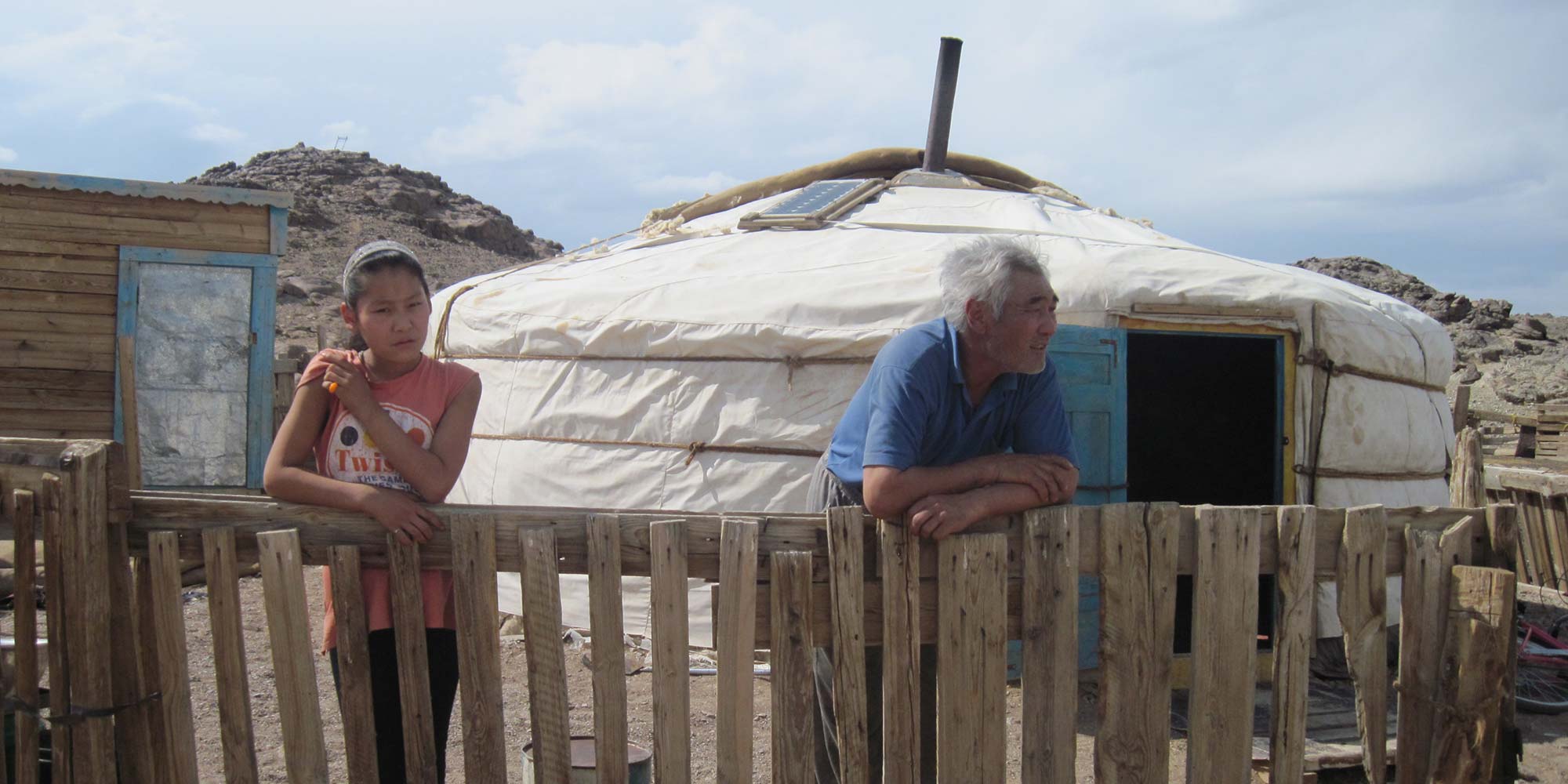
Father and daughter, resettled by Oyu Tolgoi
Stay informed
We closely follow international public finance and bring critical updates from the ground.
Background
With huge amounts of unexploited natural resources (gold, copper, coal and more) the Mongolian economy is estimated to grow massively in the years to come. But will it also benefit the people in Mongolia? Our work shows how mining operations lead to pollution and displacement for local herders and exacerbate water scarcity issues.
Dust, displacement and intimidation in the Gobi Altai mountains
Nomadic herders in the Gobi Altai mountains are facing pollution and displacement by the Tayan Nuur iron ore mine that receives financing from the European Bank for Reconstruction and Development.
While the mining company Altain Khuder responds to criticism with intimidation, the EBRD is not doing enough to protect herders’ rights.
Read more:
When the dust settles
A multimedia story about herders impacted by the Tayan Nuur mine
Dust, displacement, intimidation – Mongolian herders are under pressure by iron ore mine
Blog post | December 9, 2014
Report: Impacts of the Tayan Nuur iron ore mine on nomadic herders’ lives in Mongolia
Study | December 9, 2014
Case study on the impacts of the global iron ore sector: Altain Khuder in Mongolia
SOMO case study | December 17, 2014
Water scarcity in the South Gobi desert
In the South Gobi desert, the highly intensive mining industry with its immense need for water can pose precarious risks to the livelihoods of herders.
Read more
Spirited away – Mongolia’s mining boom and the people that development left behind (pdf)
Study | January 30, 2012
EBRD financing for mining in Mongolia
By financing several mining projects over the last few years, the EBRD followed other investors’ bias towards the natural resources sector in Mongolia. Instead, it should diversify its portfolio in the country to help Mongolia reduce its dependency on commodity exports.
Read more:
The EBRD in Mongolia: Economic diversity is something else
Blog post | September 18, 2012
Online debate
Following a discussion in the European Parliament on the EBRD’s mining operations, Bankwatch organised a live-streamed google hangout with Mongolian campaigner Sukhgerel Dugersuren.
Latest news
Mining threatens herders in Mongolia: report
Bankwatch in the media | 30 January, 2012BEIJING — Mining in southern Mongolia is threatening the livelihoods of herders and straining water supplies, a report said Monday, as foreign companies race to exploit the country’s rich mineral deposits.
Read moreBankwatch report and video: Mongolia’s mining bonanza poses threat to locals and planet
Press release | 30 January, 2012A new report launched today by CEE Bankwatch Network, urgewald and OT Watch (1), following on-the-ground research in Mongolia, details the impact of the country’s mining boom on local populations, shedding light on the ignored side of one of the biggest business stories of today: Mongolia’s planned public offering of the state-owned Erdenes Tavan Tolgoi and the rights to one of the world’s largest untapped coal reserves. (2)
Read moreVideo: Spirited away – Mongolia’s mining boom and the people that development left behind
Blog entry | 27 January, 2012Earlier this week we published an overview of two Central Asian mining projects financed by the European Bank for Reconstruction and Development – the Kumtor gold mine in Kyrgyzstan and the Ukhaa Khudag coal mine in Mongolia’s south Gobi desert, which is part of the much larger – in fact the world’s largest – coal deposit at Tavan Tolgoi.
Read moreRelated publications
Joint statement: Urgent call to IFC and EBRD to impose conditionalities on Oyu Tolgoi’s new loan
Joint statement | 20 December, 2024 | Download PDFCivil society organisations from across the globe have signed a joint statement opposing a proposed new loan for the Oyu Tolgoi mine in Mongolia.
The development of Mongolia’s energy sector: Going beyond coal
Briefing | 5 May, 2017 | Download PDFMongolia’s fragile economic situation, with its high deficit and increasing foreign debt, is putting the country on a risk map for foreign investment. Even so, the government and international financial institutions show no sign of adjusting their plan
Asian Development Bank projects in Mongolia
Briefing | 5 May, 2017 | Download PDFWith a dominance of coal in its energy sector, the Mongolian government is planning more than six new coal power plants over the next decade, despite already severe air pollution and public protests against the government’s inaction. The Asian Developm

