What’s Fuelling the Czech Automotive Motor? How the EU Modernisation Fund Subsidized Škoda Energo’s Shift to Forest Biomass
The European Union’s Modernisation Fund was established with a clear mandate to help lower-income Member States transition toward climate neutrality by upgrading energy systems, boosting efficiency, and helping recipients withstand the socio-economic shocks of decarbonisation. It is financed by revenue from the EU Emissions Trading System (ETS) as a way to turn industry’s carbon emission payments into needed capital for Europe’s energy transition. Yet, in the Czech Republic, the actual results of the Modernisation Fund have not advanced the energy transition nearly as far as it needs to be. One of the most glaring examples of this is in the district heating sector.
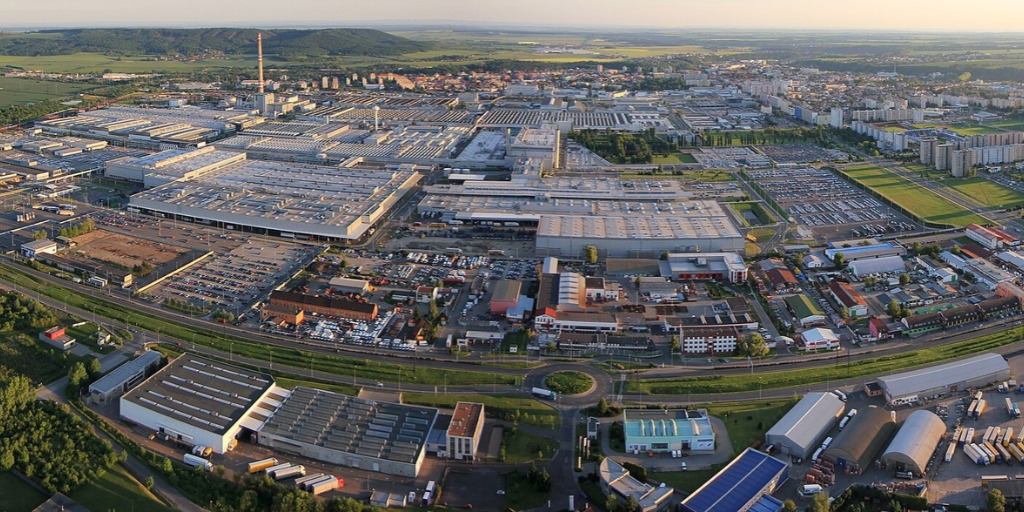
Škoda Auto Mladá Boleslav manufacturing plant in the Czech Republic. (photo: Zdeněk Fiedler/Wikimedia Commons).
Stay informed
We closely follow international public finance and bring critical updates from the ground.
Key facts
Project promoter: ŠKO-ENERGO, exclusive energy subsidiary of Škoda Auto a.s
Installed capacity: 80 MW of heat
Financing: EUR 89 million grant from the EU’s Modernisation Fund
Fuel source: biomass (wood chips and agro-biomass pellets)
Other key risks: transparency, corporate capture, forest depletion, air pollution
Key issues
- One of the Czech Republic’s most profitable companies is getting EUR 89 million of public finance instead of smaller, municipal district heating companies
- Converting the 80 MW plant from coal to biomass will still produce CO2 emissions and the regrowth of forests will not be quick enough to absorb their emissions
- Increasing the demand for biomass in the region can exacerbate regional deforestation issues which suffered a major crisis from a bark beetle outbreak and drought
- Four major companies have received most of the Czech portion of the Modernisation Fund- ČEZ, EPH, Veolia, Škoda who have received over EUR 2 billion out of EUR 3.2 billion, leaving only 1 billion for the rest of Czech district heating suppliers
Background
Based on Bankwatch’s own investigation, by the end of 2025, over EUR 6.5 billion had been disbursed from the Modernisation Fund, making the Czech Republic the country with the second highest absorption rate of all recipients. Over EUR 836 million went to gas-based heat and power projects and schemes while over EUR 253 million went to biomass-based heat and power projects and schemes.
This briefing examines a troubling example of how the Modernisation Fund has been used in the Czech Republic: the EUR 89 million (CZK 2.18 billion) direct subsidy awarded to ŠKO-ENERGO s.r.o., the exclusive energy subsidiary of Škoda Auto a.s., which is wholly owned by the multinational Volkswagen Group. This was awarded in June 2023, as a priority investment.
The public grant covers nearly half of a EUR 180 million overhaul of the industrial power plant inside Škoda’s flagship automotive manufacturing site in Mladá Boleslav. The goal is to transition from burning coal to 100% biomass (wood chips and agro-biomass pellets) by the end of 2027, with a capacity of 80 megawatts (MW) of heat. This will be the largest investment in a single heating plant and biomass project in the Czech Republic to date. The energy plant operated by ŠKO-ENERGO provides both industrial high-temperature steam and electricity for Škoda Auto’s massive assembly site, which produced 605,600 cars in 2025, averaging around 2,650 vehicles a day., It also simultaneously supplies residual district heating to approximately 14,000 residential households in the city of Mladá Boleslav.
As of 2023, ŠKO-ENERGO’s energy mix consisted of brown coal (37%), fossil gas (24%), biomass (18%) and certified renewable green electricity (21%). After its transition, the boilers in Mladá Boleslav will be run on 70% wood chips and 30% wood pellets. It will consume more than 400,000 tonnes of biomass a year. This is a part of the company’s so-called “Green Future Strategy of 2030,” which aims to make all of their Czech operations CO2 neutral by 2050.
This account will examine whether or not subsidies are really necessary for a highly profitable multinational corporation, the issues associated with industrial biomass, and whether or not an allocation of this size is at the cost of other, potentially more worthy, district heating decarbonisation projects. As one of the biggest recipients of the Modernisation Fund, this case tells a wider story about the general progress of the fund six years into its operation and the level of ambition industry in the region has towards district heating decarbonisation.
Public subsidies for a Czech economic superpower
The Czech district heating sector is robust, providing heat for nearly 4 million inhabitants, which is 40% of the Czech population. The plants were historically run on coal, however the country has decided to phase out all coal by 2033, for both electricity and heat production. The systems are based on high temperatures that usually only combustion-based boilers can reach, instead of more efficient and lower temperature systems based on renewables. Therefore, district heating plants are increasingly switching to fossil gas and biomass. To do so, large investments will need to be made and much of it from public finance sources.
One of the main financial resources for this transition is the EU’s Modernisation Fund. Within this fund, the Czech government applied for and was awarded a multiannual scheme for district heating modernisation, the HEAT programme. It is administered through the State Fund for the Environment (Státní fond životního prostředí) and has been in use since 2021, allocating over EUR 3 billion (CZK 74 billion) to district heating companies in the country.
One of the key conditions to receive financing from the Modernisation Fund is that the investment must be in line with the EU’s State aid rules. State aid in the EU requires that all public investment cannot distort competition or the free market. Interestingly, the ŠKO-ENERGO grant was not notified to the European Commission as an individual State aid measure. Instead, the Czech government included it in its HEAT programme. While the ŠKO-ENERGO grant is still only a fraction of this large scheme, it stands out as the vast majority of other recipients are municipal district heating companies, not multinational automotive producers.
In 2025, Škoda Auto’s revenue was EUR 27.8 billion, with a 9.1% increase from 2024 to 2025, and a profit of EUR 2.29 billion. As of 2025, it is one the three best-selling automotive brands in Europe. It is the most profitable of all of its parent company, Volkswagen’s brands. Furthermore, Škoda’s corporate ‘green’ marketing heavily promotes its self-funded transformation toward electromobility and sustainable operations.
As one of the biggest players in the Czech economy, Škoda Auto is far more than only a car manufacturer; it is a national economic cornerstone. As the largest exporter in the Czech Republic and anchoring a massive domestic supply chain, the corporate giant wields significant financial and political influence. Generating record profit of EUR 2.29 billion, Škoda has the exact type of financial security to pioneer true industrial innovation.
Yet, instead of utilizing its massive platform and public finance, to pilot a truly forward-looking, non-combustion thermal solution like large-scale industrial heat pumps, the company went with the low-effort path of biomass combustion. For a company that aggressively brands itself around a cutting-edge “GreenFuture” and an accelerated electric vehicle rollout, locking its primary production hub into a 19th-century technology like burning wood is a profound missed opportunity. Had Škoda chosen to build a groundbreaking, zero-emission heating prototype, it could have established a revolutionary blueprint for industrial decarbonization across Central Europe.
The Ecological Reality: The False Solution of Industrial Forest Biomass
The project is framed by ŠKO-ENERGO and the State Environmental Fund as a major ecological victory, promising a reduction of 290,000 metric tonnes of CO2 emissions annually by eliminating coal. The justification is made because EU legislation effectively allows for biomass combustion heat to be treated as zero emission, despite scientific evidence of the contrary. This is because of how biomass emissions are counted within the Renewable Energy Directive (RED) and the EU Emission Trading System (ETS).
According to the EU ETS Directive, the combustion of biomass is counted as zero emissions if the producers can prove their feedstock meets a set of sustainability and greenhouse gas savings criteria set out in the Renewable Energy Directive (RED) and its subsequent updates RED II and III. However, the sustainability and greenhouse gas criteria have proven to be weak and more of a bureaucratic formality than a true driver of sustainable forestry. As research by the European Scientific Advisory Board on Climate Change has argued, “the sustainability and GHG [greenhouse gas] criteria for biomass under RED II/III, and by extension under the CRCF [Carbon Removals and Carbon Farming] regulation, face challenges due to inconsistent implementation, insufficient transparency, and fragmented data and terminology across the EU, raising concerns about the sustainability of biomass use.” The criteria does little to require Member States to do a thorough check of the information they receive from biomass operators, meaning it can look very different country to country.
This is especially problematic as science indicates that burning wood chips releases more CO2 per unit of energy generated than burning coal due to the lower energy density and higher moisture content of wood fuel. While international frameworks assume these emissions are re-absorbed by growing forests, the time lag for this recapture spans between 40 to 100 years. In the short-term window left to stabilize greenhouse gas concentrations, burning hundreds of thousands of tonnes of wood chips inside industrial boilers actively accelerates atmospheric warming.
Regional Deforestation, Sourcing Strain and pricing small utilities out of the market
To keep their boilers running constantly, ŠKO-ENERGO will rely on a split of 70% wood chips and 30% agro-biomass phyto-pellets. It is not clear what the exact source of the biomass for the plant will be. However, typically plants try to source their biomass from as close as possible to be economically viable. Transport of biomass must be accounted for due to the sustainability criteria from the RED. If we assume that the biomass will come from a 100-kilometre radius around Mladá Boleslav, it should come from the Central Bohemia (Středočeský kraj), Northern Bohemia (Liberecký kraj) or Eastern Bohemia (Kraj Vysočina) regions.
The plant will consume hundreds of thousands of tonnes of wood chips annually, which will put a large strain on the local lumberyards. Therefore, ŠKO-ENERGO will have to rely on the dominant institutional player in the Czech forestry sector, Forests of the Czech Republic (Lesy ČR), the state-owned forestry enterprise that manages roughly half of the country’s woodland. Lesy ČR sells harvesting rights to larger private companies.
Further, given the large volume of biomass that the ŠKO-ENERGO plant will require, 400,000 tonnes per year, it will be the country’s biggest biomass energy consumer. The current annual consumption of biomass in the Czech Republic is around 5 million tonnes per year, 39% for electricity and 61% for heat production. This means that the Mlada Boleslav plant will take 8% of the market share of biomass in the country. Additionally, as the biomass will need to be sourced locally, it will affect the surrounding local market even more disproportionately.
The immense volume required introduces severe ecological and logistical risks:
- Ecosystem Depletion: Meeting this demand will create intense pressure on regional Czech forests, which are already suffering from the 2018-2022 bark beetle epidemic and climate-induced drought stress. It accelerates the extraction of whole-tree biomass and logging residuals, depleting forest soils of necessary nutrients and destroying biodiversity.
- Sourcing Leaks: The intensive local demand inevitably forces the supply chain to expand outward, drawing timber from surrounding regions and driving up wood prices for residential heating, while generating high transport emissions via heavy freight trucks and rail.
- The Pricing Out of Small Utilities: Smaller municipal district heating plants (e.g., those serving smaller towns in Central and Northern Bohemia) operate on very thin margins. They simply cannot compete in a bidding war against a corporation like Volkswagen. When regional timber aggregators have the choice to sell their wood chips, they most likely naturally prioritize massive, multi-decade, premium-priced supply contracts with ŠKO-ENERGO, leaving smaller towns with fewer options and higher costs.
The Transparency and Procurement Concern
The Public Procurement Withdrawal
In late 2024, corporate documentation and regional market filings revealed that ŠKO-ENERGO had not followed transparent public procurement procedures for finding a logistical provider for the transport of the woodchips and pellets. The 400,000 tonnes of woodchips annually will need to be delivered to the plant continuously, making it a crucial part of the plant’s transformation. In order for this part of the project to be co-funded by the Modernisation Fund grant, it needed to run a public tender as according to SFZP’s internal rules on public procurement. However, in autumn 2024, ŠKO-ENERGO abruptly stopped the public tender and instead used a restricted selection process.
The procurement process for the plant’s logistics infrastructure drew bids from two primary competitors: the TESCYO Group and Innofreight. According to the industry publication RAILTARGET, the TESCYO Group’s initial bid was higher than Innofreight’s, but was subsequently lowered to secure the contract victory. However, the integrity of this selection has since been compromised by a severe conflict of interest; it was later revealed that the wife of ŠKO-ENERGO’s modernization project manager was employed by the winning TESCYO Group at the time of the tender. As a result of this closed selection process, none of the Modernisation Fund financing could be used for the rail portion of the transformation. This calls into question the entire transformation effort’s integrity towards transparency and public accountability.
The Equity Gap: Corporate Giants vs. Underfunded Communities
The Mladá Boleslav plant’s EUR 87 million from the Modernisation Fund is not the only questionable district heating investment from the HEAT programme. Research done by the investigative newspaper Denik Referendum has shown that the fund is heavily dominated by a highly consolidated corporate oligopoly, with just three massive energy conglomerates capturing over EUR 2 billion (CZK 48 billion) in public subsidies. This leaves less than 1 billion for the rest of the district heating industry in the country to use for their own heating decarbonisation.
The partially state-owned ČEZ Group leads the funding pool with over EUR 700 million (CZK 17 billion), anchored by their EUR 555 million (CZK 13.5 billion) Mělník mega-projects which include a coal-to-gas conversion alongside millions allocated for biomass projects in Trmice and Hodonín. Billionaire Daniel Křetínský’s EPH Group captured roughly EUR 650 million (CZK 15.8 billion) across multiple major assets, including the EVO Komořany waste incinerator project EUR 165 million (CZK 4.03 billion) and the Komořany power plant gas conversion EUR 120 million (CZK 2.9 billion). Similarly, the French multinational Veolia Energie ČR secured EUR 640 million (CZK 15.5 billion) split between two enormous project bundles for regional gas turbines and multi-fuel boilers.
As the HEAT programme absorbs roughly 26% of the multi-billion-euro fund for the Czech Modernisation Fund allocation and most of that is being awarded to large corporate players such as ČEZ, EPH, Veolia, and Škoda, it calls into question what will be left for smaller, independent district heating companies in the country. Figures from 2024 show us the ownership landscape in the country- a total of 74 petajoules of heat were consumed in the country that year. ČEZ was the biggest seller of heat in the country, selling 23.5 petajoules of heat. Veolia followed with 21 petajoules and then EPH with 7.3 petajoules. That leaves 22.2 petajoules of heat sold by other independent producers.
Many of these independent producers will be small Czech municipalities who also need to transition away from coal or fossil gas heating systems. These municipalities often lack capacity overall, especially compared to corporate giants like Škoda with technical experts and legal teams who can easily navigate public and private financial schemes. However, the Czech government does not offer any specialised technical assistance for these municipalities nor earmarked financing.
Conclusion
The EUR 87 million allocation to ŠKO-ENERGO is an example of a broader, systemic failure within the implementation of the Czech Modernisation Fund. An initiative established with the virtuous mandate to shield industry from the socio-economic shocks of decarbonisation has instead been disproportionately absorbed by too few large, powerful corporate players. By allowing a multi-billion-euro multinational automotive utility to receive scarce public funds, the Czech state has effectively socialized the financial costs of a corporate supply-chain upgrade while allowing Volkswagen to retain profits. This only adds to the worrying pattern of the Czech Modernisation Fund allocations to a concentrated number of recipients.
This distortion carries severe, multi-decade penalties. Economically, it starves cash-strapped independent municipalities—who represent nearly one-third of the country’s district heating market—of the targeted financing and technical assistance they desperately need to transition away from fossil fuels. Instead, four corporate giants (Škoda, EPH, Veolia, ČEZ) will receive the much needed financing from the Modernisation Fund. Ecologically, it relies on the substitution of coal combustion with an equally unsustainable reliance on industrial biomass, a worrying practice that is happening across the EU. Forcing regional ecosystems to supply 400,000 tonnes of wood products annually to a single industrial site will trigger an acute sourcing strain, accelerate forest depletion in a landscape already devastated by bark-beetle epidemics, and trigger an inflationary bidding war that will price out smaller public utilities.
Furthermore, the abrupt cancellation of transparent public logistics tenders in late 2024 and the resulting conflicts of interest expose a troubling lack of institutional accountability and oversight. The Czech Ministry of the Environment cannot treat the Modernisation Fund as a corporate piggy bank. If the EU Green Deal is to maintain its democratic legitimacy, the European Commission needs to ensure public capital is used in a transparent, equitable way. Instead of favouring the largest and most powerful corporate players in the country, resources must be aggressively redirected toward transparent, non-combustion municipal renewables that truly protect both Europe’s climate and its communities.
Recommendations
- Phase out financing for biomass combustion from the Modernisation Fund.
- Require sourcing transparency and safeguards for all biomass investments, irrespective of funding source.
- Prioritise heating sector investments towards clean solutions like heat pumps, geothermal, heat storage, and solar thermal.
- Improve transparency and stakeholder consultation, especially at Member State level, by including civil society in the planning and implementing stages.
- Introduce safeguards to ensure highly profitable large corporate players are not able to crowd out smaller municipalities in accessing funding.
- Provide policy and technical support to beneficiary Member States to improve absorption rates and increase the share of favourable investments within the Fund.
Latest news
Boje jutra: Koliko će nas koštati grijanje ove zime?
Bankwatch in the media | 29 June, 2022Šta je sa strujom? Da li je ovo realna cijena koju trenutno plaćamo i može li biti skuplja? Šta može biti dobra alternativa trenutnim …
Read moreSustainable heating is already reality in the EU. Now it’s the Western Balkans’ turn
Blog entry | 16 May, 2022In the Western Balkans, heating based on fossil fuels is making air pollution worse and is also the source of half of greenhouse gas emissions. Sustainable and affordable heating systems based on renewables are no fantasy. They operate successfully in other parts of Europe, and can be implemented in the Western Balkans if decision makers start acting now.
Read moreNorth Macedonia’s Go-Slow on Greener Energy is Costing Lives
Blog entry | 6 April, 2022The REK Bitola mining and energy complex in North Macedonia is one of Europe’s most lethal polluters – but, despite local protests, and clear evidence of its harm, the authorities have yet to act.
Read moreRelated publications
Waste incineration trends in the Western Balkans: A critical overview of energy and heat generation
Report | 21 April, 2026 | Download PDFThe following recommendations outline the steps required to advance the decarbonisation of district heating systems, enhance waste management practices and support the development of a truly circular economy.
Why the EBRD must end support for primary forest biomass in the Western Balkans
Issue paper | 7 May, 2025 | Download PDFThis issue paper presents case studies from Bosnia and Herzegovina that highlight how EBRD-backed large-scale biomass projects have faced significant challenges related to sustainability, affordability, and fuel supply.
Unmasking the biomass dilemma in Serbia and Bosnia and Herzegovina
Briefing | 17 January, 2025 | Download PDFAs EU law regulating bioenergy is not yet sufficient to avoid climate and nature damage, this report outlines why forest biomass needs to be treated with caution in the Western Balkans.