
Ukraine Reconstruction Campaigner
Email:Tel.:
Anna is Bankwatch’s Ukraine Reconstruction Campaigner, working on green reconstruction and environmental safeguards in Ukraine’s recovery. Her work focuses on alternative sources of energy for communities, energy resilience, and the alignment of Ukraine’s energy policy and public investment management system with EU standards. Originally from Kyiv, she holds an MSc in Environmental Sciences and Policy from Central European University and is based in Bratislava.
More from
The Trans Adriatic Pipeline (TAP), the most western part of the Southern Gas Corridor, a pipeline project to bring gas from Azerbaijan to Europe is promoted by the European Commission as a strategic asset for Europe’s energy security. A July visit to over 30 Albanian villages revealed the high level of dissatisfaction and confusion for people impacted by the construction of TAP.
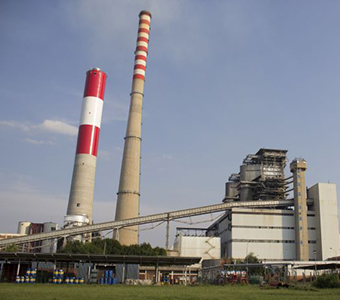
Two reports by the Serbian Center for Investigative Journalism take stock of the problems surrounding the planned Kostolac B3 lignite power plant, including a recent court decision that cancelled the project’s Environmental Impact Assessment.
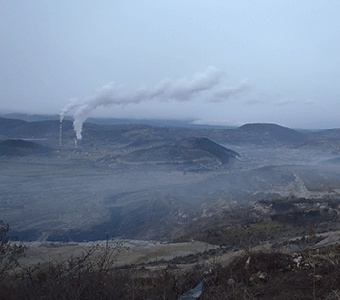
Montenegrin power plant feasible only with creative accounting
August 1, 2016 | Read more
Just as everyone else was going on holiday, on Friday night the Montenegrin parliament approved two decisions laying the ground for the controversial Pljevlja II lignite power plant. But a look at the project documentation released by the government shows that the project’s economics only add up with some giant leaps of faith.
Espoo bodies sent several specific recommendations concerning its non-compliance with the Espoo Convention to Ukraine. Nonetheless Ukraine seems to be either ignoring those or taking insufficient steps towards compliance. Therefore Bankwatch summarises the state-of-play in this letter and asks the Implementation Committee to consider a number of steps to ensure the Convention’s requirements are properly met by Ukraine.
Bosnia and Herzegovina, Serbia, Montenegro and Romania all plan new lignite power plants during the next few years. In contrast, most EU countries are giving up building new coal plants and seven EU states are already coal-free. Since the European Investment Bank, the European Bank for Reconstruction and Development and the World Bank have virtually halted lending for new coal power plants, most of them are due to be financed by Chinese state banks – ExIm Bank and the China Development Bank.

