
Ukraine Reconstruction Campaigner
Email:Tel.:
Anna is Bankwatch’s Ukraine Reconstruction Campaigner, working on green reconstruction and environmental safeguards in Ukraine’s recovery. Her work focuses on alternative sources of energy for communities, energy resilience, and the alignment of Ukraine’s energy policy and public investment management system with EU standards. Originally from Kyiv, she holds an MSc in Environmental Sciences and Policy from Central European University and is based in Bratislava.
More from
The European Investment Bank (EIB) must adopt new directives and operating principles to play a meaningful role in realising the EU’s goal of a decarbonised and resource efficient economy, say CEE Bankwatch Network and Counter Balance ahead of the bank’s annual meeting during the EU finance ministers’ Council this Wednesday, May 25.
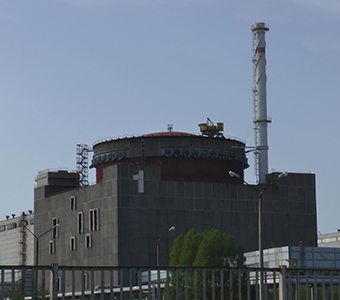
Three decades after Chernobyl, nuclear power remains a mainstay of Ukrainian energy supply. Despite persistent safety problems, the Ukrainian government has approved lifetime extensions for four of its 15 nuclear units since 2010, and two more could be greenlighted later this year. What is more, Ukraine’s nuclear sector survives in part thanks to European support. The EU needs to stop supporting Kiev’s risky nuclear energy programme.
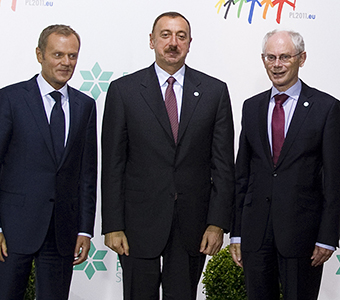
No security for Europe from the Southern Gas Corridor
May 16, 2016 | Read more
With an ownership structure heavily influenced by Azerbaijan, the European Commission’s flagship energy project may end up being a costly piece of infrastructure that does not increase Europe’s energy security but offers a tool for political leverage to the authoritarian Aliyev regime.
Ohrid – Peshtani expressway project, Macedonia
May 11, 2016 | Read more
The Ohrid-Peshtani expressway project – financed by the European Bank for Reconstruction and Development via a EUR 160 million loan for the National Roads Programme – involves the construction of a new section on the A3 express to the Albanian border. The new 12.5 kilometre section is planned to pass through the Galicica national park – a rare and important natural site with abundant biodiversity, that was listed as an emerald site (a future Natura 2000 site) and was designated in 2014 part of UNESCO’s World Network of Biosphere Reserves.
MHP is at the centre of concern for local communities and civil society organisations in Ukraine, because of the way the company engages stakeholders, acquires land, and impacts the environment, water and the local economic development. Since 2010 the European Bank for Reconstruction and Development (EBRD) has approved three loans for MHP, totalling USD 205 million. Whether or not the company is in compliance with Ukrainian law, local people think they are not adequately protected and do not have an equal voice against a large corporation if it decides to begin construction.

