
Ukraine Reconstruction Campaigner
Email:Tel.:
Anna is Bankwatch’s Ukraine Reconstruction Campaigner, working on green reconstruction and environmental safeguards in Ukraine’s recovery. Her work focuses on alternative sources of energy for communities, energy resilience, and the alignment of Ukraine’s energy policy and public investment management system with EU standards. Originally from Kyiv, she holds an MSc in Environmental Sciences and Policy from Central European University and is based in Bratislava.
More from
Western Balkan countries have ambitious plans to increase their electricity generation over the next years. But what will happen if they all become a regional energy hub? Will there be a demand for all the available electricity?
EBRD digs in deeper with Serbian coal king
May 14, 2015 | Read more
Earlier this year, Serbian media reported that the EBRD was considering providing a new EUR 200 million loan for the financial restructuring of the state-owned electric utility power company of Serbia, EPS. The EBRD Director for Serbia, Mateo Patrone, was quoted by B92.net saying that the loan is aimed at helping the financial restructuring of EPS. Meanwhile, the EBRD’s country strategy for Serbia, approved by its board of directors last April, highlights the bank’s “key role in promoting energy efficiency and renewable energy” for the country.
In July 2013 the EBRD approved its second loan in Tunisia, to Serinus Energy. With the EBRD investment portfolio in Tunisia standing at the end of 2014 at EUR 212 million the Serinus Energy loan represents roughly 25 percent of all EBRD loans in Tunisia to date and is the only loan to have gone to the country’s natural resources and energy sector. With such a significance, therefore, surely the EBRD would make every effort to ensure that the project meets the Performance Requirements of its own Environmental and social policy (from 2008) and that it demonstrates a positive transition impact for Tunisia?
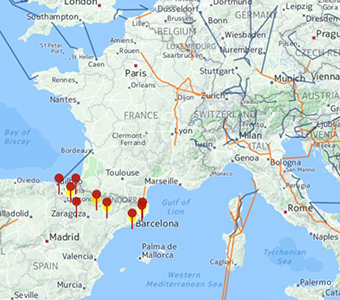
Map: Affected by energy projects
May 14, 2015 | Read more
This collaborative map (coordinated by the Observatori del Deute en la Globalització) shows the other side of energy projects and gives a voice to the regions and communities affected by current and future energy infrastructures. These projects are slated for support from the European public funding via two schemes, the Projects of Common Interest and the European Fund for Strategic Investments. They risk redefining and privatising the meaning of common interest, overlooking the opinion of directly and indirectly affected regions.
Ohrid – Peshtani expressway project, Macedonia
May 13, 2015 | Read more
The project involves the construction of a new section between Ohrid and Pestani on the A3 express ‘Kosel’ to the Albanian border crossing at Ljubanishta. The new 12.5 kilometre section is at a higher elevation than the existing coastal road and towns and will pass through the Galicica National Park. This projects is part of a sovereign guaranteed loan of up to EUR 160 million.

