
Ukraine Reconstruction Campaigner
Email:Tel.:
Anna is Bankwatch’s Ukraine Reconstruction Campaigner, working on green reconstruction and environmental safeguards in Ukraine’s recovery. Her work focuses on alternative sources of energy for communities, energy resilience, and the alignment of Ukraine’s energy policy and public investment management system with EU standards. Originally from Kyiv, she holds an MSc in Environmental Sciences and Policy from Central European University and is based in Bratislava.
More from
Europe’s leaders have failed today to live up to their commitments and make the EU’s energy future more sustainable. The Commission’s ‘Energy Union’ strategy endorsed today by EU Heads of States prioritises new fossil fuel infrastructure at the expense of investments into energy savings and clean energy sources.
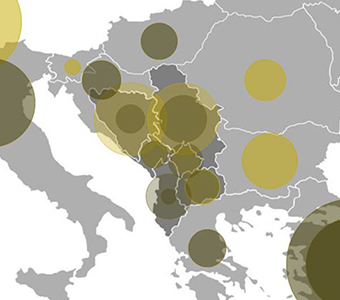
The Western Balkans countries have strong electricity export ambitions that create the danger of stranded assets, finds a new report launched by CEE Bankwatch Network today. If governments take electricity expansion decisions without taking due account of developments in other countries, the region will have to compete with other nearby exporters and may find that its power plants become uneconomic.
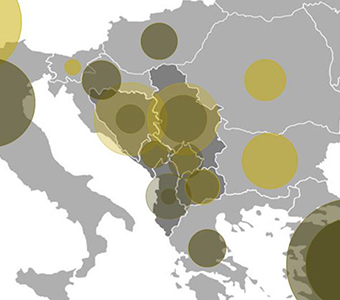
Today we’ve published a new report analysing future energy trends in countries of the western Balkans. From a robust dataset we researched together with the University of Groningen and the consultancy ‘The Advisory House’, we’ve pulled out a couple of illustrations.
Country chapters available for Albania, Bosnia and Herzegovina, Kosovo, Macedonia, Montenegro, Serbia. For other languages, see here. Analysing the estimated energy demand and production capacities in Western Balkan countries, this study shows that if countries realise their planned capacity expansions, the region will have a 56 per cent electricity surplus in 2024, led by Bosnia and Herzegovina and Serbia. Nearly all governments in the region aspire to become electricity exporters, but the study argues that if governments fail to take into account the regional perspective, they could end up with power plants becoming simply uneconomic to operate.
This independent study reveals critical vulnerabilities in the 32 year old nuclear unit 1 in the South Ukraine nuclear power plant, whose lifetime was extended by 10 years in December 2013. The study shows the reactor pressure vessel in unit 1 has several dangerous vulnerabilities that could lead to the appearance of micro-cracks in the vessel’s metal casing. The observed wear in a number of elements in the reactor vessel already exceeds tenfold tolerable levels.

