
Ukraine Reconstruction Campaigner
Email:Tel.:
Anna is Bankwatch’s Ukraine Reconstruction Campaigner, working on green reconstruction and environmental safeguards in Ukraine’s recovery. Her work focuses on alternative sources of energy for communities, energy resilience, and the alignment of Ukraine’s energy policy and public investment management system with EU standards. Originally from Kyiv, she holds an MSc in Environmental Sciences and Policy from Central European University and is based in Bratislava.
More from
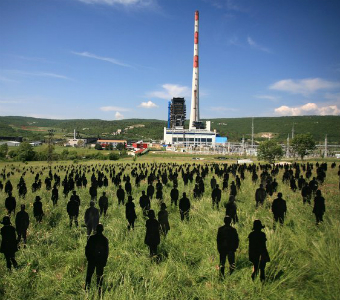
Yesterday, Green Action/Zelena Akcija, Greenpeace and Green Istria staged a spooky public action to raise attention for the findings of a new study that predicts approximately 17 early deaths annually due to the planned new 500 MW unit at the Plomin coal power plant in Croatia.
The EBRD’s new country strategy for Kosovo, announced by the bank on May 3 after Bankwatch Mail Issue 56 went to press, has confirmed what NGOs and others had feared in the consultation process for the EBRD’s first strategy in its new country of operation: that financial support for a new major lignite power plant is very much on the EBRD’s radar, despite evidence that Kosovo does not need such a power plant as well as the potential undermining of EU climate goals.
If there is one sector in which the EBRD has been causing particular controversy in recent years, it is the energy sector. From lignite in Slovenia to hydropower in Georgia and nuclear in Ukraine, the bank has financed a series of projects that have incurred opposition from various quarters. Now that the EBRD is revising its Environmental and Social Policy it’s time to take a look at what needs to be learned from these projects.
Connie Hedegaard: Stop paying the polluters
May 10, 2013 | Read more
“When the winds of change blow,” says an old Chinese proverb, “some build walls, and others build wind mills.”
At the time of writing, it is highly uncertain what the future holds for the controversial 68 MW Ombla underground hydropower plant. Approved for financing by the EBRD back in 2011, only recently has a nature impact assessment study finally been published, and no final opinions have been given by either state institutions or the EBRD on whether the project is to go ahead.

