ARCHIVED: Olkaria geothermal development, Kenya
Financed by several development banks, geothermal installations have uprooted Maasai communities whose fundamental rights as an indigenous people have been ignored at first. The company has so far been slow and reluctant in addressing the Maasai’s complaints.
Stay informed
We closely follow international public finance and bring critical updates from the ground.
Key facts
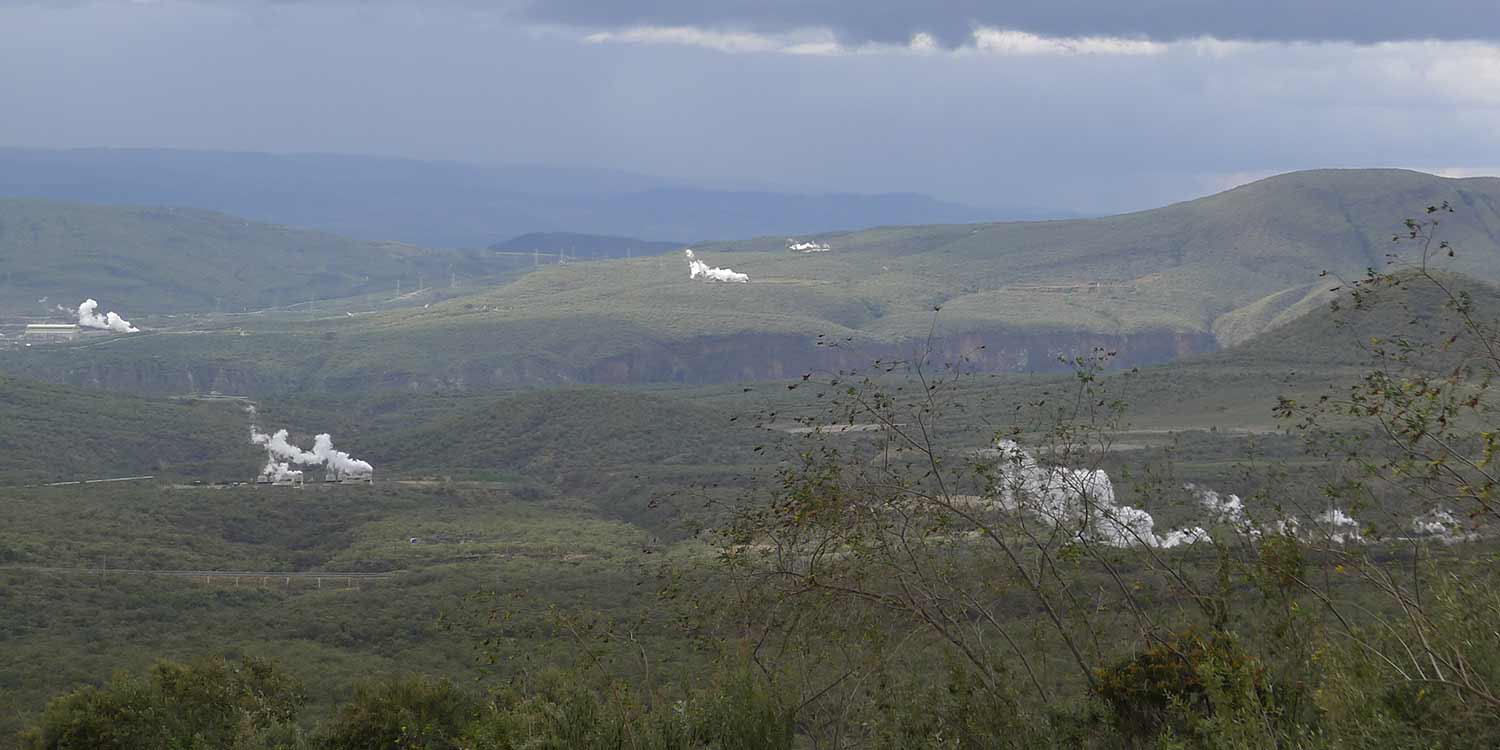
One hundred kilometers north-west from Nairobi, the Olkaria Area in the Hell’s Gate National Park is home to wildlife, pastoralist Maasai communities and hot geothermal water.
Key issues
- Resettlement of Maasai communities caused loss of their way of life. more >>
- Public banks failed to recognise the status of affected people as indigenous. more >>
- Mediation between company and communities remains unsatisfying for locals. more >>
- Uncertainty and irregularities around land titles for affected people’s land. more >>
Background
In 2010, the European Investment Bank, together with the World Bank, Kreditanstalt für Wiederaufbau (KfW, Germany’s development bank), the French Development Agency (AFD) and Japanese development financiers (JICA) invested in the extension of the geothermal power plants Olkaria I and IV which resulted in the resettlement of four indigenous Maasai villages.
Various indigenous Maasai communities in the Olkaria region have been subjected to resettlements on several occasions over the last few decades as the region was first designated a national park and then later its geothermal power potential was to be exploited. The latest resettlement took place to make way for the Olkaria IV geothermal project and happened in breach of locals’ internationally respected rights.
The EIB has already been supporting geothermal installations in Olkaria since 1982 and is now considering further loans for a 70 MW extension of Olkaria I and for a greenfield geothermal plant in the area – Akiira I.
Despite the EIB’s long experience in the region, together with the World Bank it failed to take into account that the Maasai are indigenous people and to negotiate resettlement accordingly. This has been recognised by both banks’ independent accountability mechanisms (the EIB’s Complaints’ Mechanism and the WB’s Inspection Panel), after receiving several complaints from impacted people in the middle of 2014.
Hardships after resettlement
RAPland (RAP for Resettlement Action Plan), a community made up of four resettled villages, has nice and comfortable homes, but little else is given much praise by the Maasai. The lifestyle they are accustomed to has become almost impossible to lead. Cows cannot graze outside their homes, drinking water is hard to come by, the commute to school and work places is long and unreliable.
RAPland has come to symbolise a loss of the Maasai way of life.
Violations of the Indigenous People policy and resettlement standards
Financial institutions failed to recognise the impacted persons as indigenous people and failed to trigger the Indigenous Peoples policy which could have safeguarded the communities from many of the subsequent project failures. They were deprived of the right to free, prior and informed consultation and consent for relocation, the right to secure customary land rights, the right to continue their culture and to benefit-sharing for commercialisation of indigenous peoples’ natural resources.
The complaints mechanisms found that the socioeconomic census data was based on errors, omitting a number of affected people (for instance widows) from any resettlement assistance. Those who moved away from the previous centre of economic life were not given appropriate assistance in restoring their livelihoods.
Many of these failures have not been addressed until today.
READ ALSO
Going abroad – a critique of the European Investment Bank’s External Lending Mandate
This report sheds light on the more questionable quality and effectiveness of EIB operations and on the neglected areas of the bank’s performance outside Europe, such as transparency and access to information practices, its attitude towards tax evasion and tax dodging, human rights due diligence. All of these aspects have a serious impact on the beneficiaries of concrete projects supported by the EIB, specifically on their basic rights and freedoms.

Mediation agreement
As a result of the community members’ complaints, the EIB proposed mediation was proposed to address the issues that were identified. The mediation process between the company and community representatives has been established with the facilitation of the EIB complaints mechanism and supported by the World Bank’s Grievance Redress Service.
The affected people entered into a mediation process in 2015, resulting in a Mediation Agreement in May 2016. Although the process aroused controversies and there is a sense of injustice that it was too rushed, imbalanced and inadequately addressed all the concerns, such as livelihood restoration, benefit-sharing and compensation, there were strong expectations that agreed items will be implemented.
Unfortunately, two and a half years after the resettlement and almost one year after the Mediation Agreement, the provisions have not been fully implemented, including such critical issues as water supply, the availability of grazing land and land titles.
Collective land title
Land title recognising indigenous peoples’ customary ownership should have been secured prior to resettlement. The community members still do not have land titles.
In June 2013 KenGen informed the community that it had bought 1700 acres of land from Kedong Ranch for the sole purpose of resettlement. However, the titles which had been offered turned out to be leaseholds and thus do not constitute ownership. This leaves uncertainty and lack of tenure security for the community, since the actual ownership of the land will still rest with the government.
There are also significant irregularities in the titling proposal. One title document states 999-year leases requiring an annual payment of 176,805ksh (approximately 1700 USD) for the two parcels (RAPland and Cultural Centre). Another document provides for a lease of only 99 years.
The Community Land Act, enacted in September 2016, explicitly provides for community land in freehold (i.e. ownership) which is a favoured option for the community facing the rash of other developments in the Olkaria area.
Latest news
Geothermal Development in Kenya: The Good, the Bad and the Ugly
Bankwatch in the media | 4 December, 2020Geothermal development in Kenya is widely welcomed as green, clean and good for the country. But behind the glowing publicity is a hidden story of forced relocation, human rights abuses, land loss, shattered lives, joblessness, deepening poverty, and serious negative impacts on the health of local people and their livestock.
Read moreThe European Parliament resolution urges European financial institution to respect indigenous peoples rights
Blog entry | 9 August, 2018Celebrate the rights of those 5 per cent who hold 80 per cent of the planet’s biodiversity. Today is the International Day of the World’s Indigenous Peoples.
Read moreThe forgotten struggle of Kenyan indigenous people
Bankwatch in the media | 23 June, 2017In the Rift Valley region of Kenya, Simon Sencho looks at the mountains that surround the village which used to be his home. He’s one of a thousand Maasai people who had to move, to give way to the Olkaria geothermal plant. Source: The forgotten strugg
Read moreRelated publications
Can the EIB become the “EU Development Bank”?
Report | 9 November, 2020 | Download PDFThis report analyses the EIB’s track record in the development field and offers a series of detailed recommendations for fundamental reforms at the EIB, so that the Bank can better support partner countries’ development priorities and ultimately become a credible candidate for the “EU Development Bank” seat.
KenGen’s intimidation of local community – NGO letter to development banks financing the Olkaria geothermal project in Kenya
Advocacy letter | 3 March, 2017 | Download PDFA global group of non-governmental organizations today called on the World Bank, European Investment Bank, Japan International Cooperation Agency, German Development Bank- KFW, French Agency for Development, and other international financial institutio

