• Skip to primary navigation
  • Skip to main content
  • Skip to footer

Bankwatch

  • About us
    • Our vision
    • Who we are
    • 30 years of Bankwatch
    • Donors & finances
    • Get involved
  • What we do
    • Campaign areas
      • Beyond fossil fuels
      • Rights, democracy and development
      • Finance and biodiversity
      • Funding the energy transformation
      • Cities for People
    • Institutions we monitor
      • European Bank for Reconstruction and Development
      • European Investment Bank
      • Asian Infrastructure Investment Bank
      • Asian Development Bank (ADB)
      • EU funds
    • Our projects
    • Success stories
  • Publications
  • News
    • Blog posts
    • Press releases
    • Stories
    • Podcast
    • Us in the media
    • Videos

Home > Archives for Timeline Stories

In April, Ana Colovic Lesoska – founder and executive director of Eko-Svest, the North Macedonian environmental research and advocacy organisation – received the Goldman Environmental Prize for stopping EBRD and World Bank financing of hydropower projects in North Macedonia’s Mavrovo National Park. 

Throughout 2019, Bankwatch supported efforts to open the Initiative for Coal Regions in Transition to broader stakeholder involvement and contributed to shaping the EU’s EUR 1 trillion Multiannual Financial Framework. 

We also helped secure the cancellation of EBRD loans for the Balkan expansion of Ukrainian poultry giant Myronivsky Hliboproduct (MHP) following community complaints, and successfully pushed the EBRD to strengthen protections against reprisals in its updated safeguards policy. 

In September, Montenegro officially cancelled the Pljevlja II coal-fired power plant project, previously considered for funding by Czech and Slovak export credit agencies. 

In November, signalling a major shift in EU energy policy, the EIB announced it would end financing for fossil-fuel energy projects by the end of 2021. 

But perhaps the most significant decision of 2019 came late in the year with the European Commission’s launch of the landmark European Green Deal, aiming to make Europe the first climate-neutral continent by 2050. 

In the same month, Bankwatch published the first edition of our ‘Comply or Close’ publication series, exposing chronic breaches of air pollution limits by coal plants in the Western Balkans. 
https://bankwatch.org/cool_timeline/153783

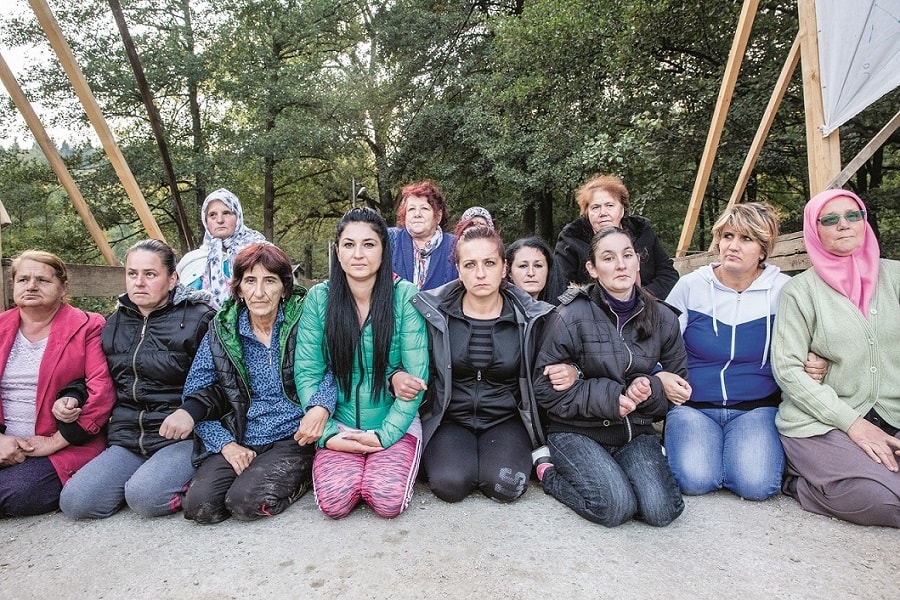
Women of Kruščica protesting. Photo by Andrew Burr, Patagonia

In June, Bankwatch and Patagonia delivered an unprecedented petition with over 120,000 signatures to the EBRD, urging an end to hydropower financing in the Balkans – the largest energy-related petition ever targeting the bank.  

In October, Bankwatch participated in the Human Rights Defenders World Summit in Paris, bringing together over 150 activists to strengthen their advocacy with development banks. 

Throughout the year, Bankwatch advanced the concept of a just transition for coal regions, engaging EU policymakers and featuring prominently at the UN climate talks in Katowice in December.  

For instance, in Slovakia, Bankwatch supported the development of an action plan for the Upper Nitra region, a pilot area in the EU’s Initiative for Coal Regions in Transition, aiming for a coal phase-out by 2023. 

https://bankwatch.org/cool_timeline/153780

In January, the EBRD cancelled its EUR 65 million loan for the Boškov Most hydropower plant in North Macedonia, following our sustained campaigning over its environmental impact. 

In Kenya, Bankwatch highlighted the case of an EIB-financed road project where over 100 people were displaced without compensation, in breach of project obligations. 

Between April and July 2017, Bankwatch carried out independent air quality monitoring at six sites across the Western Balkans, Romania, and Bulgaria to address gaps in official oversight. Our findings revealed frequent breaches of EU air quality standards for PM10 and PM2.5, underscoring the health risks posed by coal-fired power plants and the inadequacy of official monitoring systems. 

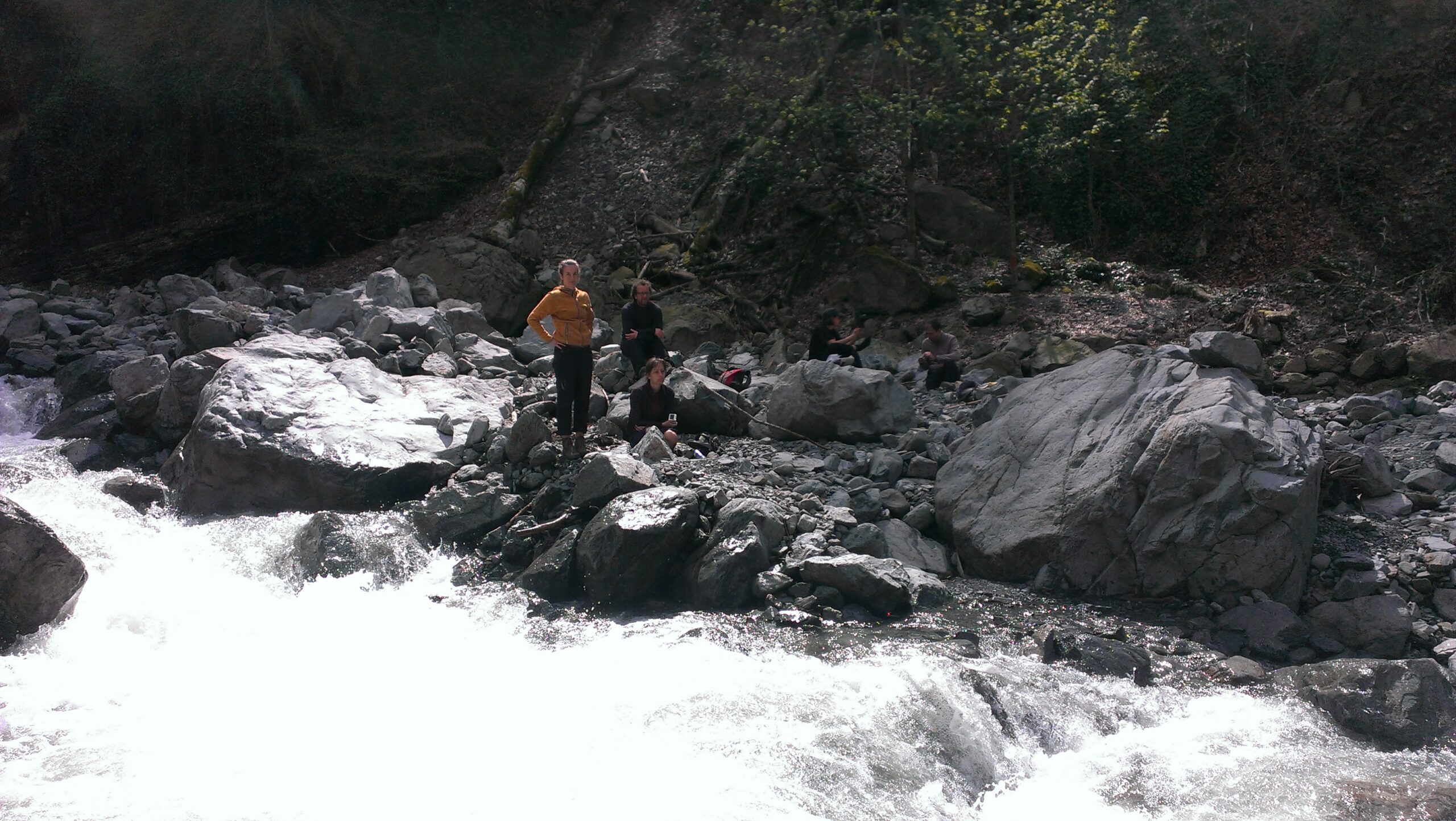
In March, we co-hosted a global gathering of nearly 100 river defenders in Tbilisi, bringing together activists from across five continents to strategise for river protection. 

And lastly, in November, Bankwatch joined over 30 civil society groups and think-tanks from 28 countries in launching the Europe Beyond Coal initiative, calling for a just and inclusive energy transition. 

https://bankwatch.org/cool_timeline/153777

In January, Bankwatch, in partnership with Friends of the Earth Europe, published its widely circulated report – ‘Climate’s Enfants Terribles’ – highlighting how the mismanagement of EU funds by some of the newer Member States was hindering the EU’s clean energy transition. 

In March, the EU adopted the Circular Economy Action Plan, aiming to promote the reuse, repair, and recycling of materials across all sectors as part of its shift toward a more sustainable economic model. 

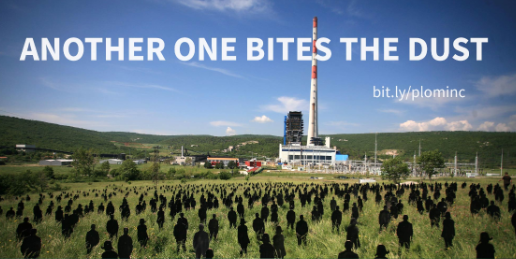
In April, Croatia’s Minister of Economy confirmed that the planned Plomin C coal power plant would not proceed. The project, previously expected to receive financing from institutions including Crédit Agricole, was abandoned amid growing opposition and financing uncertainty. 

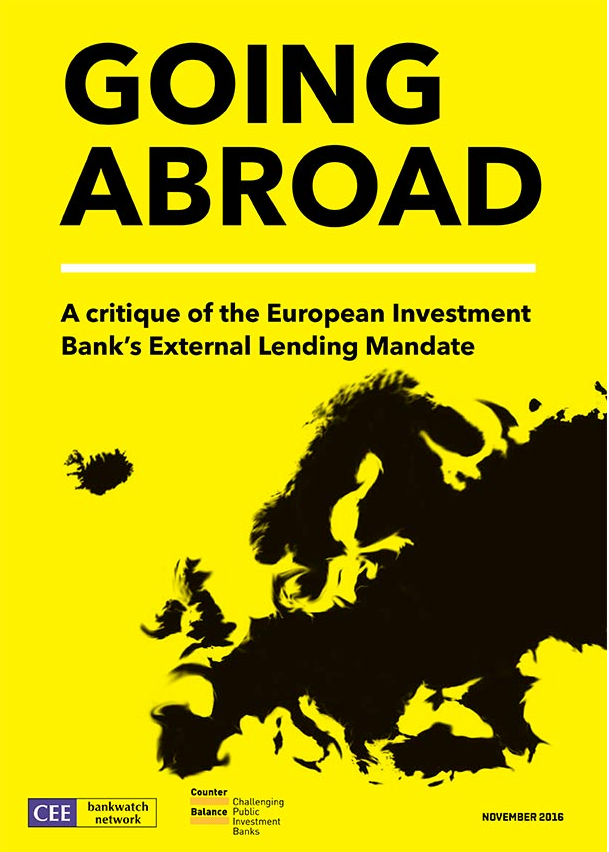
And to round off the year, in November, we published another two major publications: a report co-authored with Counter Balance – ‘Going abroad: A critique of the European Investment Bank’s external lending mandate’ – examining the development impacts and accountability gaps in the EIB’s operations outside the EU; and the ‘Great Coal Jobs Fraud’ report, exposing how coal projects across south-eastern Europe were being justified with inflated or unrealistic employment figures. 

https://bankwatch.org/cool_timeline/153774

In 2015, against the backdrop of the landmark Paris Agreement and a significant migration crisis stemming from the wars in Syria and Iraq, linked by many to factors including climate change, Bankwatch actively campaigned across south-eastern Europe, successfully stopping or stalling investments in coal in Romania, Croatia, Bosnia and Herzegovina, and Serbia. 

At the EU level, we pushed for and achieved the greening of the European Fund for Strategic Investments, highlighting the minimal investment in renewables and energy efficiency by central and eastern European governments using EU funds. 

We also held a first fact-finding mission to Ukrainian communities impacted by mini hydropower plants, as documented in our ‘Black Earth’ report, and continued to support movements against large dams. 

Our sustained efforts to reverse the impact of polluting coal power and promote cleaner energy in the Balkans yielded important victories in Romania and Serbia. 

https://bankwatch.org/cool_timeline/153771

Throughout 2014, Bankwatch continued to focus on influencing EU funding for sustainability and opposing harmful allocations.  

In May, following active campaigning against fossil fuels, Bankwatch scored a significant victory when the EBRD adopted a new energy sector strategy that largely stopped its funding of new coal projects, with the temporary exceptions of Kosovo and Mongolia. 

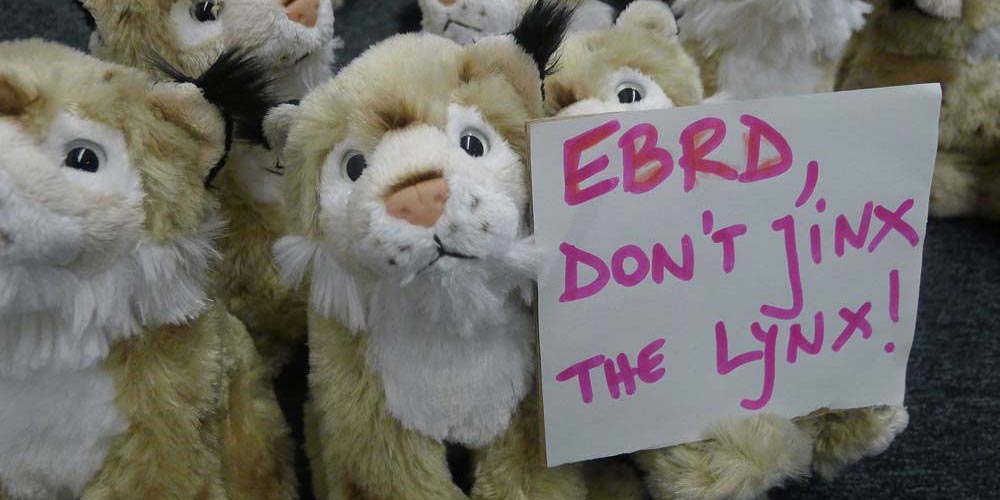
One of our major campaigns during the year highlighted the ongoing threats to the Balkan lynx and Mavrovo National Park. We also advocated against mandatory biodiversity offsetting and engaged in EU climate policy discussions.  

Bankwatch’s annual meeting took place in Georgia, where the network was actively involved in environmental issues throughout the year, particularly concerning controversial hydropower projects.  

https://bankwatch.org/cool_timeline/153768

« Previous Page
Next Page »

Footer

CEE Bankwatch Network gratefully acknowledges EU funding support.

The content of this website is the sole responsibility of CEE Bankwatch Network and can under no circumstances be regarded as reflecting the position of the European Union.

Unless otherwise noted, the content on this website is licensed under a Creative Commons BY-SA 4.0 License

Your personal data collected on the website is governed by the present Privacy Policy.

Get in touch with us

  • Bluesky
  • Email
  • Facebook
  • Instagram
  • LinkedIn
  • RSS
  • YouTube