Preliminary comments on the Nenskra Environmental Impact Assessment and its consultation process
Publication | 25 June, 2015Following an on-site visit in the Upper Svaneti region in Georgia, these comments find substantial weaknesses in the Environmental Impact Assessment (EIA) for the Nenskra hydropower plant, in particular with regards to the engagement and consultation of local communities. See also the comments on the final Nenskra EIA report.
Read more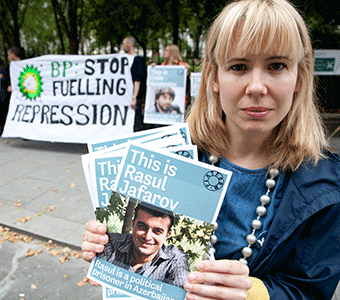
Azeri regime stifles criticism ahead of European Games. European lender must finally take measures.
Blog entry | 10 June, 2015UPDATE 1 12h CET 12 June 2015 Platform have taken to the streets of London to protest the opening of the European Games. See a video of the action below, and read more in their book published Friday, All that glitters, which explores how the European Games belong to the Aliyev regime and the British oil company BP and how sport is being co-opted in the service of a dynasty and fossil fuels. ––––
Read more
Italian mayor stands up against EU priority gas pipeline
Blog entry | 8 June, 2015Local opposition against the Trans-Adriatic gas pipeline (TAP) is growing as an Italian mayor made clear in an open letter to the European Commission and European public banks.
Read more
Transforming development finance? Europe’s multilateral lenders fail on aid transparency
Blog entry | 4 June, 2015The recently published 2015 Aid Transparency Review concludes that the European Union is off track from meeting its aid transparency commitments. Europe’s two multilateral development banks are indicative of the altogether rather disappointing outcome.
Read moreReflections on biodiversity offsetting in Mongolia
Publication | 25 May, 2015A fact-finding mission in April 2015 to Mongolia identified serious concerns regarding the implementation of the new Mongolian Environmental Impact Assessment (EIA) legislation – in particular the specific provision on biodiversity offsetting. Oyu Tolgoi (OT), the largest mining investment ever licensed in Mongolia, has been the first project to include a biodiversity offset action in its EIA and related biodiversity management plan.
Read moreInterviewing the EBRD about the Kumtor gold mine
Publication | 14 May, 2015This interview was conducted during the EBRD annual meeting and business forum, 14-15 May 2015 in Tbilisi. The interview was led by Ryskeldi Satke (RS) with Dr. Alistair Clark (AC), EBRD’s Managing Director Environment and Sustainability Department; Michaela Bergman (MB), EBRD’s Chief Counselor for Social Issues Environment and Sustainability Department; and Dr. Dariusz Prasek (DP), Director, Project Appraisal Environment Department.
Read moreBankwatch Mail 62
Publication | 14 May, 2015Коротко о публикации Материалы 62-го выпуска Bankwatch Mail были опубликованы сразу после ежегодной встречи Европейского банка реконструкции и развития в Тбилиси. Увеличение числа энергетических проектов с печальными последствиями для людей и планеты, − от подавления инакомыслящих в Азербайджане и уничтожения национального парка в Македонии до (частичного) успеха ядерной безопасности в Украине, – является основной темой данного выпуска.
Read moreBankwatch Mail 62
Publication | 14 May, 2015Published on the heels of the European Bank for Reconstruction and Development’s annual meeting in Tbilisi, the red thread of Issue 62 of Bankwatch Mail is a slew of energy projects with grim implications for people and planet – from the crackdown on dissent in Azerbaijan to the destruction of a national park in Macedonia to a (partial) success for nuclear safety in Ukraine.
Read more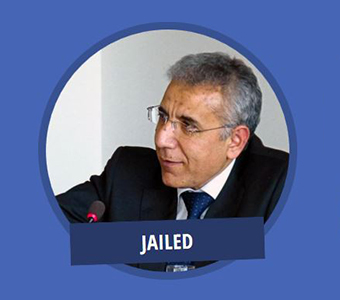
Europe’s Caspian gas dreams – a nightmare come true for human rights in Azerbaijan
Blog entry | 14 May, 2015As investors and officials are promoting a gas pipeline project from the Caspian Sea to Italy, the systematic repression of human rights in Azerbaijan is hardly on the official agenda. The Aliyev regime’s weakly veiled attempts to muzzle dissent illustrate how even the most repressive governments are acceptable partners for Europe’s pet energy projects.
Read more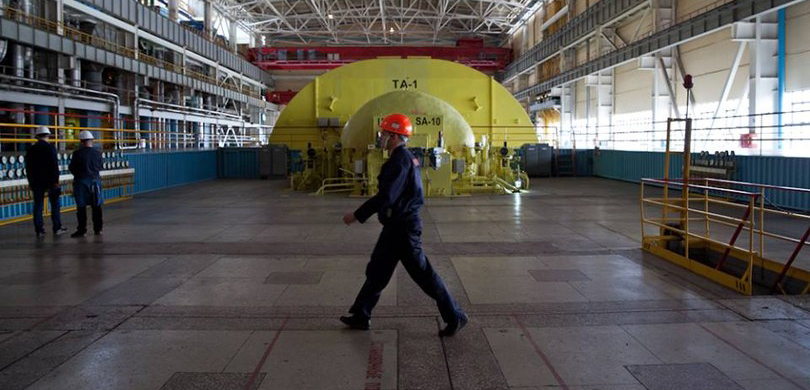
Operations suspended at one Ukrainian nuclear unit, as wider safety doubts persist
Publication | 14 May, 2015Citing 33 safety issue failings, at the end of April Ukraine’s nuclear regulator took the decision to suspend operations at Unit 2 of the South Ukraine nuclear power plant by a May 12 deadline, the date marking the end of the plant’s design lifetime. Under the terms of the Ukrainian State Nuclear Regulatory Inspectorate Council’s decision, should the state-owned nuclear energy operator Energoatom wish to resume the unit’s operations beyond its design lifetime it will have to implement all necessary measures by May 2017.
Read more
