Western Balkans electricity plans: where will all that power go?
Blog entry | 23 March, 2015Western Balkan countries have ambitious plans to increase their electricity generation over the next years. But what will happen if they all become a regional energy hub? Will there be a demand for all the available electricity?
Read moreSummary of an independent review of the proposed lifetime extension of Unit 1 at the South Ukraine nuclear power plant and its compliance with relevant nuclear safety standards
Publication | 17 March, 2015This independent study reveals critical vulnerabilities in the 32 year old nuclear unit 1 in the South Ukraine nuclear power plant, whose lifetime was extended by 10 years in December 2013. The study shows the reactor pressure vessel in unit 1 has several dangerous vulnerabilities that could lead to the appearance of micro-cracks in the vessel’s metal casing. The observed wear in a number of elements in the reactor vessel already exceeds tenfold tolerable levels.
Read moreNew study sounds the alarm on safety in Ukrainian nuclear power plants operated beyond their design lifetime
Press release | 17 March, 2015Prague, Kiev – In December 2013, Ukraine’s State Nuclear Regulatory Inspectorate (SNRIU) has granted a 10 years lifetime extension license to unit 1 in the South Ukraine nuclear power plant. But a new independent study reveals critical vulnerabilities in the 32 year old nuclear unit that could have dangerous ramifications.
Read more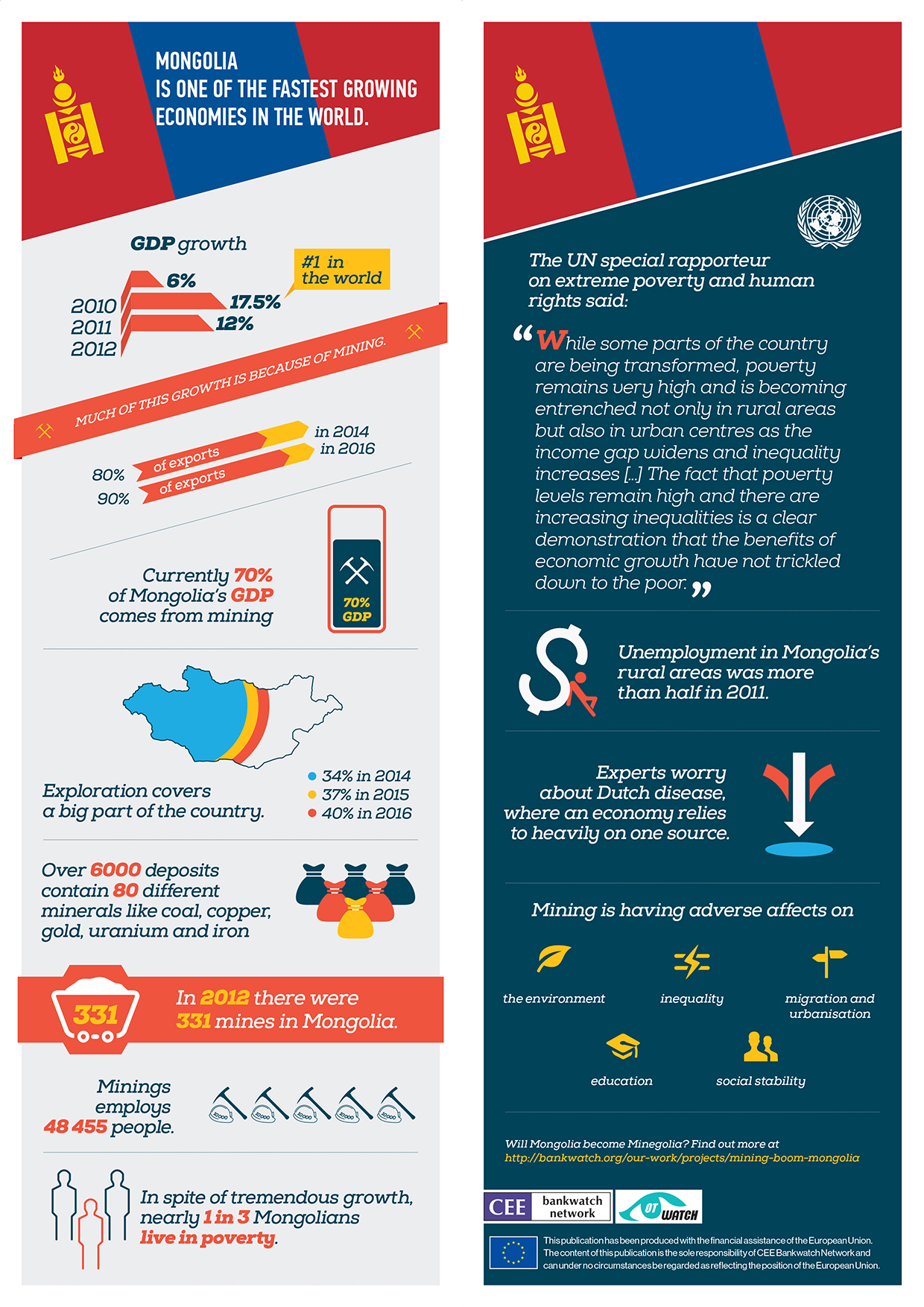
Infographic: Growth, poverty and mining in Mongolia
Publication | 15 March, 2015This infographic juxtaposes Mongolia’s impressive economic growth over the last years with the still widespread poverty in the country.
Read moreEBRD must not back Egyptian coal imports
Press release | 24 February, 2015Cairo — Ahead of tomorrow’s Board vote on the EBRD loan to CEMEX Egypt, a number of civil society organisations [*], inlcuding Egyptian groups, urge the bank to reject this project not only because it involves support for dirty coal-based production but also because it actually means promoting the plans of a repressive government despite opposition from civil society.
Read more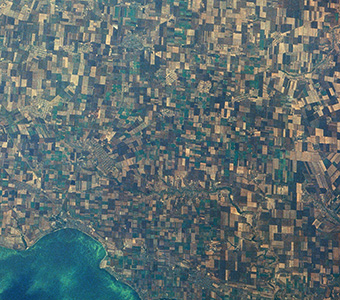
Agro business shooting star in Ukraine turns into nightmare for investors
Blog entry | 18 February, 2015The story of the defaulted company Mriya Agro Holding shows what risks investors and creditors are willing to take in the pursuit of profit in Ukraine’s agribusiness. Major creditors, including the International Finance Corporation and export credit agencies have been left with little hopes of recoveries. The European Bank for Reconstruction and Development has escaped the financial loss by a hair’s-breadth.
Read more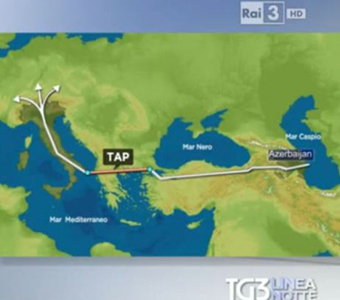
EU priority gas pipeline faces fierce opposition in Italy
Blog entry | 17 February, 2015The European Investment Bank recently confirmed plans to finance the Trans-Adriatic Pipeline from Greece via Albania to Italy. Yet a coalition of local mayors will do whatever it takes to stop the project.
Read moreLetter to EBRD: Nuclear inspections must continue in Ukraine
Publication | 16 February, 2015In a bid to help the recession-hit Ukrainian economy, the country’s government has significantly reduced regulatory obligations for businesses and state-owned companies. This includes Ukraine’s nuclear power plants which have been plagued in the recent past by ageing reactors and accidents and whose safety upgrades are receiving support from the European Bank for Reconstruction and Development and Euratom. In this letter Ukraine Bankwatch member group is asking the EBRD to pressure the government to ensure that the Ukrainian state nuclear regulator SRNIU is able to carry out inspections of nuclear power plants.
Read more
Natural gas left, right and centre at Energy Union conference in Riga
Blog entry | 11 February, 2015Massive infrastructure for transporting natural gas is shaping up to be a centre piece of the Energy Union put forward by the Juncker Commission. This was also the impression Bankwatch campaigners had at an Energy Union conference in Riga last week.
Read more
New arrests should dampen Serbia’s appetite for coal
Blog entry | 4 February, 2015Corruption cases continue to haunt Serbia’s coal sector as a new round of arrests last week has shown. They also illustrate how the dependence on coal creates vulnerabilities for Serbia’s energy sector and potentially its financiers, in particular in the aftermath of last year’s floods.
Read more
