Toolkit on the Project Complaint Mechanism of the European Bank for Reconstruction and Development
Publication | 22 December, 2014The Project Compliance Mechanism (PCM) is the EBRD’s accountability mechanism for the assessment and follow-up of complaints about project financed by the bank. The PCM is a grievance mechanism for civil society, local groups and individuals that may be directly and adversely affected by a bank project. It’s purpose is to help identify when the EBRD or its client has not fulfilled the obligations defined in the bank’s policies and to facilitate a problem-solving process with the EBRD’s client.
Read moreProposed Lukoil EBRD loan – for whose benefit?
Publication | 22 December, 2014Despite the Russian invasion in Ukraine leading to EU and US sanctions against Moscow and major Russian energy companies, public banks supported by EU countries are gearing up to offer almost a billion dollars in financial support to Russian company Lukoil for gas extraction in Azerbaijan.
Read more
Dust, displacement, intimidation – Mongolian herders are under pressure by iron ore mine
Blog entry | 9 December, 2014Herders in the Mongolian Gobi Altai mountains are facing pollution and displacement by an iron ore mine. The mining company Altain Khuder responds to criticism with intimidation. The financier, the European Bank for Reconstruction and Development, is not doing enough to protect herders’ rights.
Read more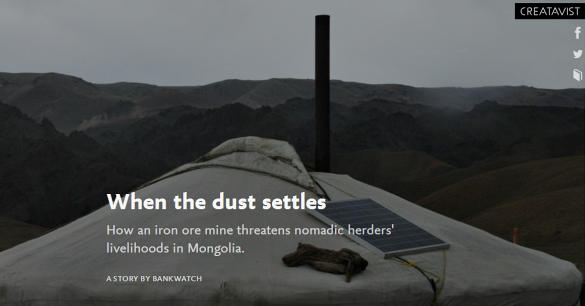
When the dust settles – Impacts of the Tayan Nuur iron ore mine on nomadic herders’ lives in Mongolia
Publication | 9 December, 2014This report from a fact-finding mission to the Gobi Altai mountains in Mongolia describes the impacts the Tayan Nuur iron ore mine has on local nomadic herders, including displacement, dust pollution resulting in diminished livestock, and more. While the mining company Altain Khuder responds to criticism with intimidation, the company’s financier, the European Bank for Reconstruction and Development, is not doing enough to protect herders’ rights.
Read moreLetters to EBRD regarding loan for Naftogaz pipeline
Publication | 9 December, 2014The letters were sent shortly before the EBRD’s board of directors are to approve a loan for the Naftogaz Emergency Pipeline Upgrade and Modernisation project. Since the project has not yet passed through all environmental and social procedures, Bankwatch asked the EBRD’s president and its board in separate letters to postpone the board decision. Letter to the EBRD president >> (pdf)
Read more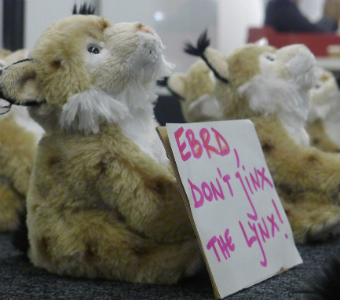
Boskov Most suspected of breaching Council of Europe nature protection convention
Press release | 5 December, 2014Skopje/ Strasbourg – The Standing Committee of the Bern Convention, a binding international legal instrument in the field of nature conservation for signatory countries, announced today (pdf) that it will open a case file to address the complaint made by Eko-svest about the planned hydropower plants in Mavrovo national park.
Read more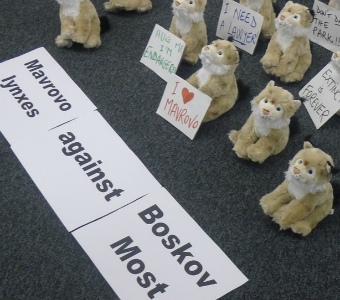
How much will the Macedonian hydropower plant Boskov Most really cost?
Blog entry | 5 December, 2014The total costs of the Boskov Most hydropower plant project in Macedonia will possibly cost more than twice the projected EUR 84 million, considering that many aspects have so far not been studied or remain unresolved.
Read more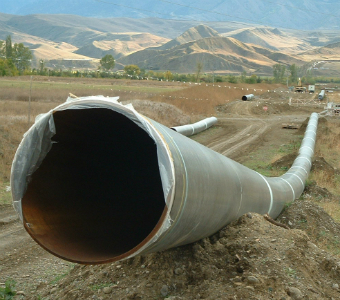
Energy security for Europe or profit for Lukoil?
Blog entry | 4 December, 2014Despite the Russian invasion in Ukraine leading to EU and US sanctions against Moscow and major Russian energy companies, public banks supported by EU countries are just gearing up to offer a one billion dollar loan to Russian company Lukoil for gas extraction in Azerbaijan.
Read moreNECU and Bankwatch statement on the incident at Zaporizhye nuclear plant in Ukraine
Press release | 3 December, 2014Statement on an incident at the Zaporizhye nuclear power plant in Ukraine, where a power transformer dysfunction occurred on November 28th.
Read more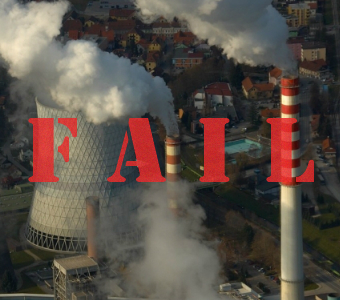
Sostanj lignite plant: A mistake not to be repeated
Press release | 2 December, 2014Ljubljana — A new briefing by Slovenian NGO Focus shows how misguided assessments of future viability and corruption led to TES6 lignite unit costing more than double the estimated amount, bringing annual losses of tens of millions of euros, and creating only a fraction of the number of jobs promised.
Read more
