EIB and EBRD transparency nosedive needs fixing – and fast
Publication | 2 December, 2014Operational transparency standards at the European Investment Bank and the European Bank for Reconstruction and Development continue to deteriorate, according to the 2014 Aid Transparency Index (ATI) published in October by aid watchdog Publish What You Fund (PWYF).
Read more
EBRD-EIB role in Slovak private equity gas debacle questioned
Publication | 2 December, 2014The European Bank for Reconstruction and Development (EBRD) has revealed, in a letter of late October to Bankwatch’s Slovak member group Friends of the Earth-CEPA, that the EnerCap Power Fund, a private equity investor, has pulled out of the controversial COGEN gas power plant being developed in the northern Slovakian town of Považský Chlmec.
Read more
Another chip off the EBRD block – Kronospan expansion in Belarus
Publication | 2 December, 2014In October this year, the European Bank for Reconstruction and Development (EBRD) approved an up to EUR 50 million loan to a Belarusian subsidiary of the Austrian company Kronospan for the expansion of a particleboard facility at Smorgon in the Grodno region of Belarus. Belarus will provide a guaranteed return on investment for both Kronospan and the EBRD. With the country’s rich wood resources, generous state tax incentives, weak legal environment, toothless trade unions, cheap labour and a generally stifled civil society, the EBRD and its client are not likely to run into the same environmental and legal difficulties experienced by Kronospan in other eastern European countries.
Read moreThe Great Rush – The European Union’s responsibility in natural resources grabbing
Publication | 31 October, 2014Land, forests, water and raw materials are valuable resources that increasingly interest the major players of the economy of our planet. This report collects 16 case studies from around the world in order to better understand the impacts of natural resource grabbing on the local communities, clarify the responsibilities of the European Union and, in conclusion, examine actions to be undertaken to invert this phenomenon.
Read more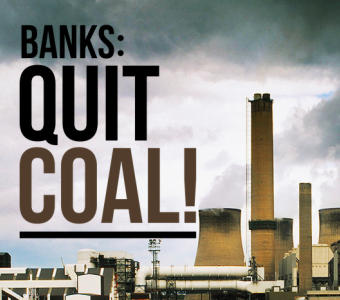
Two great new websites on all things coal
Blog entry | 31 October, 2014As anti-coal movements are gaining momentum around the world, two new websites offer a slew of information about the dirtiest of fossil fuels and the campaigns against it. They also offer a stark reminder that despite progress in the last years coal is far from dead.
Read more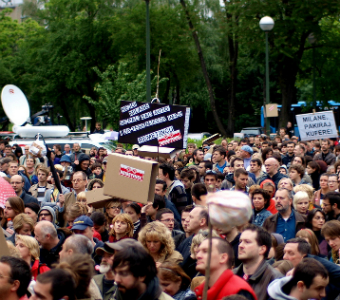
Zagreb Mayor arrested – and not before time
Blog entry | 20 October, 2014Something quite amazing happened yesterday evening in Zagreb. The Croatian police and the State Prosecutor announced that several people had been arrested on suspicion of a number of criminal corruption offences, abuse of office and peddling influence. Among the arrested were Zagreb Mayor Milan Bandic, Head of Zagreb Holding municipal company Slobodan Ljubicic, the head of the ZET public transport company Ivan Tolic, head and part-owner of the CIOS metal recycling company Petar Pripuza and around 15 more un-named people.
Read moreThe Boskov Most hydropower plant, Macedonia
Publication | 20 October, 2014The Boskov Most hydropower plant includes an accumulation dam 33 metres in height and a power plant with a total capacity of 68MW, Around 80 per cent of the project falls within the territory of the Mavrovo national park, the largest and richest national park in Macedonia. Three years after the signing of a loan agreement over EUR 65 million from the EBRD, little progress has been made with the project. This briefing details several reasons why the project should not receive support from the EBRD.
Read morePoor quality of draft ESIA report for Part C and D of the 750 kV Rivne – Kyiv High Voltage Line Project
Publication | 17 October, 2014Letter to the European Bank for Reconstruction and Development, 17 October 2014 – Download as pdf Letter to the European Investment Bank, 31 October 2014 – Download as pdf
Read moreGreen 10 letter to European Commission president-elect Juncker regarding the appointments of new Commissioners
Publication | 16 October, 2014This Green 10 letter highlights some controversial aspects of Commission President-elect Juncker’s new cabinet appointments, including the inclusion of sustainability within the competency of Commissioner Timmermans.
Read more
