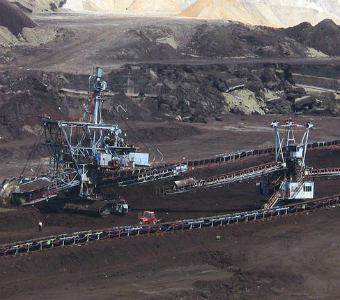
Lonely advocacy at Kolubara lignite mine
Blog entry | 28 June, 2012On a visit to the Kolubara mining complex in Serbia, Bankwatch staff was denied a meeting with the mining company, because of them caring for the environment.
Read more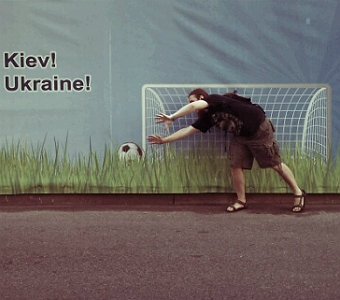
Another own goal for Ukraine at the Euro 2012
Blog entry | 27 June, 2012A Euro 2012 related road rehabilitation in Ukraine has left locals with a high speed road but no safety in their front yards.
Read more
Europe’s unequal partnerships – a sad tale about energy
Blog entry | 25 June, 2012A too strong focus on energy security is steering Europe’s engagement with neighbouring states in a troublesome direction for the partnering countries.
Read moreComments and recommendations on the EBRD Draft Mining Strategy
Publication | 23 June, 2012(Download a short version of these comments as pdf.) As it is now, the EBRD foresees growth in the mining sector and sees its involvement as crucial in this process. At the same time the Bank recognizes that mining can cause significant adverse environmental and social impacts, including permanent ones, and that no single mine can be sustainable since it exploits a finite local resource.
Read more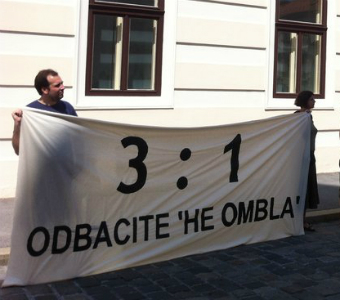
3:1 against Ombla, Croatia must stop gung-ho investment
Blog entry | 20 June, 20123 out of 4 experts gave a negative opinion on the environmental study of the Ombla hydropower plant. Now the Croatian government must heed their warnings and stop the project.
Read more
Between the headlines: EBRD expansion demands policy-driven approach
Blog entry | 14 June, 2012With the European Parliament’s ratification of the expansion of EBRD operations to north Africa the question arises again: Is the bank fit for this purpose? The Parliament’s answer sounds like a resounding ‘maybe’.
Read more
The revolution should not be privatised
Blog entry | 12 June, 2012Pushing for public-private partnerships will not support democratisation in the Arab Spring countries but risks increasing their public debt. Our new website brings together the PPP lessons that Europe should have learned.
Read moreThe EU’s electricity imports from neighbouring countries: at what cost?
Press release | 8 June, 2012Kiev — Despite being the place of one of the most terrifying nuclear accidents in the world, Ukraine is currently working on expanding the lifespan of 13 of its old Soviet-style reactors, with electricity exports to the European Union in mind. In a study published today, CEE Bankwatch Network is revealing how the EU and its financing institutions are promoting electricity imports to the EU which are likely to have highly damaging consequences for the exporting countries.
Read moreA Partnership of unequals – Electricity exports from the eastern neighbourhood and western Balkans
Publication | 7 June, 2012Cooperation in the energy sector is one of the European Union’s key priorities in its relationships with neighbouring states. Although the promotion of energy efficiency, energy savings and the use of renewable energy sources should be the primary areas of cooperation along with “energy security”, the latter receives the lion’s share of attention and in several cases also a disproportionally large amount of financial support. This can have several negative environmental and social implications as this study shows.
Read more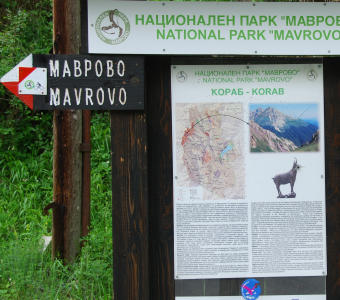
Hydro power plants endanger the Balkan lynx in Macedonia
Blog entry | 5 June, 2012A fact-finding mission to Macedonia has confirmed our concerns that two planned hydro power plants are set to destroy important natural habitats in the Mavrovo National Park.
Read more
