Letter to EBRD: request to clarify conflicting information on mining projects in Mongolia
Publication | 23 March, 2012Following a fact-finding mission to Mongolia in June 2011, CEE Bankwatch sent a letter on August 18, 2011 with several questions for clarification to the EBRD. Additionally OT Watch submitted a paper on November 1, 2011 to representatives of the EBRD Board of Directors during their visit to Mongolia. While the EBRD replied to both of these, several issues still need clarification, as there is conflicting information.
Read moreLetter to EBRD and EIB: Will a loan to ENEA free up assets for a coal fired power plant in Poland?
Publication | 22 March, 2012The EBRD and the EIB are considering a loan of up to PLN 800 million to the Polish electricity utility ENEA to support a PLN 3.2 billion investment programme of the company’s distribution network. Bankwatch’s letter enquires what conditions will be placed on an EBRD loan to ENEA to make sure that the loan does not free the company’s assets that it needs to invest in the Kozienice coal-fired unit number 11 in Poland. A similar letter was sent to both the European Bank for Reconstruction and Development (pdf) and the European Investment Bank (pdf).
Read more
Corporate largesse meets scepticism at World Water Forum
Blog entry | 21 March, 2012Criticism and protests around the World Water Forum have highlighted the risk of hydropower projects being greenwashed and the dangers these installations can pose to people and nature in many countries.
Read more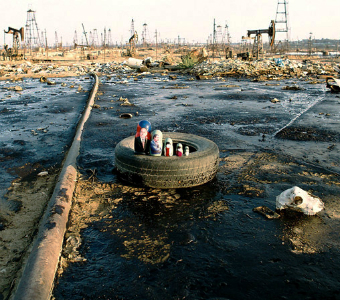
The two sides of reality – what the BTC pipeline means for the EBRD in north Africa
Blog entry | 19 March, 2012To illustrate its readiness to help Arab Spring countries, the European Bank for Reconstruction and Development draws on the Baku Tbilisi Ceyhan pipeline project as a positive example. Having closely followed the project, Manana Kochladze outlines why people in north Africa should be wary of what’s to come when the EBRD enters their countries.
Read more
Formal complaints lodged against questionable EBRD energy loans
Publication | 13 March, 2012Early in the new year Bankwatch and partner groups lodged two complaints with the EBRD’s Public Complaint Mechanism (PCM): one concerning the loan agreement for the Rivne-Kyiv High Voltage Line project in Ukraine, the other concerning the EBRD’s Šoštanj lignite thermal power plant loan in Slovenia.
Read more
Round and round they go, what they finance next … nobody knows
Publication | 13 March, 2012There is more or less consensus among various stakeholders that developing decentralised renewable energy sources (RES) to feed local energy demand is the only way to build a long-term, truly sustainable, effective and fair way to satisfy Europe’s energy needs.
Read more
Silence is golden for some – the strange case of the EBRD’s mining policy
Publication | 13 March, 2012It is coming up for three years since the EBRD’s 2009 Annual Evaluation Overview Report “alerted Management to develop a new Operation Policy to cover all forms of non-energy related extraction of natural resources (mining policy)”. The EBRD does not appear to have been in any great rush with the preparation of this policy, and one has to wonder how long the bank will allow for the new policy to be consulted with the interested public. More importantly, how influential will public input be in setting the policy objectives and requirements?
Read more
EBRD plans for Egypt slammed by human rights group
Publication | 13 March, 2012An independent Egyptian human rights organisation, the Egyptian Initiative for Personal Rights (EIPR), published in early March a scathing assessment of the EBRD’s plans for its future investment activities in Egypt. Based on an EBRD Technical Assessment document, EIPR takes issue with the EBRD analysis on three main counts:
Read moreLetters to EBRD and EIB: Irregularities in the Sostanj project in Slovenia
Publication | 13 March, 2012With this letter, Bankwatch, together with Focus, Association for Sustainable Development and Greenpeace Slovenia are informing the EIB’s and EBRD’s highest decision-making bodies about recent developments in the case of the Sostanj lignite power plant that in our view should prompt the banks to drop their participation in this investment. The EBRD’s president Thomas Mirow replied on April 16, 2012 (download his response (pdf)) informing us about the suspension of the EBRD’s loan for the Sostanj project. Just one day later, another letter from the EBRD (download as pdf) informed us that the suspension is not a formal suspension.
Read moreVreoci community requests EBRD to suspend credit arrangement with Kolubara
Publication | 13 March, 2012The Vreoci community from the Kolubara mining basin requests from the EBRD to suspend the loan arrangements for the Kolubara lignite mine due to the constant and increasing violations of human and property rights by the Public Company Mining Basin “Kolubara” – Lazarevac.
Read more
