• Skip to primary navigation
  • Skip to main content
  • Skip to footer

Bankwatch

  • About us
    • Our vision
    • Who we are
    • 30 years of Bankwatch
    • Donors & finances
    • Get involved
  • What we do
    • Campaign areas
      • Beyond fossil fuels
      • Rights, democracy and development
      • Finance and biodiversity
      • Funding the energy transformation
      • Cities for People
    • Institutions we monitor
      • European Bank for Reconstruction and Development
      • European Investment Bank
      • Asian Infrastructure Investment Bank
      • Asian Development Bank (ADB)
      • EU funds
    • Our projects
    • Success stories
  • Publications
  • News
    • Blog posts
    • Press releases
    • Stories
    • Podcast
    • Us in the media
    • Videos
  • Donate

Home > Archives for Press release

Press release

Crédit Agricole violating own coal policies with new Croatian power plant support – new report

French bank Crédit Agricole’s support for a proposed major new coal plant project in Croatia is inconsistent with the bank’s climate ambitions and its own sector policy on coal-fired power plants, according to a new study released today. The analysis, by Friends of the Earth France and Croatia, Zelena Istra, CEE Bankwatch Network and BankTrack, screens the risks of the 500 megawatt Plomin C project proposed for development in the picturesque Istrian peninsula, a popular international tourist destination.

The report, “Plomin C power plant project – compliance study of the project with Crédit Agricole’s policies on coal-fired power plants and coal mining” can be downloaded from: https://bankwatch.org/sites/default/files/PlominC_Compliancestudy_Sept2015.pdf

Less than three months before the United Nations climate summit in Paris, and with Crédit Agricole presenting itself as taking a responsible stance on climate change, Croatian and international groups are launching a campaign with actions held today in Paris and Zagreb aimed at ending Crédit Agricole’s role as financial advisor in the estimated EUR 800 million Plomin C project.

Pippa Gallop, Research Co-ordinator at CEE Bankwatch Network, said: “The Plomin C project, if it proceeds, would violate both local and European laws and regulations. The coal plant lacks an alternative assessment, the project promoters have failed to address relevant climate and energy dependence issues, not to mention the coal plant’s very real economic risks. After assessing all the potential impacts of the project, our study finds that by supporting this project Crédit Agricole is violating the principles which it claims to its customers and shareholders to be upholding.”

Crédit Agricole announced in May this year that it is ending its funding for coal mine projects and companies specialised in the sector “in order to cut down on the use of fossil fuels and meet the objective of limiting global warning to 2°C by the end of the twenty-first century“. [1]

However, the campaign groups believe that this welcome move from the bank is being compromised by its ongoing support for coal plants. Crédit Agricole, the only international bank currently supporting the construction of the Plomin C coal plant project, provided more than EUR 4.7 billion in financing for the coal power sector over the last ten years, making it one of the top 20 climate-damaging banks worldwide. [2]

Lucie Pinson, private finance campaigner for Friends of the Earth France, commented: “The termination of Crédit Agricole’s support for coal mines is a healthy first step towards a total exit from fossil fuels. But the bank seems not to have fully grasped the unequivocal point being advanced by scientists. If we are to leave more than 80% of the world’s coal reserves in the ground to limit global warming below the 2°C threshold, then we simply cannot afford to carry on building new coal power plants that will emit millions of tonnes of CO2 for decades to come. [3]

“Crédit Agricole must immediately withdraw from Plomin C if it is sincere in its claims about wanting to fight climate change. As long as it maintains its support for this project led by notorious polluters Alstom and Marubeni, Crédit Agricole will continue to be responsible for worsening climate change.”

A referendum in March 2015 found that 94% of the Istrian population were against Plomin C. The project is currently the subject of several court cases.

Bernard Ivčić, director of Zelena Akcija/Friends of the Earth Croatia, commented: “Croatia hasn’t produced coal for years, so this project will do nothing for the country’s energy security or for raising living standards. In fact, the project may lead to increased electricity prices, causing a double burden for the population already suffering the severe impacts of air pollution. If the 500 megawatt Plomin C coal plant is realised, studies project that it will cause the premature deaths of 680 people.”

During actions taking place today in Paris, Zagreb and on social networks, the groups will call on Crédit Agricole to immediately withdraw from the Plomin C project. In Paris, the Young Friends of the Earth have organised a press conference within the premises of a Crédit Agricole bank warning of the health impacts of the project, with photos of the people who will be affected if Plomin C goes ahead. In Zagreb, activists from Zelena Istra, Friends of the Earth Croatia and Greenpeace are gathering in front of the French embassy in order to call on France’s public and private bodies to stop all support to fossil fuels.

For more information contact:

Lucie Pinson
Private Finance Campaigner, Friends of the Earth France
lucie.pinson@amisdelaterre.org
Tel: +33 9 72 43 92 62

Yann Louvel
Climate and Energy Campaign Coordinator, BankTrack
yann@banktrack.org
Tel: +33 06 88 90 78 68

Bernard Ivčić
Director, Friends of the Earth Croatia
bernard@zelena-akcija.hr
Tel: +385 99 314 9138

Pippa Gallop
Research Co-ordinator, CEE Bankwatch Network
pippa.gallop@bankwatch.org
Tel: +385 997 559 78

Notes to editors

[1] Credit Agricole: Sector Policies: http://www.ca-cib.com/group-overview/csr-sector-policies.htm

[2] Crédit Agricole is advising the Japanese company Marubeni leading the construction of Plomin C, which will purchase the required equipment from Alstom. Crédit Agricole is the lead finance arranger for the project and is responsible for project relevant studies (including economic and environmental) prior to project fundraising. To find out more about the Plomin C project, see the Bankwatch Profile (English) or the Friends of the Earth Profile (French).

Information on Crédit Agricole’s coal financing in the period 2005 to April 2014 is available on BankTrack’s CoalBanks website: http://coalbanks.org/bank#credit_agricole

[3] See, for example, recent comments by Angel Gurria, Secretary General of the OECD, on coal power plants available here: https://www.oecd.org/environment/climate-what-has-changed-what-has-not-and-what-we-can-do-about-it.htm

Investigation launched into Mongolian iron ore mine financed by European Bank for Reconstruction and Development for impacts on local communities

Updated September 10, 2015*

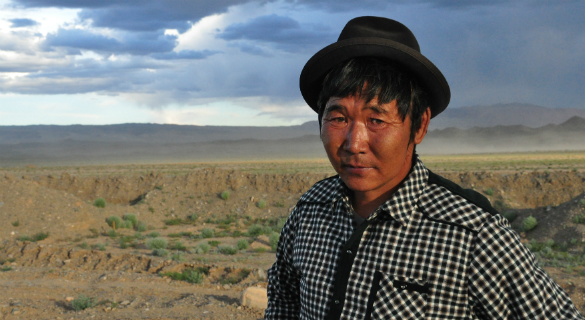
Amsterdam/Ulaanbaatar/Prague – Last week, the independent accountability mechanism of the EBRD announced it will investigate *the Bank’s compliance with its environmental and social standards at a mine it finances and is operated by Altain Khuder in the Gobi-Altai region of Mongolia. The investigation comes in response to a complaint filed to the EBRD’s Project Complaint Mechanism (PCM) in December 2014 from herders affected by the project.

Press release by Centre for Research on Multinational Corporations (SOMO), CEE Bankwatch Network & OT Watch

The herders had also requested that the PCM convene a dialogue with the company to address issues of displacement and dust pollution, but the PCM rejected that request. In response to the PCM’s determination, documented in its Eligibility Assessment Report which was published on 28 August, Amibukh, one of the complainants, expressed, “Although we hoped that the PCM could get the company to finally listen to all our concerns, we are not surprised that the company is not cooperating. They have been unresponsive to all our attempts to resolve the issues so far. It’s disappointing, but at the same time we are pleased that there will be an investigation. We invite the PCM to come visit us in Tseel soum and assess the impact of the mine on our lives”.

Mining in Mongolia


Background, updates, publications

The Eligibility Assessment Report reveals the deteriorating relationship between the EBRD and Altain Khuder. As a result, the EBRD has not received any information from the company regarding environmental and social issues since mid-2013, making it impossible for the Bank to fulfill its obligation to monitor the implementation the agreed action plans. The PCM found that the deteriorating relationship was also, in part, the reason for rejecting the complainants’ request to convene a dialogue between the parties, stating that “the PCM would not be viewed as a suitable forum for dialogue between the Complainants and the Client.” It also cited the lack of cooperation of the EBRD’s client, “the Complainants continue to assert that the Client refuses to engage with them, [and is] in some cases purportedly pursuing legal action against them.”

“We are very disappointed by the PCM’s reasoning for finding the problem solving request not eligible. The fact that Altain Khuder refuses to engage with the herders is exactly why we requested the problem-solving process in the first place,” says Anne Schuit, researcher at the Amsterdam-based Centre for Research on Multinational Corporations (SOMO). “Nevertheless, we hope the compliance review will provide clear recommendations for improvements to the project that will result in meaningful improvements for the lives and livelihoods of the herders.”

Sukhgerel Dugersuren, director at OT Watch, states “It is unacceptable that a company financed by the EBRD can cause unmitigated environmental and social impacts, refuse to engage with the Bank or the PCM, and get away with it. It is the EBRD’s responsibility to ensure that its borrowers comply with its standards and do not further impoverish the communities where they work. We hope that the compliance review will help resolve these issues for the relocated local community members after all.”

The complaint, filed by seven individuals in December 2014, alleges that the mine displaced herders and left them without a suitable alternative resettlement site. As a result they are unable to sustain their livelihoods. In addition, dust pollution as a result of the export of iron ore from the mine to China allegedly causes illnesses to herders and their animals. Herders have brought these impacts to the attention of the company on numerous occasions but rather than solving the problems the company has reacted with intimidation and legal action.

“At the start of the mining boom in Mongolia, Bankwatch warned the EBRD that it would be unsustainable to make Mongolia dependent on mining exports. With slowing demand from China, the Altain Khuder case demonstrates that communities are paying the price for the EBRD’s short-sightedness and are left without redress,” says Fidanka Bacheva-McGrath, EBRD campaign coordinator at CEE Bankwatch Network.

For the investigation, the PCM will assess the EBRD’s compliance with its own environmental and social standards in relation to its investment in Altain Khuder. The Eligibility Assessment Report includes a Terms of Reference for the investigation and identifies the PCM expert responsible for it. The Terms of Reference also provides for the possibility of a site visit to Mongolia. According to *the Terms of Reference, the review is intended to be completed in 60 business days, unless further time is needed.

* This press release has been ammended at the request of the PCM

Notes for the editor

1. For the complaint, see http://www.ebrd.com/work-with-us/project-finance/project-complaint-mechanism/pcm-register.html

2. For a report on a fact finding mission to the Tayan Nuur mining area in Mongolia, see
https://bankwatch.org/sites/default/files/when-dust-settles-AltainKhuder.pdf

3. For a multimedia story, see http://stories.bankwatch.org/when-dust-settles

4. For a case study on Altain Khuder and the mining project, see

Publication_4158

5. For other press releases regarding this case, see http://grievancemechanisms.org/news/complaint-by-mongolian-herders-about-iron-ore-mining-company-accepted-by-european-development-bank

Azerbaijan: Sport for Rights coalition condemns sentencing of journalist Khadija Ismayilova

The Sport for Rights coalition strongly condemns the sentencing of Azerbaijani journalist Khadija Ismayilova to a staggering 7.5 years in jail. On 1 September, the Baku Court of Grave Crimes convicted Ismayilova on charges of embezzlement, illegal entrepreneurship, tax evasion, and abuse of office. Ismayilova was acquitted of the charge of inciting someone to attempt suicide. Sport for Rights considers the charges against Ismayilova to be politically motivated and connected to her work as an investigative journalist, particularly her exposure of corruption among the ruling Azerbaijani elite.

“We condemn today’s verdict in the case of Khadija Ismayilova, which puts an outrageous yet expected ending to the grotesque proceedings against her”, CPJ Europe and Central Asia Program Coordinator Nina Ognianova said. “The time for business as usual with Azerbaijan is over. We call on Baku’s counterparts in the international community to make no further dealings with this highly repressive state until Ismayilova is unconditionally released and fully acquitted of all fabricated accusations”.

“Khadija Ismayilova’s trial failed to meet minimum fair trial guarantees, a pattern that has been regularly observed by IPHR’s monitors in similar cases in Azerbaijan”, said Brigitte Dufour, IPHR Director. “The defence’s motions are routinely rejected, which runs contrary to the principle of equality of arms – a cornerstone of the right to a fair trial – and indicates that the judges in these trials are openly siding with the prosecution”.

One of Azerbaijan’s most prominent investigative journalists, Ismayilova is also among the most courageous, one of very few willing to report on risky topics such as human rights violations and corruption. In the months leading to her arrest in December 2014, Ismayilova was aware she could be targeted, which she linked to her investigations into the business interests of President Ilham Aliyev’s family. Despite being warned not to return to the country from trips abroad – during which she spoke at international organisations on abuses taking place in Azerbaijan – Ismayilova persisted, speaking out critically until her arrest, and even afterwards, in letters smuggled out from jail.

Sport for Rights believes that in jailing Ismayilova, the Azerbaijani authorities sought to silence her critical voice before the country faced increased international media attention during the inaugural European Games, which took place in Baku in June 2015. Sport for Rights has referred to Ismayilova as a “Prisoner of the European Games” – along with human rights defenders Leyla and Arif Yunus, Rasul Jafarov, and Intigam Aliyev, who were also arrested in the run-up to the games.

“For her thorough and fearless investigative journalism, which has uncovered corruption at the highest levels of power, Khadija has earned numerous accolades, including PEN American’s 2015 Barbara Goldsmith/Freedom to Write Award”, said Karin Deutsch Karlekar, director of Free Expression programmes at PEN American Center. “However, speaking the truth has grave consequences in Azerbaijan, where independent reporting has been all but extinguished through farcical trials, imprisonment, murder, and other forms of severe harassment. We demand that the government cease this unprecedented witch-hunt against journalists and their family members, and enable Azerbaijani citizens to freely access a range of news and information”.

The harsh sentencing of Ismayilova is the latest incident in an unprecedented crackdown being carried out by the Azerbaijani authorities to silence all forms of criticism and dissent. Less than two weeks before Ismayilova’s verdict, the same court sentenced human rights defenders Leyla and Arif Yunus to 8.5 and seven years in jail, respectively. Authorities have so far disregarded the widespread calls for humanitarian release of the couple, who both suffer serious health problems that continue to worsen in custody. Human rights defenders Intigam Aliyev, Rasul Jafarov, and Anar Mammadli are also serving staggering sentences of 7.5 years, six years and three months (recently reduced from 6.5 years by the appellate court), and 5.5 years, respectively, all on politically motivated charges.

The situation for journalists is also dire. On 9 August, journalist and chairman of the Institute for Reporters’ Freedom and Safety Rasim Aliyev died in hospital after being severely beaten the previous day. Aliyev had reported receiving threats in the weeks leading to the attack, and the police failed to provide him with protection. This attack followed an earlier high-level threat against an Azerbaijani journalist, Berlin-based Meydan TV Director Emin Milli, in connection with his critical reporting on the European Games. In addition to Ismayilova, journalists Nijat Aliyev, Araz Guliyev, Parviz Hashimli, Seymur Hezi, Hilal Mammadov, Rauf Mirkadirov, and Tofig Yagublu are also behind bars on politically motivated charges.

The Sport for Rights coalition reiterates its call for Ismayilova’s immediate and unconditional release, as well as the release of the other jailed journalists and human rights defenders in Azerbaijan. The coalition also calls for the Azerbaijani government to take immediate and concrete steps to improve the broader human rights situation in the country, particularly in the context of the upcoming November parliamentary elections. Without independent media coverage, including critical voices such as Ismayilova’s, the elections cannot be considered free and fair. Finally, Sport for Rights calls for greater vigilance by the international community to developments in the country, and increased efforts to hold the Azerbaijani government accountable to its international human rights obligations.

Supporting organisations:

ARTICLE 19
CEE Bankwatch Network
Civil Rights Defenders
Committee to Protect Journalists
Freedom Now
Front Line Defenders
Helsinki Foundation for Human Rights
Human Rights House Foundation (HRHF)
Index on Censorship
International Federation for Human Rights (FIDH), within the framework of the Observatory for the Protection of Human Rights Defenders
International Media Support (IMS)
International Partnership for Human Rights (IPHR)
NESEHNUTI
Norwegian Helsinki Committee
PEN American Center
People in Need
Platform
Polish Green Network
Solidarity with Belarus Information Office
World Organisation Against Torture (OMCT), within the framework of the Observatory for the Protection of Human Rights Defenders

Azerbaijan: Sport for Rights coalition condemns sentencing of journalist Khadija Ismayilova

Коалиция «Спорт за права» решительно осуждает ошеломляющий приговор азербайджанской журналистке Хадидже Исмайловой, осужденной на 7,5 лет лишения свободы. 1 сентября Бакинский суд по тяжким преступлениям признал Исмайлову виновной по обвинениям в присвоении средств, незаконном предпринимательстве, уклонении от уплаты налогов и злоупотреблении должностными полномочиями. По обвинению в доведении человека до самоубийства Исмайлову оправдали. Коалиция «Спорт за права» считает, что обвинения против Исмайловой политически мотивированы и связаны с ее журналистскими расследованиями, в частности с разоблачениями коррупции среди правящей азербайджанской элиты.

“Мы осуждаем сегодняшний возмутительный, хотя и предсказуемый вердикт, которым завершился абсурдный процесс по делу Хадиджи Исмайловой, – сказала координатор Программы Европы и Центральной Азии Комитета по защите журналистов Нина Огнянова . – С Азербайджаном больше нельзя вести дела, как раньше. Мы призываем партнеров Баку среди международного сообщества не вступать с этим крайне репрессивным государством ни в какие дальнейшие отношения до тех пор, пока Исмайлова не будет выпущена на свободу без каких-либо дополнительных условий и полностью оправдана по всем сфабрикованным обвинениям»”.

“Судебный процесс над Хадиджой Исмайловой происходил с нарушениями даже минимальных стандартов справедливого разбирательства, причем аналогичную ситуацию наблюдатели от Международного партнерства по правам человека регулярно наблюдают в Азербайджане в контексте других похожих дел, – сказала директор Международного партнерства по правам человека Брижитт Дюфор. – Ходатайства защиты постоянно отклоняются, что противоречит принципу равноправия сторон, который лежит в основе права на справедливый суд, и показывает, что судьи в таких процессах открыто встают на сторону обвинения”

Одна из известнейших в Азербайджане журналистов, ведущих собственные расследования, Исмайлова входит в число самых смелых репортеров – тех очень немногих, кто готов браться за рискованные темы, такие как нарушения прав человека и коррупция. Еще за несколько месяцев до своего ареста в декабре 2014 года Исмайлова уже осознавала, что может стать объектом преследования, и связывала это со своими расследованиями бизнес-интересов семьи президента Ильхама Алиева. Несмотря на предостережения не возвращаться на родину из зарубежных поездок, в ходе которых она информировала международные организации о нарушениях, совершаемых в Азербайджане, Исмайлова не сдавалась и продолжала выступать с открытой критикой вплоть до самого своего ареста и даже после него в письмах, которые она тайком передавала из тюрьмы.

По мнению коалиции «Спорт за права», поместив Исмайлову за решетку, власти Азербайджана попытались тем самым заткнуть ей рот накануне проведения в Баку первых Европейских игр в июне 2012 года, когда страна должна была стать объектом повышенного внимания международных СМИ. Коалиция «Спорт за права» назвала Исмайлову «узницей Европейских игр» наряду с правозащитниками Лейлой и Арифом Юнусами, Расулом Джафаровым и Интигамом Алиевым, которые тоже были арестованы в преддверии игр.

“За свой тщательный и бесстрашный подход к проведению журналистских расследований коррупции в высших эшелонах власти Хадиджа была удостоена множества наград, в том числе премии имени Барбары Голдсмит «За свободу слова» Американского ПЕН-клуба за 2015 год, – сказала Карин Дойч Карлекар, директор программ Американского ПЕН-клуба в области свободы выражения мнений. – Однако публикация правды может повлечь за собой тяжелые последствия в Азербайджане, где независимая журналистика почти полностью истреблена с помощью фарсовых судебных процессов, лишения свободы, убийств и других форм жесткого притеснения. Мы требуем от властей прекратить эту беспрецедентную охоту на ведьм, развязанную в отношении журналистов и членов их семей, чтобы граждане Азербайджана получили свободный доступ к самым разным новостям и информации”.

Суровый приговор Исмайловой – самый свежий эпизод в серии беспрецедентных репрессий, развернутых властями Азербайджана с целью подавления всех форм критики и несогласия. Менее чем за две недели до вынесения приговора Исмайловой тот же суд приговорил правозащитников Лейлу и Арифа Юнусов к 8,5 и 7 годам заключения соответственно. До сих пор власти игнорировали повсеместно звучащие призывы освободить супругов из гуманитарных соображений, поскольку у них обоих серьезные проблемы со здоровьем и в тюрьме их состояние продолжает ухудшаться. По политически мотивированным обвинениям также были осуждены на неоправданно длительные сроки правозащитники Интигам Алиев – 7,5 лет лишения свободы, Расул Джафаров – 6 лет и 3 месяца (таким образом апелляционный суд недавно сократил ему изначальный срок в 6,5 лет) и Анар Мамедли (5,5 лет).

Ужасающей остается и ситуация с журналистами. Так, 9 августа журналист и председатель Института свободы и безопасности репортеров Расим Алиев скончался в больнице от тяжелых побоев, нанесенных ему днем ранее. В течение несколько недель до нападения Алиев сообщал о поступавших ему угрозах, но полиция ничего не предприняла для его защиты. Незадолго до этого нападения от одного высокопоставленного должностного лица поступали угрозы в адрес другого азербайджанского журналиста – директора Meydan TV Эмина Милли, проживающего в Берлине, в связи с критическим освещением Европейских игр. Помимо Исмайловой, по политически мотивированным обвинениям лишены свободы такие журналисты, как Ниджат Алиев, Араз Гулиев, Парвиз Хашимли, Сеймур Хази, Хилал Мамедов, Рауф Миркадыров и Тофик Ягублу.

Коалиция «Спорт за права» повторно призывает незамедлительно и безоговорочно освободить Хадиджу Исмайлову, а также других азербайджанских журналистов и правозащитников, оказавшихся за решеткой. Коалиция также призывает власти Азербайджана срочно предпринять конкретные шаги по улучшению ситуации с правами человека в стране в целом, особенно в контексте предстоящих в ноябре парламентских выборов. Без независимого освещения в СМИ, в том числе без критических оценок, какие давала, например, Исмайлова, выборы не могут считаться свободными и честными. И наконец, коалиция «Спорт за права» обращается к международному сообществу с просьбой более бдительно следить за событиями в Азербайджане и настойчивее требовать от руководства страны соблюдения ее международных обязательств по защите прав человека.

Поддержавшие организации:

АРТИКЛЬ 19
Международная сеть НПО ЦВЕ «Бенквоч»
Защитники гражданских прав
Комитет по защите журналистов
Freedom Now
Front Line Defenders
Хельсинкский фонд по правам человека
Фонд Домов Прав Человека (HRHF)
Индекс цензуры
Международная федерация за права человека (FIDH) в рамках Обсерватории по защите правозащитников
Международный центр поддержки СМИ (IMS)
Международное партнерство по правам человека (IPHR)
Независимое социально-экологическое движение — NESEHNUTÍ
Норвежский Хельсинкский комитет
Американский ПЕН-клуб
Чешская правозащитная организация «Человек в беде»
Платформа
Польская зеленая сеть
Информационное бюро солидарности с Беларусью
Всемирная организация против пыток (OMCT) в рамках Обсерватории по защите правозащитников

Energoatom lawsuit against Ukrainian activists is the latest attempt to stifle public debate over an ageing nuclear energy fleet

A Kiev court held yesterday the first hearing in a case brought by Energoatom, Ukraine’s state-owned nuclear power plants operator, against the National Ecological Centre of Ukraine (NECU), a civil society group, member of the CEE Bankwatch Network.

Energoatom accuses the activists of supposedly spreading false information on those of Ukraine’s nuclear reactors operating beyond their design lifetime.

Energoatom refers to NECU’s press release from May 15, 2015, which reported that unit 2 in the South Ukraine nuclear power plant is not in compliance with the requirements to safely operate in electricity production mode. The group also warned in that press release, that decisions taken by Ukrainian authorities regarding nuclear units’ operation beyond their design lifetime lack crucial substantiation. In its lawsuit, Energoatom asked the court to order NECU to publish a statement on its website saying some of the information in the original press release was false.

Read more


Operations suspended at one Ukrainian nuclear unit, as wider safety doubts persist
Bankwatch Mail article | May 14, 2015


Ukraine’s nuclear lifetime extensions


More background & updates

In April, two weeks before this 30 years old nuclear reactor reached the end of its design lifetime, the board of Ukraine’s nuclear energy regulator SNRIU acknowledged the unit has 41 deviations from safety standards. Consequently, the nuclear unit was not granted a permission to continue operation and it has been shut down since. Its restart, the board ruled, would only be considered once all required measures and safety upgrades are completed.

“This lawsuit was filed simply because we dared to openly call things what they are in reality,” says Iryna Holovko, NECU and CEE Bankwatch Network campaigner in Ukraine. “Nuclear units with compromised safety can not be considered safe and citizens, in Ukraine and in neighbouring countries, must be aware of that. We believe our moral obligation is to inform public of the situation as it is.”

Ukrainian environmental NGOs – including Ecoclub-Rivne, NECU and others – have been campaigning since more than five years for of the public’s right to be fully informed and engaged in the decision-making process regarding the prolonged operation of nuclear units beyond their design expiration date. This year civil society groups in five EU countries have joined the campaign to demand citizens in Ukraine’s neighbourhood are fully informed about the potential transboundary implications of these plans and have a say in the process.

In fact, the EU is actively involved in the revival of Ukraine’s nuclear energy. Energoatom enjoys generous financial support from Euratom and from the European Bank for Reconstruction and Development (EBRD) to implement safety upgrades in its nuclear units, which are in turn used for legitimising a postponed expiry date. Yet, it has been continuously ignoring Ukraine’s legal obligations under the Aarhus and Espoo Conventions for transboundary consultations, which are also conditions to these European loans.

In July this year 25 Members of the European Parliament have signed a letter to Euratom and the EBRD asking they suspend their loans for Ukraine’s safety upgrade programme until the country complies with the relevant international legal obligations.

“If Energoatom is concerned about its reputation it would be wiser to directly engage with the public on its plans and their long term implications rather than trying to stifle civil society critique,” says Holovko.

The next hearing in the case is scheduled for September 28, 2015.

For more information contact:

Iryna Holovko
National campaigner for Ukraine
CEE Bankwatch Network
iryna@bankwatch.org
Tel.+380 50 647 6700

Note to editors:

For more on Ukraine’s nuclear units lifetime extension program see here: https://bankwatch.org/our-work/projects/nuclear-power-plant-safety-upgrades-ukraine


Image by Rebecca Barray (CC BY-NC-SA 2.0)

European funding for a Lukoil gas project in Azerbaijan tramples the EU’s commitment to both climate action and human rights

A USD 500 million loan for the share of Russian gas giant Lukoil in a major gas project in Azerbaijan has been approved yesterday by the Board of Directors of the European Bank for Reconstruction and Development (EBRD). Yet, the decision will significantly hinder Europe’s commitments to decarbonise as well as to advance democracy.

Developed by a consortium of carbon majors led by BP, the Shah Deniz stage II gas field is essentially the cornerstone for the Southern Gas Corridor, the European Commission’s flagship energy project, promoted as means to alleviate Europe’s reliance on Russian gas imports.

Yet, the EBRD’s decision to support the Shah Deniz project stands in stark contrast to its own statutes. Article 1 in the agreement establishing the EBRD states: “Under the EBRD Agreement, the parties must be committed to human rights, multi-party democracy, rule of law and pluralism.” But the authoritarian Aliyev regime, thriving on Azerbaijan’s gas and oil riches, has been systematically cracking down on civil society and human rights defenders. In fact, with 80 political prisoners – among them investigative journalist Khadija Ismayilova and prominent human rights lawyer Rasul Jafarov – Azerbaijan now has more activists behind bars than Russia and Belarus together.

Moreover, with the UN’s decisive Paris climate summit just months away, entrenching the role of fossil fuels in Europe’s energy mix only hampers the EU’s efforts to combat climate change. Multiple studies have shown that the world must leave most of the remaining fossil fuels in the ground if it is to avoid the harshest of climate change impacts, and a recent report from Carbon Tracker warned that gas investments are at risk of becoming stranded assets.

With EU gas consumption on the decrease, and likely to continue falling over the next few decades, as the European Commission’s own Energy Roadmap 2050 projects, the Southern Gas Corridor can end up as a massive stranded asset on investors’ sheets.

“The EBRD’s decision yesterday is a shameful blemish on the EU’s efforts to promote human rights, climate action and sustainable development,” says Fidanka Bacheva-McGrath CEE Bankwatch’s EBRD Campaign Co-ordinator.

On Monday, the Sports for Rights coalition, CEE Bankwatch Network and 15 other NGOs have sent letters to country Directors and EBRD President Suma Chakrabati calling on them not to lend public money to a project that so blatantly contravenes the Bank’s own mandate.

“Any loan to Lukoil to develop Shah Deniz II will squeeze the space for civil society even further as it bolsters the current regime,” the letter said. “A substantial improvement in the respect of basic rights and freedoms should be achieved before you consider lending to Azerbaijan’s oil and gas sector”.

For more information contact:

Fidanka Bacheva-McGrath
EBRD Campaign Co-ordinator
fidankab@bankwatch.org
Twitter: @fidankabmg

Note to editors:

For more on the Southern Gas Corridor’s false promise see the NGO report “Pipe Dreams: Why the Southern Gas Corridor will not reduce EU dependency on Russia”:
https://bankwatch.org/news-media/for-journalists/press-releases/pipe-dreams-why-southern-gas-corridor-will-not-reduce-eu-d

« Previous Page
Next Page »

Footer

CEE Bankwatch Network gratefully acknowledges EU funding support.

The content of this website is the sole responsibility of CEE Bankwatch Network and can under no circumstances be regarded as reflecting the position of the European Union.

Unless otherwise noted, the content on this website is licensed under a Creative Commons BY-SA 4.0 License

Your personal data collected on the website is governed by the present Privacy Policy.

Get in touch with us

  • Bluesky
  • Email
  • Facebook
  • Instagram
  • LinkedIn
  • RSS
  • YouTube