• Skip to primary navigation
  • Skip to main content
  • Skip to footer

Bankwatch

  • About us
    • Our vision
    • Who we are
    • 30 years of Bankwatch
    • Donors & finances
    • Get involved
  • What we do
    • Campaign areas
      • Beyond fossil fuels
      • Rights, democracy and development
      • Finance and biodiversity
      • Funding the energy transformation
      • Cities for People
    • Institutions we monitor
      • European Bank for Reconstruction and Development
      • European Investment Bank
      • Asian Infrastructure Investment Bank
      • Asian Development Bank (ADB)
      • EU funds
    • Our projects
    • Success stories
  • Publications
  • News
    • Blog posts
    • Press releases
    • Stories
    • Podcast
    • Us in the media
    • Videos
  • Donate

Home > Archives for Press release

Press release

Proposed EU loan would make Tunisia’s debt problems worse, say CSOs

– MEPs to vote on new loan in April.
– Tunisia is already paying more to its Western creditors than it receives in loans and grants, and almost all of the new loan would be used for debt repayments.

Civil society groups from Tunisia and Europe are urging the European Parliament to concentrate on debt relief instead of voting through a EUR 300 million loan to Tunisia, arguing that this will only add to the country’s huge existing debt burden.

The loan – which comes with numerous economic and trade conditions attached – is due to be voted on in plenary by the Parliament on the 16th of April. CSOs argue that only debt relief and assistance in the form of grants and capacity building for the Tunisian institutions can lead to the economic recovery and democratic reform that Europe has promised to support. [*]

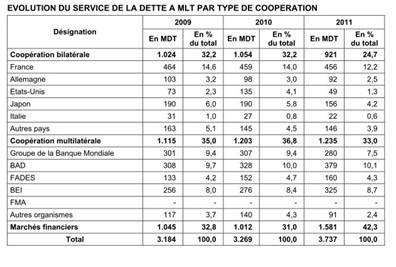
Tunisia is already paying off debts generated under the Ben Ali regime to France and several multilateral development institutions such as the World Bank, the African Development Bank and the European Investment Bank. The latter received EUR 149 million (325 million Tunisian Dinars) in debt repayments in 2011 [1] alone, and that figure is rising.

Last year Tunisia made repayments of EUR 330 million [2] in international debt. In total it pays more to its Western creditors in repayments and interest than it receives in the form of loans or grants.

Fathi Chamkhi of RAID (a Tunisian association member of the Networks CADTM and ATTAC): “This EU loan – which is labeled as ‘assistance’ – would have to be repaid and would mean Tunisia is even more in debt. Tunisia’s existing debt burden was built up under the former dictatorship of Ben Ali, and a significant part of it can be labeled as ‘odious’ – as the European Parliament stated in its resolution of 10th May 2012 – and thus must not be put on the shoulders of the Tunisian people. Perhaps one of the most perverse aspects of this new loan is that 85% would be used to repay debt to EU Member States and the EIB, debt that has been generated by a corrupt, dictatorial regime.”

Kuba Gogolewski from CEE Bankwatch Network: “Everybody knows that lending more to repay outstanding debt is a vicious circle. Debt relief is the only way to break this dynamic. Europe knows this very well. In early 1990s Poland’s foreign debt was cut in half by the Paris Club and the London Club. It provided the oxygen for economic recovery. Remarkably, it is not part of the deal this time.”

Bodo Ellmers from the European Network on Debt and Development (Eurodad) said: “Instead provide support in the form of grants with no strings attached. The young European democracies received generous assistance from the U.S. in the form of the Marshall Plan after World War II. Such assistance enabled European nations to have a fresh start. Today, it is Europe’s turn to support countries like Tunisia which are emerging from decades of dictatorial rule. The EU should not impose macroeconomic conditionality on their partners.”

CSOs are also calling on the EU to provide support for Tunisia in the form of grants and capacity building with no strings attached.

Notes to Editors:

[*] Following the popular uprisings in Tunisia in early 2011, Catherine Ashton and the European Commission promised to put extra billions on the table to support a transition towards ‘deep democracy’. However the majority of these funds came in the form of loans through the European Investment Bank and the World Bank.

1. Details of the debt owed by Tunisia to each institution (Banque Centrale de Tunisie, Dette extérieure de la Tunisie 2011, p20)

2. The planned EU loan comes together with a stringent set of conditions, namely those already imposed by the IMF program. These “structural reforms” aim at drastically reducing subsidies to foodstuffs and energy, despite the fact that a large part of the population rely on those subsidies to escape extreme poverty. A tax policy reform is also planned, but alas not to improve tax justice but exactly the opposite, by bringing the tax rates of the Tunisian “onshore” business sector closer to the “offshore” sector (in effect bringing business taxation to levels close to a 0% rate). Finally, a heavy contribution by the Tunisian public finances is foreseen to bail out three major banks, but the details of the audit of these banks mismanagements are to remain secret, at the request of the IMF.
These conditions are tragically ironic, inasmuch as they replicate classic austerity measures which have been recognized as failures by the IMF itself in the Greek case. They also in effect force the Tunisian people to apply one type of neoliberal policy, instead of being free to exercise the right, conquered at such a heavy price, of democratically choosing its own social and economic model.

For further information, or to request an interview, please contact:

Kuba Gogolewski
North Africa Coordinator for Bankwatch
kuba.gogolewski at bankwatch.org
Tel.: +32 2 893 10 35

Fathi Chamkhi
RAID (a Tunisian association member of the Networks CADTM and ATTAC)
Tel.:+21 6 55 52 23 78

Julia Ravenscroft
Communications Manager, Eurodad
Tel.: + 32 2 893 0854
jravenscroft at eurodad.org

This press release was issued by the following organisations:

EcoConscience (Tunisia)
OTC (l’Organisation tunisienne pour la citoyennete)
RAID (a Tunisian association member of the Networks CADTM and ATTAC)
Rencontre Citoyenne de Lutte contre la Dictature de la Dette
UDC (Union des diplomes chomeurs)
UGET (l’Union generale des etudiants de Tunisie)
Arab NGO Network for Development (ANND)
Both Ends
CADTM (Comité pour l’Annulation de la Dette du Tiers Monde)
CEE Bankwatch Network
CNCD-11.11.11. (Centre national de coopération au développement)
CounterBalance
DDCI – Debt and Development Coalition Ireland
Egyptian Centre for Environmental and Social Rights (ECESR)
European Network on Debt and Development (Eurodad)
Jubilee Debt Campaign
The Norwegian Coalition for Debt Cancellation (SLUG)
ODG (Observatorio de la Deuda en la Globalizacion)
Platform London
Re:Common
Urgewald
WEED

Failure to keep up with EU climate and energy policies will move South East Europe away from the EU, say NGOs


As the EU Council tomorrow debates A framework for climate and energy in the period from 2020 to 2030 [1], proposed by the European Commission, NGOs today called for much stronger environmental and climate commitments in the upcoming revised Treaty of Energy Community, which brings together the Western Balkan countries, Ukraine and Moldova, during a public hearing taking place in the European Parliament.

The EC’s climate proposal calls for a binding target of 40% greenhouse gas emissions reduction by 2030 and has been criticised by the European Parliament and others for its lack of ambition. Therefore, all eyes will be turned to the European Heads of States tomorrow, when they convene to further discuss the future of EU climate and energy policy. Although most of the countries of the Energy Community are striving to become EU members in the next decade – Serbia and Montenegro have already opened negotiations while others are expected to follow – none of the countries have adopted greenhouse gas reductions targets.

Garret Tankosić-Kelly, Principal of SEE Change Net, and one of the panelists at today’s hearing An Energy Community for the Future, emphasizes that failure to adopt EU 2020, 2030 and 2050 targets will only move South East Europe away from the EU path. “SEE countries want to be part of the EU, and not taking on these standards now will make it harder and more expensive to do so in the future. A week might be a long time in politics, but a decade is nothing in energy planning. This is the conflict of interests we face.”

The case of Croatia has clearly demonstrated what kind of drastic changes countries will face with adapting their legislation according to the EU acquis, leaving limited space for public participation and a number of uncertainties in fulfilling the obligations, particularly those related to climate and energy.

However, the Energy Community has so far been largely focused on transposition and implementation of the EU energy acquis while only patchy bits of environmental legislation have been adopted.

“It is essential to include the whole range of Directives covering industrial emissions and air quality, but also energy-related water, waste and habitats legislation [2] if the Energy Community is to be part of a European energy market with a level playing field for all participants”, commented Angela Klauschen, a policy expert at the World Wide Fund For Nature. “Signatory countries must comply with all relevant EU social, environmental and climate legislation through automatic and systematic updates of the Treaty. The current situation, in which only a small portion of the acquis has been adopted by the Energy Community countries means that there is a danger of ‘emissions leakage’ [3] or ‘energy grabbing’ [4]”, she added.

We believe that countries of the region should be supported with development of their energy strategies in line with long-term EU goals [5], in order to ensure that only appropriate investments leading to decarbonisation and the sustainable use of renewable resources are encouraged. This approach would enable social and economic cohesion and distribution of benefits from energy production and consumption, which would tackle energy poverty and enable an increase in sustainable employment.

“No true progress and democratization of our societies can be achieved without an open and frank debate of all actors”, said Dragana Mileusnić of Climate Action Network Europe. “Thus, we call for civil society representatives from various sectors to be allowed to participate at Energy Community meetings and for implementation of the Strategic Environmental Impact Assessment Directive. Finally, we call for stronger measures against corruption and illegal subsidies in the energy sector”, she concluded.

Contacts

Masha Durkalić
SEE Change Net Communication Officer
masha at seechangenet.org
Tel.: +387 63 999 827

Dragana Mileusnić
Energy Policy Officer for South East Europe, Climate Action Network
dragana at caneurope.org
Tel.: +32 471 438 442

Bojan Stojanović
Communications Officer, WWF Mediterranean Programme
bstojanovic at wwf.panda.org
Tel.: +385 95 598 14 58

Ioana Ciuta
Energy Coordinator, CEE Bankwatch Network
ioana.ciuta at bankwatch.org
Tel.: + 40 724 020 281

Notes for editors

[1] For more information please see:
http://ec.europa.eu/energy/doc/2030/com_2014_15_en.pdf

[2] For more information, please refer to NGOs briefing on the Future of the Energy Community:
http://www.env-health.org/IMG/pdf/future_of_the_energy_community_-_policy_briefing_20feb2014.pdf

[3] Emissions leakage occurs when there is an increase in carbon dioxide emissions in one country as a result of an emissions reduction by a second country with a more stringent climate policy.

[4] “Energy grabbing” refers to the practice of importing energy from countries without adequate benefit-sharing with the population of the exporting country. This may refer to exporting energy while the population does not have adequate access to energy; while the population does not enjoy adequate financial benefits from the export; or while the population suffers undue costs such as environmental or health damage, forced land expropriation or restrictions on freedom in order to provide energy exports.

[5] For more information, please consult EU Energy 2050 Roadmap:
http://ec.europa.eu/energy/energy2020/roadmap/doc/roadmap2050_ia_20120430_en.pdf

SEE SEP partner organizations:

SEE Change Net (regional)
Analytica (Macedonia)
ATRC (Kosovo)
Cekor (Serbia)
Public interest Advocacy Centre – CPI (Bosnia and Herzegovina)
Center for Environment – CZZS (Bosnia and Herzegovina)
DOOR (Croatia)
EDEN (Albania)
Ekolevizja (Albania)
Eko-Svest (Macedonia)
Forum for Freedom of Education – FSO (Croatia)
Fractal (Serbia)
Front 21/42 (Macedonia)
Green Home (Montenegro)
MANS (Montenegro)
CEE Bankwatch Network (regional)
WWF (regional)

NGOs respond to EU aid for Ukraine: watch for the devil in the details

Prague — As the European Council on aid to Ukraine concludes today in Brussels NGOs caution that the 11 billion euros put forward by the EU come on terms which will not necessarily foster an independent, self-reliant Ukraine.

“It is very important that the world and especially the European Union stand by Ukraine right now,” comments Bankwatch’s executive director Mark Fodor. “Yet the financial package proposed by the EU relies too heavily on loans via institutions whose track record in both Ukraine and Russia has done more to benefit the domestic elites and foreign corporations than the general population. This sounds like just administering more of a medicine that has proven to suffocate the patient in the past.”

Out of the 11 billion euros that the EU said this week it could make available for Ukraine over the next years, around 8 billion would come in the form of loans provided by the European Investment Bank and the European Bank for Reconstruction and Development to specific projects to be proposed by public and private actors in the country.

The EU aid package has been explicitly linked to Ukraine agreeing to a macro-economic stabilisation package with the International Monetary Fund.

„The insistence by the IMF and EBRD on Ukraine’s quick signing up to macro-economic conditionalities is of concern as well,” adds Mark Fodor. „If the West is serious about wanting to support Ukraine’s independence, it should not be asking Ukraine to sign on to massive commitments while they have a Russian gun at their heads. Ukrainians should be allowed to make their own decisions when it comes to economic reforms.”

The EIB and the EBRD have been lending to both Ukraine and Russia for years. Russia is the biggest recipient of EBRD loans (net investment 23.7 billion euros), accounting for just under 30 percent of the bank’s portfolio. (1) Ukraine is the third largest recipient of the EBRD with a net investment of 8.7 billion euros (2). The EIB, which started operations in Ukraine in 2007, has invested 2.1 billion euros into the country to date.

„After two decades of seeing EIB and EBRD loans supposedly propping up integration and democratisation in Central and Eastern Europe, we fail to be convinced,” says Bankwatch’s Petr Hlobil. „What we see in practice is banks seeking profit investing in larger business ventures because they offer surer guarantee of return while offering puny support to smaller economic activities. Moreover, projects financed by both banks are often being rushed through without proper consultation of affected people and often under a veil of secrecy as regards the financial terms.”

Commenting on the EU aid package focus on gas diversification in Ukraine, Bankwatch Ukraine coordinator Iryna Holovko said, „While gas supply diversification is important, real savings can come from decreasing consumption via investments in energy efficiency and preventing energy loss in households and municipality buildings. That’s the way to truly reduce our dependency on Russian gas and to benefit ordinary people by reducing their energy bills.

„The energy sector today is run by the same people as before, so we fear that if the EU starts pumping money into the energy sector without safeguards (e.g., fulfilling Energy Community obligations, full transparency and public participation in decisions over energy projects), this aid would continue to benefit gas trading companies and connected structures, instead of helping to fix the critical situation in our energy sector and economy.”

Notes:

(1) For one example of how the EBRD has been financing some of the richest people in Russia, read this Bankwatch briefing on a loan to raiway company NPK:
https://bankwatch.org/publications/ebrds-policy-offshore-financial-centres-meaningful*

One of the beneficiaries of the EBRD’s Sustainable Energy Initiative has been steel giant Severstal, headed by its Soviet times manager, oligarch Alexei Mordashov:
http://www.foreign.senate.gov/imo/media/doc/55285.pdf (see p. 37)

*updated version available upon request

Russia’s representative to the EBRD, Elena Kotova, who played an important role in bank decisions, has been investigated for money laundering in the UK
http://www.businessweek.com/news/2012-08-16/russian-banker-s-money-laundering-case-risks-worsening-u-dot-k-dot-ties

(2) Country profiles for Russia and Ukraine here:

http://www.ebrd.com/pages/country/russia.shtml

http://www.ebrd.com/pages/country/ukraine.shtml

According to the EBRD’s own calculations from 2013 Transition report, faith in market-based solutions was lowest in Ukraine among all Eastern Europe, Caucasus and Central Asian countries after the recent financial crisis (see p. 15 of the report).

On the new Country Strategy for Russia: the strategy takes a very optimistic view of the present human rights situation in Russia.

https://bankwatch.org/bwmail/56/more-questions-answers-ebrds-new-country-strategy-russia

European Development Bank: Backward Step on Rights – Draft Policy Would Weaken Protection

(London) – The European Bank for Reconstruction and Development’s (EBRD) new draft Environment and Social Policy would fail to weed out abusive development projects, seven human rights and bank watchdog organizations said today in a joint statement. The bank’s consultation on the draft policy closes on March 5, 2014. It then has an opportunity to revise the policy before sending it to the bank’s board for approval in the coming months.

The draft policy removes some existing safeguards that protect against rights violations and fails to include other safeguards necessary for people affected by projects for which the bank lends money, Accountability Counsel, Amnesty International, ARTICLE 19, CEE Bankwatch Network, Center for International Environmental Law, Centre for Research on Multinational Corporations (SOMO), and Human Rights Watch said.The groups urged the bank and its member countries to reconsider this backward step.

“The European Bank for Reconstruction and Development should have firm policies so that countries and businesses seeking the bank’s loans know they’re required to respect human rights if they wish to work with the bank,” said Jessica Evans, senior international financial institutions advocate at Human Rights Watch. “Instead of using this opportunity to make sure the EBRD lives up to its longstanding human rights commitment, it appears to be retreating on this commitment altogether.”

The groups urged the bank to use this opportunity to put policies and systems in place to ensure that it will take all necessary steps to prevent it from causing, contributing to, or exacerbating human rights violations.

Headquartered in London, the bank is owned by 64 countries and two European Union institutions. With a cumulative business volume of US$ 117 billion, it is designed to help build open market oriented economies and promote private and entrepreneurial initiative. The EBRD works in 34 countries in Central and Eastern Europe and the Middle East, and invests mainly in private enterprises. The bank is also revising its public information and project complaint mechanism policies.

The groups cited several concerns with the EBRD’s draft policy revisions, including that:

  • The draft Environment and Social Policy (“the draft policy”)eliminates language that the “EBRD will not knowingly finance projects that would contravene country obligations under relevant international treaties and agreements related to environmental protection, human rights, and sustainable development;”
  • While the draft policy recognizes the responsibility of business to respect human rights, it does not actually require its business clients to live up to this responsibility;
  • The draft policy doesn’t require human rights due diligence to ensure that the bank does not support activities that will cause, contribute to, or exacerbate human rights violations. Existing environmental and social impact assessments rarely identify, assess, or address the full range of human rights impacts a project is likely to have, illustrating the importance of expressly requiring analysis of human rights impacts;
  • While the draft policy provides that the bank would not knowingly finance projects that involve forced evictions contrary to international human rights standards, it does not require the bank to take all necessary steps to become aware of potential forced evictions in projects that it supports, and its requirements for resettlement are inadequate;
  • The draft Public Information Policy does not commit the bank to disclose information on social and environmental appraisals of projects, as the presumption of transparency is undermined by an overly wide description of confidentiality, which would prevent disclosure in many cases; and
  • The window of opportunity for people negatively affected by bank projects to make formal complaints is far too limited.

“Our research on two bank-financed projects in Romania and Serbia showed that the bank did not adequately assess the risk of human rights violations before approving projects and failed to put in place effective measures to protect communities,” said Audrey Gaughran, director of global issues at Amnesty International. “The cost of these failures was forced evictions that, in Romania, left entire families homeless in winter and, in Serbia, forced Roma to live in metal containers.”

EIB suspends operations in Ukraine, EBRD ducks the question


Kiev – The European Investment Bank announced the suspension of all activities in Ukraine yesterday [*] following the most violent day since protests in this country began. In its turn, the European Bank for Reconstruction and Development declared it would “concentrate on the private sector” [**], hardly a meaningful stance considering the close links between government and the business sector in this country.

The EIB announcement came one day before the Foreign Affair Council of the EU made a formal decision about sanctions on Ukraine (this is expected to happen by end of day today).

„We commend the EIB for taking this bold step and acting as a decision-maker not a decision-taker on such an important issue where so many people’s lives and destinies are at stake,” comments Counter Balance’s Xavier Sol. „This is the kind of firm attitude that we would like to see from international financial institutions in the future, when faced with contexts where human rights are so clearly trampled.”

“The EBRD’s stance sounds little more than business as usual if we look at the reality in Ukraine,” says Bankwatch’s Fidanka Bacheva McGrath. “The Yanukovich’s ‘Family’ control of various sectors of the economy in Ukraine, most strikingly the coal business, is notorious. A large part of the private sector in Ukraine today is marred with corrupt and undemocratic practices, quite far from the safe haven the EBRD’s statement implies it to be.” [***]

“The EBRD cannot expect to get away with these kind of ambiguous positions for too long in the future, especially as it has started operating in North Africa and the Middle East where human rights have been systematically abused in some countries like Egypt,” continues McGrath. “The EIB’s current stance on Ukraine is a much more appropriate and convincing answer.”

Notes for the editors:

* Speaking during the EIB’s press conference yesterday in Brussels, bank president Werner Hoyer declared, “I think it would be completely the wrong signal to appear as being the ones who do business as usual in Ukraine while the people on the streets of Kiev…are being slaughtered.” Hoyer added that it is necessary that the EU speaks with one voice on Ukraine, and that the EU bank is a part of that single European voice.

** Speaking to Reuters today, an EBRD spokesperson said, “We have not suspended our operations in Ukraine, however, as of about three weeks ago, we are concentrating primarily on the private sector.”

***Read more about the links between the Yanukovych regime and the private sector at:
http://yanukovich.info/

Mind the environmental gap in south east European electricity market plans, say civil society groups


The new version of the EU-backed Energy Community Treaty must ensure that EU environmental and climate standards apply in countries that want to export electricity to the Union, says CEE Bankwatch Network in its submission to the public consultation on the review of the Treaty, which officially closes today [1].

The goal of the Energy Community is to ensure a single energy market across EU countries and the Western Balkans, Ukraine and Moldova, but campaigners here argue that failure to include more relevant EU laws in the revised Treaty will result in carbon leakage [2] or biodiversity loss from poorly sited energy infrastructure such as large dams.

Countries wishing to join the EU will also face nearly insurmountable challenges bringing their energy infrastructure up to par on time if they do not speed up now, Bankwatch argues.

As part of its public submission on the future of the Treaty after 2016 [3], Bankwatch says that in order to clean up the air, water and soil around cities like Tuzla, Pristina and Pljevlja which suffer from serious health costs due to coal electricity generation [4], and to preserve the outstanding biodiversity value of the Energy Community countries [5], the following EU environmental Directives must be included in the revised Treaty and the Treaty’s Secretariat needs to be provided with means to monitor and enforce their implementation:

  • Industrial emissions and the use of best available techniques;
  • Air quality and cleaner air;
  • Environmental quality standards in the field of water policy;
  • Management of waste from extractive industries; and
  • Conservation of natural habitats and of wild fauna and flora.

Bankwatch energy co-ordinator Ioana Ciuta said: “Many of the energy projects being planned are climate-damaging lignite power stations like Kostolac B3 in Serbia or Pljevlja II in Montenegro or Ugljevik III in Bosnia and Herzegovina. But such projects are not just bad for the climate and people’s health, they’re also riddled with attempts to bypass or bend tendering procedures.”

“Including the EU Directive on public procurement in the revised Energy Community Treaty would help rule out such instances of foul play,” added Ciuta.

For more information, contact:

Ioana Ciuta, Energy Co-ordinator,
ioana.ciuta at bankwatch.org

Pippa Gallup, Research Co-ordinator
pippa.gallop at bankwatch.org

Notes

[1] For more details about the extension of the Energy Community Treaty, read our media briefing here
https://bankwatch.org/sites/default/files/briefing-EnergyCommunityFuture-06Feb2014.pdf

[2] Carbon leakage occurs when there is an increase in carbon dioxide emissions in one country as a result of an emissions reduction by a second country with a more stringent climate policy.

[3] Bankwatch’s input to the consultation is available at
https://bankwatch.org/sites/default/files/comments-EnCom-consultation-05Feb2014.pdf

[4] Sources on coal and health in these cities:

Pristina, Kosovo:
http://siteresources.worldbank.org/INTKOSOVO/Resources/KosovoCEA.pdf

Tuzla, Bosnia and Herzegovina:
http://www.ekologija.ba/userfiles/file/Uticaj%20termoelektrana%20na%20zdravlja%20stanovnistva.pdf

Pljevlja, Montenegro:
http://www.greenhome.co.me/fajlovi/greenhome/attach_fajlovi/lat/glavne-stranice/2013/12/pdf/Uticaj_TE_Pljevlja_na_zdravlje_stanovnistva_Pljevalja.pdf
and
http://www.greenpeace.de/fileadmin/gpd/user_upload/themen/energie/GPI_Kohlestudie_technical_report.pdf

[5] The Energy Community Contracting Parties are Bosnia and Herzegovina, Kosovo, Macedonia, Albania, Moldova, Montenegro, Serbia and Ukraine

« Previous Page
Next Page »

Footer

CEE Bankwatch Network gratefully acknowledges EU funding support.

The content of this website is the sole responsibility of CEE Bankwatch Network and can under no circumstances be regarded as reflecting the position of the European Union.

Unless otherwise noted, the content on this website is licensed under a Creative Commons BY-SA 4.0 License

Your personal data collected on the website is governed by the present Privacy Policy.

Get in touch with us

  • Bluesky
  • Email
  • Facebook
  • Instagram
  • LinkedIn
  • RSS
  • YouTube