Kamengrad lignite power plant, Bosnia-Herzegovina
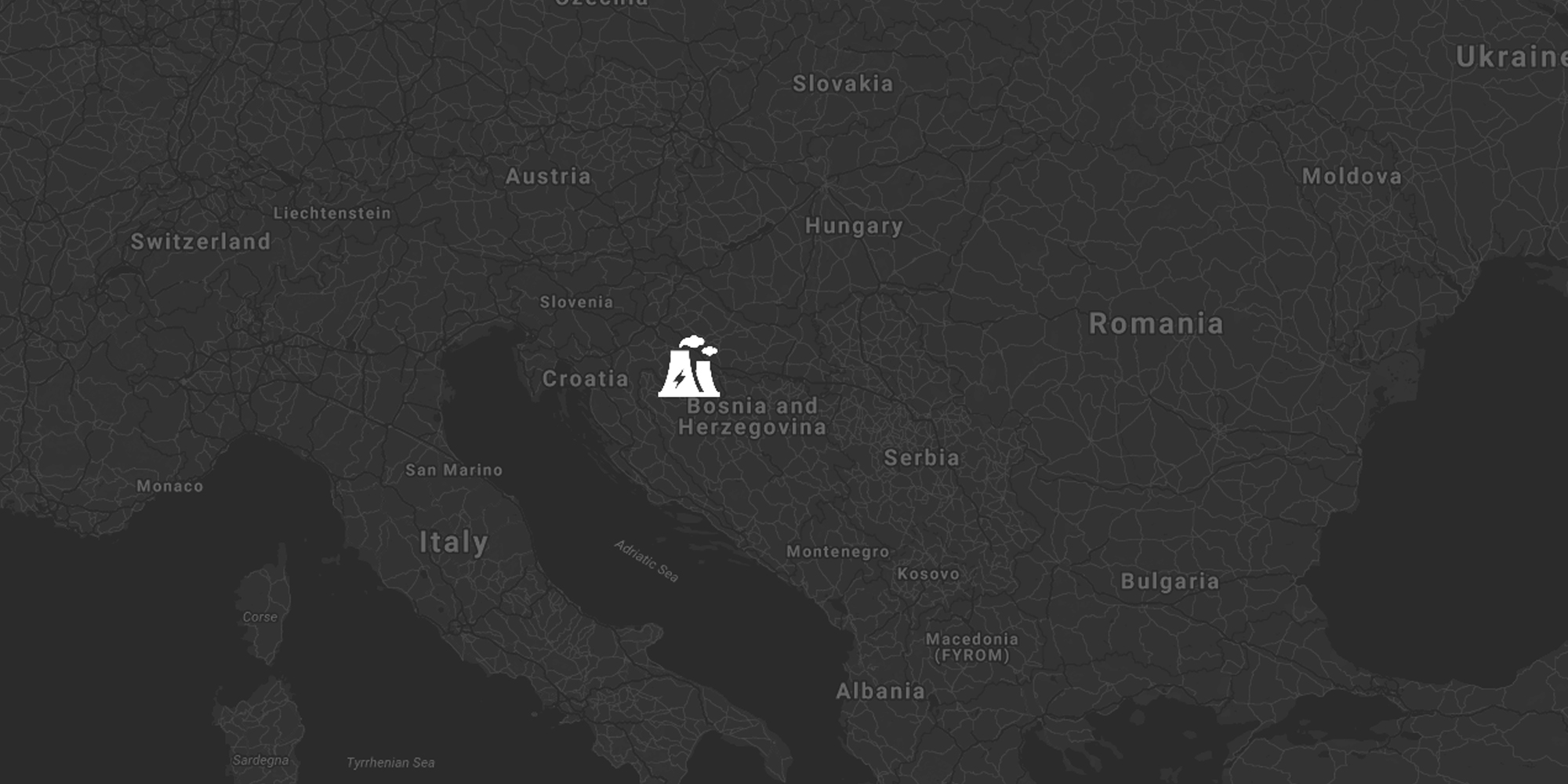
An idea to build a power plant at the open-cast Kamengrad coal mine near Sanski Most in the Federation of Bosnia and Herzegovina has been around for years, but in November 2017 it took a step forward with the signing of a Memorandum of Understanding between Energy China International and the construction supplier Lager d.o.o. for a 2 x 215 MW plant.
Stay informed
We closely follow international public finance and bring critical updates from the ground.
Background
CANCELLED: An idea to build a power plant at the open-cast Kamengrad coal mine near Sanski Most in the Federation of Bosnia and Herzegovina has been around for years, but in November 2017 it took a step forward with the signing of a Memorandum of Understanding between Energy China International and the construction supplier Lager d.o.o. for a 2 x 215 MW plant.
Few details are available about the plant, and it has no environmental permit and no financing. As with other plants across the region, unrealistic employment promises have already been made. In December 2017 head of the Sanski Most District Faris Hasanbegović stated that it would provide 1000 workplaces.
This does not appear to have convinced local people, however. As it would be a new power plant, it has attracted much more opposition locally than most other planned plants in the country. Sanski Most is located on the beautiful river Sana and prides itself on having no fewer than nine rivers in the district altogether. As a scenic and green area many of its residents feel that the power plant will spoil its potential for agriculture and tourism rather than bringing prosperity.
At a public debate on the adoption of the Una-Sana Canton spatial plan in August 2018, Sanski Most residents and the local council demanded the removal of the power plant project from the plan. This was carried out, although the plan was never adopted. In November 2019, another presentation of the Kamengrad coal power plant project appeared on the agenda of the Sanski Most Municipal Council. However, the meeting was cancelled after public pressure.
Another issue is that the concession for the mine was awarded to Lager d.o.o. after a bankruptcy procedure was carried out for the previous operator, RMU Kamengrad, but in 2017 the bankruptcy decision was declared illegal by the Constitutional Court of Bosnia and Herzegovina and returned to the Una-Sana Canton court.
As of early 2026 the plant is very unlikely to go ahead and does not appear in Bosnia and Herzegovina’s ten-year network development plans, so we consider it cancelled.
Latest news
A ray of light for communities in Serbia’s coal heartland
Blog entry | 22 July, 2016For more than 50 years, the lignite mines in Serbia’s Kolubara basin have been expanding, effectively engulfing the few small communities living between them. For local residents, whose homes have quite literally been teetering on the brink of the mines, life has become unbearable. But a recent court ruling might be paving the way to a long overdue reprieve for residents who have been promised to be relocated.
Read moreDans les Balkans, une vie sous le charbon
Bankwatch in the media | 5 July, 2016Malgré leur impact sur l’environnement, douze centrales sont en activité, réparties entre la Bosnie, la Serbie, le Monténégro, le Kosovo et la Macédoine. Dix-sept autres devraient être construites à l’horizon 2030.
Read moreCampaign update: environmental and health impacts of Serbian planned coal power plant Kostolac B3 discussed in court hearing
Blog entry | 28 June, 2016The possible cancellation of the Serbian government’s decision to construct a new 350 MW unit at the Kostolac B lignite power plant was discussed on June 23 at the national administrative court of Serbia.
Read moreRelated publications
Comply or Close: Eight years of deadly legal breaches by Western Balkan coal plants
Report | 23 June, 2026 | Download PDFThis report exposes the systematic, deadly breaches of air pollution limits by coal-fired power plants in the Western Balkans – eight years after new pollution standards entered force.
Electricity market integration needs environmental compliance: Joint civil society position paper on CBAM and the Western Balkans electricity sector
Report | 19 March, 2026 | Download PDFThe inclusion of electricity in the EU’s Carbon Border Adjustment Mechanism (CBAM) has raised questions about CBAM’s impacts on EU-Western Balkans market integration.
The weakest link: Towards a transmission grid that supports decarbonisation in the Western Balkans
Briefing | 26 February, 2026 | Download PDFFor the Western Balkan countries to speed up their energy transformation, it is crucial to improve their transmission grids.

