What’s Fuelling the Czech Automotive Motor? How the EU Modernisation Fund Subsidized Škoda Energo’s Shift to Forest Biomass
The European Union’s Modernisation Fund was established with a clear mandate to help lower-income Member States transition toward climate neutrality by upgrading energy systems, boosting efficiency, and helping recipients withstand the socio-economic shocks of decarbonisation. It is financed by revenue from the EU Emissions Trading System (ETS) as a way to turn industry’s carbon emission payments into needed capital for Europe’s energy transition. Yet, in the Czech Republic, the actual results of the Modernisation Fund have not advanced the energy transition nearly as far as it needs to be. One of the most glaring examples of this is in the district heating sector.
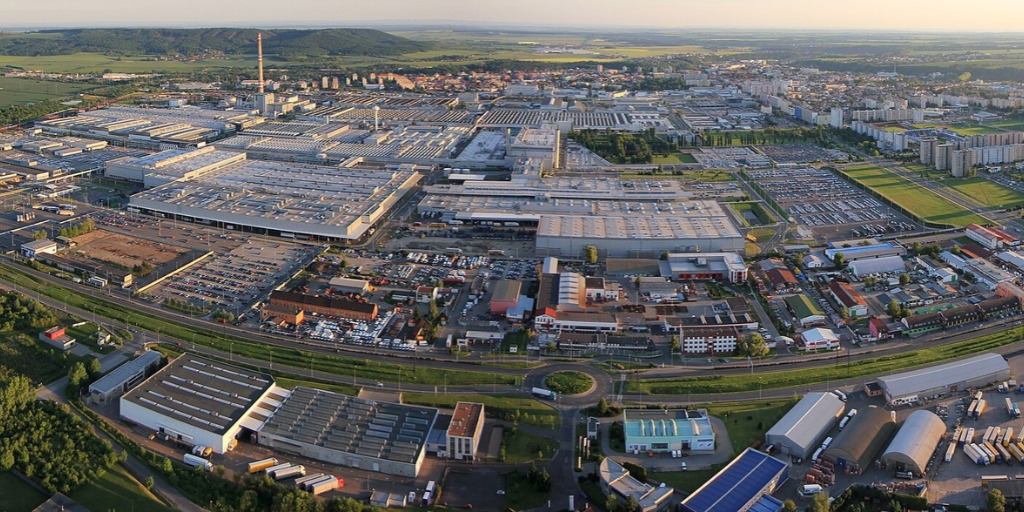
Škoda Auto Mladá Boleslav manufacturing plant in the Czech Republic. (photo: Zdeněk Fiedler/Wikimedia Commons).
Stay informed
We closely follow international public finance and bring critical updates from the ground.
Key facts
Project promoter: ŠKO-ENERGO, exclusive energy subsidiary of Škoda Auto a.s
Installed capacity: 80 MW of heat
Financing: EUR 89 million grant from the EU’s Modernisation Fund
Fuel source: biomass (wood chips and agro-biomass pellets)
Other key risks: transparency, corporate capture, forest depletion, air pollution
Key issues
- One of the Czech Republic’s most profitable companies is getting EUR 89 million of public finance instead of smaller, municipal district heating companies
- Converting the 80 MW plant from coal to biomass will still produce CO2 emissions and the regrowth of forests will not be quick enough to absorb their emissions
- Increasing the demand for biomass in the region can exacerbate regional deforestation issues which suffered a major crisis from a bark beetle outbreak and drought
- Four major companies have received most of the Czech portion of the Modernisation Fund- ČEZ, EPH, Veolia, Škoda who have received over EUR 2 billion out of EUR 3.2 billion, leaving only 1 billion for the rest of Czech district heating suppliers
Background
The European Union’s Modernisation Fund was established with a clear mandate to help lower-income Member States transition toward climate neutrality by upgrading energy systems, boosting efficiency, and helping recipients withstand the socio-economic shocks of decarbonisation. It is financed by revenue from the EU Emissions Trading System (ETS) as a way to turn industry’s carbon emission payments into needed capital for Europe’s energy transition. Yet, in the Czech Republic, the actual results of the Modernisation Fund have not advanced the energy transition nearly as far as it needs to be. One of the most glaring examples of this is in the district heating sector.
Based on Bankwatch’s own investigation, by the end of 2025, over EUR 6.5 billion had been disbursed from the Modernisation Fund, the Czech Republic being the country with the second highest absorption rate of all recipients. Over EUR 836 million went to gas-based heat and power projects and schemes while over EUR 253 million went to biomass-based heat and power projects and schemes.
Learn more about this case in our briefing:
Latest news
Before the money arrives, the work begins: how Kolašin in Montenegro is preparing for renewable district heating
Blog entry | 4 August, 2026Located below the Bjelasica mountain in northern Montenegro, the town of Kolašin is experiencing a rapid transformation. The expansion of the local ski resort, which attracted around 80,000 visitors during the 2025/2026 winter season, is accelerating tourism growth and new construction. As the town grows, local authorities face a critical challenge – ensuring that new heating infrastructure supports sustainable renewable solutions and avoids locking the town into fossil fuel-based systems for decades.
Read moreSerbia’s district heating utilities approaching breaking point due to gas import dependence
Blog entry | 14 July, 2026The current situation among district heating companies in Serbia provides a timely warning for Western Balkan governments still betting on new fossil gas infrastructure. In recent years, these governments have shown renewed interest in building new gas infrastructure. Many projects have been on the table for years, but new schemes are also being actively promoted by the United States.
Read moreHow a pioneering Slovak town is modernising its district heating system
Blog entry | 17 March, 2026With fossil fuel phase-outs underway across Europe, many municipalities must urgently find ways to replace their coal- or gas-based district heating systems. Several resources are available from the EU to help municipalities plan and execute their energy transitions. One town in Slovakia has used these tools to modernise its own district heating system.
Read moreRelated publications
What’s fueling the Czech automotive motor? How the EU Modernisation Fund subsidised Škoda Energo’s shift to forest biomass
Briefing | 12 November, 2026 | Download PDFThis briefing examines a troubling example of how the Modernisation Fund has been used in the Czech Republic – the EUR 89 million (CZK 2.18 billion) direct subsidy awarded to ŠKO-ENERGO s.r.o., the exclusive energy subsidiary of Škoda Auto a.s..
Waste incineration trends in the Western Balkans: A critical overview of energy and heat generation
Report | 21 April, 2026 | Download PDFThe following recommendations outline the steps required to advance the decarbonisation of district heating systems, enhance waste management practices and support the development of a truly circular economy.
Why the EBRD must end support for primary forest biomass in the Western Balkans
Issue paper | 7 May, 2025 | Download PDFThis issue paper presents case studies from Bosnia and Herzegovina that highlight how EBRD-backed large-scale biomass projects have faced significant challenges related to sustainability, affordability, and fuel supply.