
Ukraine Reconstruction Campaigner
Email:Tel.:
Anna is Bankwatch’s Ukraine Reconstruction Campaigner, working on green reconstruction and environmental safeguards in Ukraine’s recovery. Her work focuses on alternative sources of energy for communities, energy resilience, and the alignment of Ukraine’s energy policy and public investment management system with EU standards. Originally from Kyiv, she holds an MSc in Environmental Sciences and Policy from Central European University and is based in Bratislava.
More from

Good news: EBRD drops controversial Monsanto project
January 28, 2013 | Read more
A potential cooperation between the European Bank for Reconstruction and Development and the agro-corporation Monsanto has thankfully not come to fruition. The case highlights the difficulties for a large development bank to reach farmers on the ground.
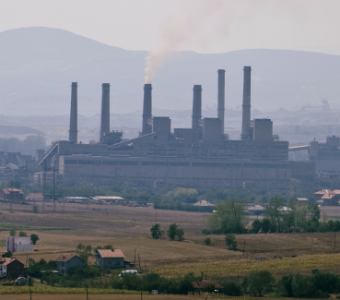
Off on the wrong foot in Kosovo? A lignite power plant and the EBRD
January 25, 2013 | Read more
Notwithstanding the dominance of lignite in Kosovo’s energy mix, the European Bank for Reconstruction and Development may get involved with yet another lignite project in the Western Balkans.
In their comments, the German NGO urgewald and the environmental coalition Klimaallianz focus on the EBRD’s support for fossil fuels and nuclear energy. Their recommendations call for a phase out of loans to fossil fuels, a more stringent approach to energy efficiency and a stronger focus on renewables for domestic needs.
Cohesion Policy 2014-2020: NGO priority recommendations for trialogues
January 16, 2013 | Read more
Environmental NGOs would like to highlight opportunities for decision makers to improve key issues of the Cohesion Policy regulations, in order to maximise the benefits that can be delivered to European regions by the future Cohesion Policy and other Common Strategic Framework funds. In addition, they will ensure that the future Cohesion Policy better contributes to reach the Europe 2020 targets, create regional green jobs, enhance economic opportunities and address environmental challenges.
Environmental NGOs fully understand the need of more flexibility for regions that but have high concerns with the solution proposed by the Parliament regarding the principle of thematic concentration: in this time of crisis, we note with concern that many Member States and regions stick to business as usual approaches to re-boost growth urgently – because it is considered to be faster and easier than more innovative, complex and forward looking solutions.

