
Ukraine Reconstruction Campaigner
Email:Tel.:
Anna is Bankwatch’s Ukraine Reconstruction Campaigner, working on green reconstruction and environmental safeguards in Ukraine’s recovery. Her work focuses on alternative sources of energy for communities, energy resilience, and the alignment of Ukraine’s energy policy and public investment management system with EU standards. Originally from Kyiv, she holds an MSc in Environmental Sciences and Policy from Central European University and is based in Bratislava.
More from
Belgrade – Next week, the EBRD is deciding whether to invest 80 million Euros in the Kolubara „environmental improvement” project in Serbia. With the help of this money, state-owned Elektroprivreda Srbija (EPS) will expand lignite production in Serbia at the cost of forcefully resettling local communities. CEKOR and CEE Bankwatch Network urge the EBRD to rethink this investment.
The letter poses questions regarding the environmental and social appraisal for the Kolubara lignite mine project and the due diligence carried out by the EBRD before the project’s approval by the EBRD: How has the EBRD assessed the corporate behaviour of the Kolubara and EPS companies towards communities affected by the extension of mining operations? How has the EBRD defined the project’s influence in the Kolubara basin? Can EBRD staff provide studies or numbers justifying Serbia’s need for further growth of coal production?

Macedonian Bankwatcher Ana Colovic-Lesoska is disappointed by how few opportunities for real public participation were provided during the European Union’s (EU) consultation on the Instrument for Pre-Accession Assistance (IPA), the main EU financial tool to help countries in their efforts to join the Community.
18 000 people from around the world have asked the Slovene government to adopt a future proof National Energy Plan that doesn’t rely on fossil fuels or nuclear energy. Bankwatch research coordinator Pippa Gallop took part in handing over the list of signatories yesterday and points out that European public banks also need to take the message seriously.
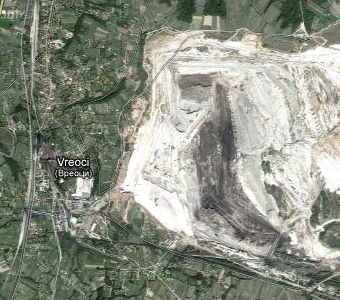
Before making any decisions on the planned EUR 80 million loan for the Kolubara lignite mine project in Serbia, the European Bank for Reconstruction and Development’s Board of Directors should take note of the controversy the bank will get involved in. Not only are the climate impacts of lignite well known, but the project is also indirectly connected to the resettlement of nearby residents.

