The EU external energy policy Communication published today by the European Commission continues the decade-long approach of the EU to ensure the unhindered flow of fossil fuel energy supplies to Europe without a real recognition of the problems this drive creates both inside and outside of the EU.
, | 7 September 2011
The EU approach has been and continues to be (as this communication and its enthusiastic endorsement by the Polish Presidency shows) focused on supporting energy infrastructure mega-projects that cost billions of euros but are often not feasible from both economic and environmental perspectives.
The Nabucco gas pipeline project is an obvious example, but we can also look at completed projects to note the same pattern. The Medgaz pipeline, which has experienced serious cost overruns, is also facing operational challenges: Neither does Spain need the amount of gas this pipeline can supply, nor can Algeria surely supply the amount of gas this infrastructure can take.
Many of the mega-projects prioritised by the Commission in this communication actually increase the energy insecurity of the EU: they make the block dependent on authoritarian regimes that run countries at their own whim. What kind of “security of supply” can such governments offer?
Even more, reliance on such business partners as the leaderships of Turkmenistan and Azerbaijan makes a mockery of the EU’s human rights commitments. The EU argues that energy cooperation with these countries can be beneficial even from a human rights perspective: non-engagement or even sanctions in the case of these countries would be counterproductive, goes the EU argument, but broadening energy ties would ensure the intensification of the human rights dialogue. Yet, what we have seen in the past is that energy cooperation has not been able to bring about democratisation, neither in Central Asian countries nor in the North African economic partners of the EU.
Rather than pursue the approach proposed by the Commission, the EU would be better advised to both explore more thoroughly sustainable energy scenarios inside the Union and to encourage them in partner countries.
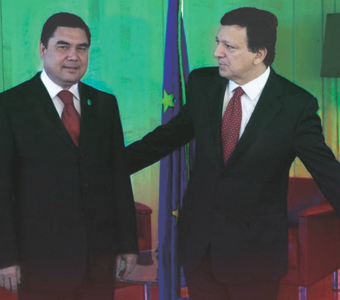
Image: EC president Barroso with Turkmenistan’s president Gurbanguly Berdymukhamedov
Never miss an update
We expose the risks of international public finance and bring critical updates from the ground – straight to your inbox.
Institution: EBRD | EIB
Theme: Energy & climate | Social & economic impacts
Project: Nabucco gas pipeline | The ‘Second Backbone Corridor’ – High voltage electricity transmission lines, Ukraine
Tags: European Commission | energy | energy security | extractive industries | fossil fuels | human rights | local benefits | policy | transparency

