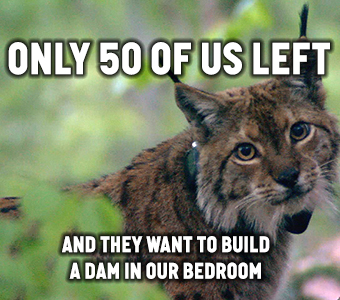
Macedonia urged to suspend controversial hydropower project
Press release | 4 December, 2015Strasbourg, Skopje, Prague – In the latest blow to planned hydropower dam in Macedonia’s Mavrovo National Park, the Standing Committee of the Bern Convention, the European wildlife treaty, added today its voice to growing calls to reconsider this reckless project. The spotlight is now on the European Bank for Reconstruction and Development (EBRD), the project’s main financier.
Read more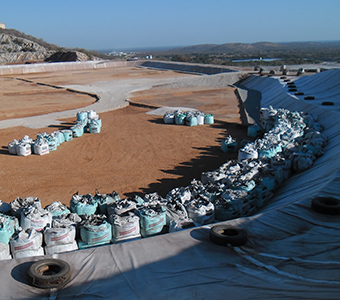
Bankwatch statement on hazardous arsenic waste in Dundee operations in Namibia
Press release | 1 December, 2015Last week Namibian news outlets reported on Bankwatch’s findings on the potential impacts of Dundee Precious Metals’ (DPM) operations in the country. Yet, in light of the company’s response we believe a number of points need to be stressed.
Read more
Bern Convention Committee to decide fate of Balkan lynx and Boskov Most hydropower plant in Macedonia
Blog entry | 30 November, 2015The critically endangered population of the Balkan lynx (Lynx lynx balcanicus) may be getting a new lease on life this week after being threatened by planned hydropower constructions in its core area of reproduction.
Read more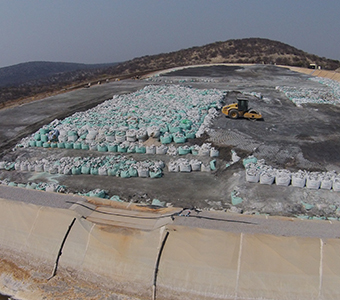
Exporting toxic pollution from Europe to Namibia
Blog entry | 19 November, 2015The case of the Tsumeb smelter in Namibia demonstrates how European pollution is exported to the Global South with indirect help of public development money.
Read more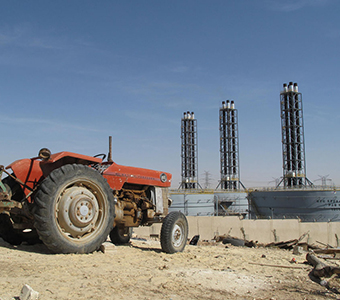
The EBRD: Fueling the future, or stuck in the past?
Blog entry | 19 November, 2015A closer look at the projects that the European Bank for Reconstruction and Development has financed in the energy sector in Middle East and North African countries reveals that, despite the bank’s rhetoric about promoting sustainable energy, its balance sheet has fossil fuels all over it.
Read moreExecutive summary: European public money for the energy sector in countries of the European Neighbourhood Policy
Publication | 17 November, 2015Countries of the European Neighbourhood have received a boost to their energy sectors in the last decade, thanks in part to the prominent role played by the EU as a catalyst of both policy reforms and financing. This paper is the executive summary of an upcoming study that examines EU financing for the energy sector in 16 countries of the European Neighbourhood between 2007 and 2014.
Read moreExecutive summary: The EU and energy in the Arab countries
Publication | 17 November, 2015This briefing (an executive summary of an upcoming report) looks at energy investments by the EU in the Southern Mediterranean region and the impacts on the social, economic and environmental rights of citizens and communities by highlighting the compliance of these activities with the values of democracy, human rights and economic development for Egypt, Morocco and Tunisia. It also assesses the type of the investments that would be beneficial both for host countries as well as for the EU.
Read moreAnalysis of EU investments in Ukraine’s energy sector, 2007-2014
Publication | 17 November, 2015Between 2007-2014, Ukraine received from EU public institutions over EUR 2.5 billion for 56 projects in the country’s energy sector. This is the highest amount of support for the energy sector among all countries of the European Neighbourhood Policy, both by volume and number of investments. Only 15 per cent of that support went to combating inefficient energy use or to developing local sustainable energy sources. The focus of EU financial support has remained on ‘traditional’ sources of energy.
Read moreAzerbaijan, the European Neighbourhood Policy and the EU’s energy interest
Publication | 17 November, 2015Azerbaijan has been a part of the EU Neighbourhood Policy since 2004 and has enjoyed substantial support through investments in the energy sector. As a result of cooperation on energy projects, the EU is today Azerbaijan’s main trading partner, with bilateral trade amounting to more than EUR 16.7 billion in 2014. But while the European Commission’s 2014 progress report on Azerbaijan stressed the good progress in the EU’s partnership with Azerbaijan, problems for ordinary Azeris are increasing.
Read moreExecutive summary: the Eastern Neighbourhood Region and the EU’s energy interests
Publication | 17 November, 2015Since the early 1990s, the EU has actively sought the development of both the oil and gas sectors in former Soviet republics. Energy security, the cornerstone of the EU’s foreign policy became the driving force behind the European Neighbourhood Policy. Investments through the EU’s Neighbourhood Policy Instrument and public banks have supported the development of unsustainable energy systems in most Eastern Partnership (EaP) countries. Like in other countries, the EaP region received more for fossil fuels than renewable sources of energy.
Read more
