Policy briefing: Revision of the EBRD’s Environmental and Social Policy
Publication | 10 May, 2013Read more
Information disclosure and public participation in decision-making: necessary changes for EBRD policies
Publication | 10 May, 2013EBRD policy must take a stance: will it limit the ways in which stakeholders interact with each other and with the environment by adopting technical and procedural solutions? Or will it aim to promote shifts in social relations, in line with its mandate to promote sustainability and democratisation in its countries of operation? In this briefing, Bankwatch recommends a number of improvements in the EBRD’s Environmental and Social Policy and its Public Information Policy to better reflect the needs of the public.
Read moreBankwatch Mail 56
Publication | 10 May, 2013Published to coincide with the EBRD’s annual meeting 2013 being held in Istanbul, this issue examines a developing controversial project in the bank’s newest region: a refinery expansion project in Cairo. Other fossil fuel investments by the EBRD also feature in the newsletter – and as the bank goes into major ‘policy review’ mode, with revisions to its energy, environmental and social and public information policies in the pipeline for this year, we put forward the case for the EBRD to rise to the climate challenge with real action rather than words. As the bank’s newly signed Kosovo country strategy demonstrates, however, the bank isn’t on course yet.
Read more
Guest post: Development banks and the Arab Spring, new report takes stock
Blog entry | 6 May, 2013A new report takes a critical look at the engagement of European development banks in Egypt after the popular uprisings in the Middle East and North African region. This article appeared originally on the Counter Balance blog and has been shortened and slightly edited.
Read moreInput for online questionnaire on Projects of Energy Community Interest
Publication | 29 April, 2013Our input expresses our main concern relating to the need to develop an energy sector in southeast and eastern Europe that is in line with EU environmental and climate policies and legislation, as well as one which addresses the increasing problem of energy poverty through sparing and efficient energy use. We underline the need for the PECIs projects to be in line with current and forthcoming EU legislation and policies on climate, environment, renewable energy and energy efficiency.
Read moreNGO letter regarding Projects of Energy Community Interest
Publication | 29 April, 2013The letter accompanied Bankwatch’s and other NGOs’ input to the public consultation on the proposed Projects of Energy Community Interest in the electricity, gas and oil sectors. With the letter, civil society groups jointly address several important matters about the process, scope and selection criteria. See also Bankwatch’s inputs to the consultation.
Read moreUkraine’s Nukes Are in Breach of UN Convention
Press release | 22 April, 2013Kiev – Ukraine’s expansion of the lifetime of its old nuclear reactors is in breach of the UN Espoo Convention, ruled the body monitoring the implementation of this international agreement, because Kiev went ahead with the prolongation of the use of its old reactors without assessing the impact this may have on neighbouring countries.
Read more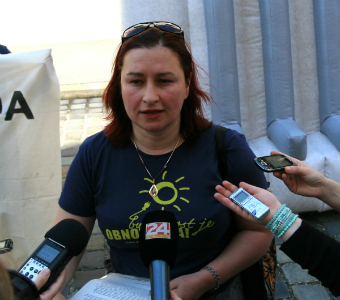
Guest post: New studies fail to prove that the Ombla hydroplant is fit for EBRD financing
Blog entry | 22 April, 2013The EBRD’s involvement in the Ombla hydropower plant project has from the start been a story of insufficient scrutiny and cutting procedural corners, followed by an attempt to patch things up by commissioning a belated nature impact assessment. The assessment highlights the Ombla area’s natural importance and captures some of the harm that would be done by the dam, but fails to draw the right conclusions, says Jagoda Munic, President of Friends of the Earth International and Biodiversity Programme Co-ordinator at Zelena akcija/Friends of the Earth Croatia.
Read moreLetter to EBRD: Espoo Convention confirms Ukraine’s non-compliance with Ukraine’s international obligations regarding nuclear reactors’ lifetime-extensions
Publication | 22 April, 2013The Implementation Committee under the Espoo Convention concluded in March 2013 that the extension of the life-times of two nuclear reactor units at the Rivne NPP are a case of non-compliance with Ukraine’s international obligations. The two units are part of a, EBRD financed project and got their life-time extensions in 2010 without preparing an environmental impact assessment (EIA) and with no information provided to potentially affected neighbouring states.
Read more
