Briefing for the EIB Board of Directors
Publication | 17 October, 2025Ahead of the EIB’s annual Board Seminar with Civil Society, this briefing urges the Bank to demonstrate genuine dialogue and accountability to match its global ambitions.
Read more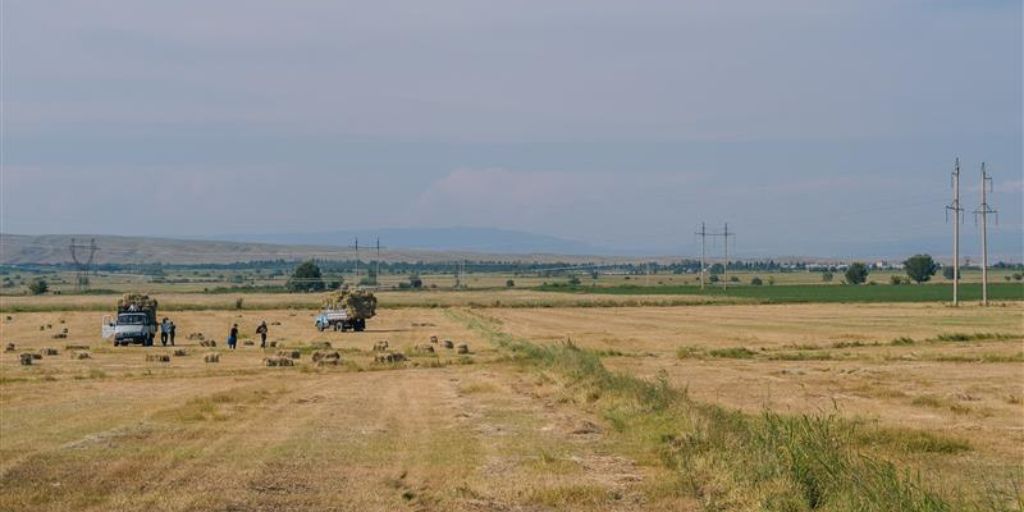
Highway of injustice: How EIB-financed East–West road projects in Georgia impact local communities
Publication | 13 October, 2025In 2021, the European Investment Bank approved EUR 106.7 million in funding for two major highway projects in southern Georgia. Field research revealed significant social and environmental issues in the affected municipalities.
Read more
Recommendations for the EIB Group: Shaping the 2026–2030 Climate Bank Roadmap
Publication | 15 July, 2025The publication outlines the European Investment Bank’s transformation into the EU’s first public international financial institution to stop funding fossil fuels in both developed EU Member States and developing countries and significantly increasing investments in climate action and environmental sustainability.
Read more
EIB–EBRD mutual reliance: A threat to environmental and social accountability
Blog entry | 14 July, 2025In April, the European Investment Bank (EIB) and the European Bank for Reconstruction and Development (EBRD) signed a Mutual Reliance and Cooperation Agreement, founding their future cooperation on jointly financed projects. Yet concerns have already emerged about potential risks to environmental and social safeguards as well as accountability under the new partnership.
Read more
Outcome undisclosed: EIB Group Complaints Mechanism leaves Corridor Vc complainants in the dark
Publication | 21 March, 2025This case study summarises the circumstances of the complaints against the project, the conclusions of the EIB Complaints Mechanism, the outcomes and recommendations for the next review of the EIB Group Complaints Mechanism Policy.
Read more
Central Asia: environmental groups and scientists call on international financial institutions to preserve key freshwater bodies and stop supporting destructive hydropower projects
Press release | 14 March, 2025The future of Central Asia’s key rivers and lakes is at risk, warn international environmental groups Rivers without Boundaries, International Rivers, Friends of the Earth US, Urgewald and CEE Bankwatch Network in a formal request sent today to the World Bank, European Bank for Reconstruction and Development (EBRD), European Investment Bank (EIB), Asian Development Bank (ADB), Eurasian Development Bank (EDB), Islamic Development Bank (ISDB) and Asian Infrastructure Investment Bank (AIIB).
Read more
Ringing the bell for gender equality and diversity: European public banks must do more for women’s rights and economic empowerment
Blog entry | 7 March, 2025In the current age of ‘competent white men’, ‘traditional family values’ and the EU’s simplified sustainable finance regulations, what lies in store for the inclusion and equality policies of Europe’s public development banks?
Read more
Countering shrinking space: How multilateral development banks can empower civil society in the Western Balkans, Caucasus and Central Asia
Publication | 25 February, 2025This report examines how multilateral development banks have failed to adequately protect civil society in the Caucasus, Western Balkans, and Central Asia.
Read more
EIB Group Complaints Mechanism ineffective in addressing complaints submitted in relation to the Budapest Airport expansion project
Publication | 31 January, 2025In this case study, we lay bare inefficiencies of the EIB and EBRD grievance mechanisms using a real-life example – the Budapest Airport Expansion Project – and make recommendations for the next review of the EIB Group Complaints Mechanism Policy.
Read more
Holding the EIB and EBRD accountable: Are their grievance mechanisms effective?
Publication | 20 November, 2024In this report, we examine the alignment of the EIB and EBRD grievance mechanisms with the effectiveness criteria for the design and assessment of non-judicial complaints mechanisms set out in the UN Guiding Principles on Business and Human Rights.
Read more
