New Bankwatch study: European “green energy” funding for hydropower threatens pristine Balkan rivers
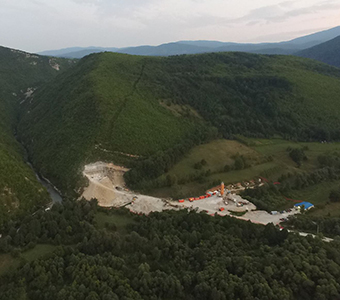
Press release | 11 December, 2015Radolfzell, Vienna, Prague – A wave of hydropower development fuelled by European public funding and EU companies is endangering pristine river environments in the Balkans, finds a new study by CEE Bankwatch Network released today.
Read more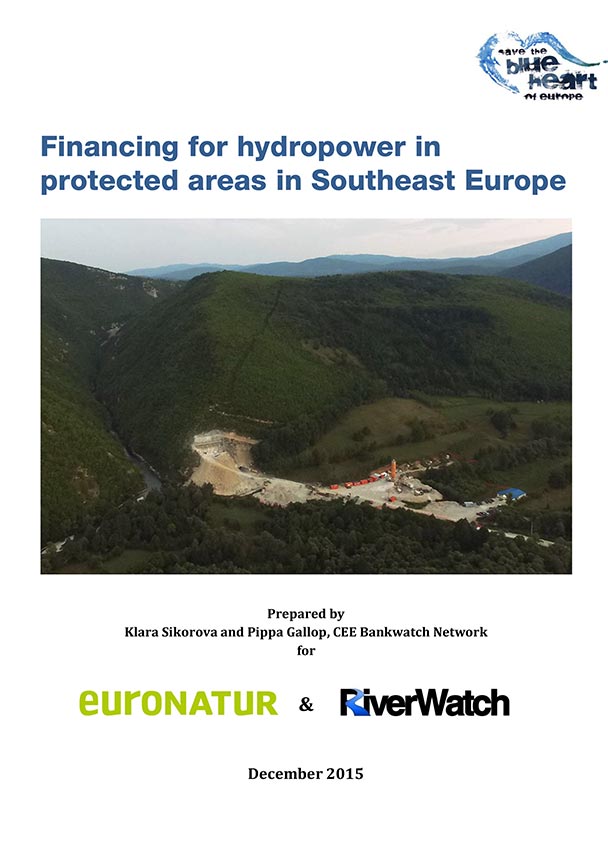
Financing for hydropower in protected areas in southeast Europe
Publication | 11 December, 2015Southeast Europe is experiencing a wave of hydropower projects. In a region with a deadly combination of Europe’s last wild rivers, rampant corruption and inadequate nature protection, the potential for damage is immense. In order to address this issue, we need to know who is making it happen. This research aims – to the extent possible given the secrecy around the financial sector – to find out who are the main actors involved in financing hydropower projects in the region, both overall and inside of protected areas. Update January 2017 The EBRD has said that financing has been cancelled for four small hydropower plants in Macedonia: Zrnovska reka 1, Zrnovska reka 2, Estericka reka, Kadina reka. In addition, financing has been cancelled for the 68 MW Boskov Most plant in the Mavrovo National Park, also in Macedonia. Regarding the Ternove SHPP in Albania, the EBRD has said that it had conducted an on-site investigation into the concerns received in a letter from an affected citizen. The bank found nothing to substantiate the allegations. Bankwatch will continue to monitor the issue.
Read more
9 reasons why the EU’s bank is no climate leader
Blog entry | 8 December, 2015The European Investment Bank’s track record stands in stark contrast to its pose as a hero in the fight against climate change.
Read moreŠefčovič’s underwhelming outlook for the Energy Union’s role in the energy transition
Blog entry | 1 December, 2015On 20 November 2015, following the presentation of the first State of the Energy Union, Vice-President Šefčovič hosted a Twitter Chat. Also several Bankwatchers joined the discussion. Here are some points we found noteworthy.
Read moreConfirmatory application for disclosure of EIB documents related to Volkswagen loans
Publication | 24 November, 2015Following the revelations around Volkswagen cheating emission tests, Bankwatch requested information from the European Investment Bank about its loans to the car maker. After some delays, the bank released only part of the requested information, despite the profound public interest in the case.
Read moreExecutive summary: European public money for the energy sector in countries of the European Neighbourhood Policy
Publication | 17 November, 2015Countries of the European Neighbourhood have received a boost to their energy sectors in the last decade, thanks in part to the prominent role played by the EU as a catalyst of both policy reforms and financing. This paper is the executive summary of an upcoming study that examines EU financing for the energy sector in 16 countries of the European Neighbourhood between 2007 and 2014.
Read moreExecutive summary: The EU and energy in the Arab countries
Publication | 17 November, 2015This briefing (an executive summary of an upcoming report) looks at energy investments by the EU in the Southern Mediterranean region and the impacts on the social, economic and environmental rights of citizens and communities by highlighting the compliance of these activities with the values of democracy, human rights and economic development for Egypt, Morocco and Tunisia. It also assesses the type of the investments that would be beneficial both for host countries as well as for the EU.
Read moreAnalysis of EU investments in Ukraine’s energy sector, 2007-2014
Publication | 17 November, 2015Between 2007-2014, Ukraine received from EU public institutions over EUR 2.5 billion for 56 projects in the country’s energy sector. This is the highest amount of support for the energy sector among all countries of the European Neighbourhood Policy, both by volume and number of investments. Only 15 per cent of that support went to combating inefficient energy use or to developing local sustainable energy sources. The focus of EU financial support has remained on ‘traditional’ sources of energy.
Read moreAzerbaijan, the European Neighbourhood Policy and the EU’s energy interest
Publication | 17 November, 2015Azerbaijan has been a part of the EU Neighbourhood Policy since 2004 and has enjoyed substantial support through investments in the energy sector. As a result of cooperation on energy projects, the EU is today Azerbaijan’s main trading partner, with bilateral trade amounting to more than EUR 16.7 billion in 2014. But while the European Commission’s 2014 progress report on Azerbaijan stressed the good progress in the EU’s partnership with Azerbaijan, problems for ordinary Azeris are increasing.
Read moreExecutive summary: the Eastern Neighbourhood Region and the EU’s energy interests
Publication | 17 November, 2015Since the early 1990s, the EU has actively sought the development of both the oil and gas sectors in former Soviet republics. Energy security, the cornerstone of the EU’s foreign policy became the driving force behind the European Neighbourhood Policy. Investments through the EU’s Neighbourhood Policy Instrument and public banks have supported the development of unsustainable energy systems in most Eastern Partnership (EaP) countries. Like in other countries, the EaP region received more for fossil fuels than renewable sources of energy.
Read more
