Development Banks Urged to Review Support for Mekong Dams, 10 Years After Nam Theun 2
Press release | 1 April, 2015Amsterdam/Bangkok/Manila/Prague/Tokyo – Non-governmental organizations are calling on the World Bank, Asian Development Bank (ADB) and European Investment Bank (EIB) to publicly acknowledge the millions of dollars of failed investment in their flagship project, Nam Theun 2. This 1070 MW dam has failed to bring intended development benefits, and instead has unleashed a range of negative impacts on the affected populations in central Laos.
Read moreInput to EIB climate policy consultation
Publication | 16 March, 2015The comments were jointly submitted by Bankwatch, Counter Balance, Focus, urgewald, Both Ends, Estonian Green Movement, Transport and Environment, CEPA Slovakia and Latvian Green Movement.
Read more
European Parliament intergroup ITCO condemns new transparency policy of the European Investment Bank
Blog entry | 13 March, 2015The European Investment Bank’s slide towards secrecy, manifest in its newly adopted transparency policy, has been lambasted by the intergroup of the European Parliament responsible for transparency and corruption.
Read more
EIB’s new transparency policy allows for more secrecy
Press release | 11 March, 2015Brussels – Yesterday the European Investment Bank (EIB) formally adopted a revised transparency policy including controversial exceptions to the disclosure of internal documents. This watered down transparency policy comes right before the bank will start implementing the € 315 billion Juncker plan and risks undermining the impact of EU recovery efforts.
Read more
Dr. Jekyll and Mr. Hyde: An Energy Union torn between clean energy and fossil fuels
Press release | 24 February, 2015Brussels – The vision of Energy Union to be outlined by the European Commission tomorrow proposes making Europe a world leader in renewables and energy efficiency, but at the same time envisages significant investments undermining that goal, such as gas import infrastructure, nuclear and dirty unconventional fossil fuels.
Read more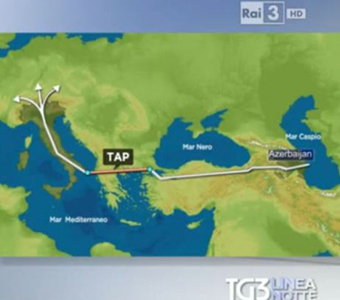
EU priority gas pipeline faces fierce opposition in Italy
Blog entry | 17 February, 2015The European Investment Bank recently confirmed plans to finance the Trans-Adriatic Pipeline from Greece via Albania to Italy. Yet a coalition of local mayors will do whatever it takes to stop the project.
Read moreEuropean Fund for Strategic Investments: focus on low carbon, clean energy and resource efficiency investments
Publication | 16 February, 2015The European Commission President Juncker’s ‘Investment plan for growth and jobs’ is aiming at mobilising EUR 315 billion of additional investments by 2018. A proposed regulation setting up the framework of the EFSI is currently negotiated in the European Parliament and the Council and its adoption is envisaged for June 2015. This briefing, prepared by Bankwatch, Counter Balance, Friends of the Earth Europe and WWF Europe stresses that this regulation should give clarity on how the fund will contribute to the achievement of EU long-term objectives, its added-value for the EU and the expected benefits for European citizens: all projects benefiting from the fund should explicitly accelerate the transition of Europe’s economies, infrastructure investments should aim at the decarbonisation, decentralization and decrease of energy and transport systems, R&D focusing on the absolute decoupling of resource use and production.
Read moreEIB Climate Action undermined by bank’s fossil fuel lending
Press release | 11 February, 2015Brussels — Ahead of a public consultation on the European Investment Bank’s Climate Action Programme tomorrow in Brussels, Bankwatch insists that, if the bank’s pro-climate efforts are to be effective, the EIB must give up its loans to fossil fuels and other climate-damaging sectors.
Read more
Natural gas left, right and centre at Energy Union conference in Riga
Blog entry | 11 February, 2015Massive infrastructure for transporting natural gas is shaping up to be a centre piece of the Energy Union put forward by the Juncker Commission. This was also the impression Bankwatch campaigners had at an Energy Union conference in Riga last week.
Read moreLong awaited investigation into Glencore for alleged tax dodging shows EU Bank’s lack of transparency and vulnerability to abuse
Press release | 5 February, 2015Brussels – The European Investment Bank (EIB) is virtually powerless in the face of abuse of its own funds, an internal investigation published last week by the EIB shows. What’s even worse is that the EIB’s new transparency policy – to be adopted in the coming weeks – would formally allow the bank to keep such internal investigations into abuses of its funds secret, hereby undermining public scrutiny of public money.
Read more
